Agile ONE SN Humanoid Robot Unveiled in Berlin
Agile Robots and Nvidia have unveiled the Agile ONE SN, a compact humanoid robot created to help researchers test smart machines in science labs.
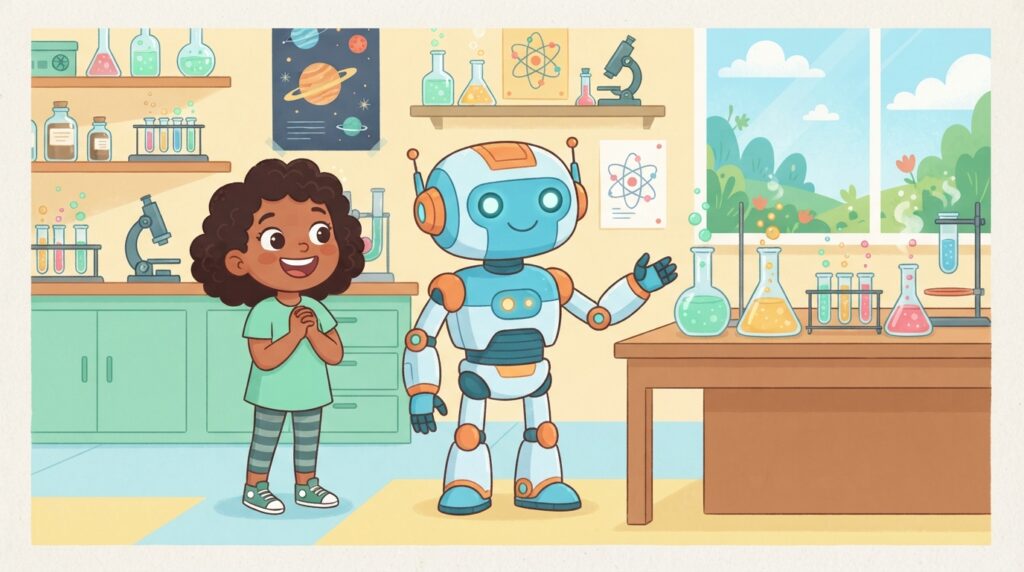
Imagine walking into a science laboratory and shaking hands with a friendly machine that has five fingers just like yours! On 21 October 2026, tech company Agile Robots and computer giant Nvidia introduced the world to the Agile ONE SN humanoid robot in Berlin, Germany. The big announcement took place at the GTC Berlin conference inside the Tempodrom arena.
This new bipedal machine walks on two legs and is designed specially to help researchers test smart artificial intelligence. Instead of staying trapped inside a computer screen, this robot is built to step directly into the physical world and learn how to carry out everyday laboratory tasks alongside human scientists.
What happened?
Agile Robots, a robotics company based in Munich, joined forces with tech giant Nvidia to create this new research platform. Agile Robots Chief Executive Officer Zhaopeng Chen explained that production of the compact Agile ONE S and ONE SN models will begin by late 2026. The company plans to manufacture between 1,000 and 2,000 units during 2027.
The Agile ONE SN is built to be smaller and much safer for laboratory workers than giant factory machines. It stands 1.4 metres (4.59 feet) tall and weighs approximately 40 kilograms. Because it is close to the height of a middle school student, scientists can interact with it comfortably without feeling overwhelmed.
Even though it is compact, this machine is packed with clever technology! It features 31 degrees of freedom across its entire body, allowing it to move flexibly. At the end of its arms are two five-fingered WUJI Hand 2 hands. Each hand has 20 degrees of freedom, special tactile touch sensing, and 1 kilohertz force control. These sensitive hands help the robot feel what it touches and control its grip gently, while each arm can lift a maximum payload of 3 kilograms.
Inside the robot sits a powerful computing brain called the Nvidia Jetson Thor. This computer unit delivers an incredible 2,070 FP4 teraflops of processing power and 128 gigabytes of unified memory. To look around and navigate rooms safely, the robot uses multimodal sensors. These include lidar, inertial measurement units (IMUs), and high-resolution cameras placed neatly on its head and wrists.
The machine also arrives preloaded with Nvidia’s Isaac GR00T foundation model and software tools. This clever software cuts technical setup time for research teams from weeks to just days! Leading academic institutions, including Stanford University in the United States and ETH Zurich in Switzerland, are already lined up as the first testing customers.
Why does it matter to you?
Have you ever imagined what science classrooms and laboratories will look like when you grow up? Nvidia Chief Executive Officer Jensen Huang highlighted that this machine marks a major step forward for physical AI, where artificial intelligence leaves the digital screen and works directly in our everyday world.
Watching humanoid robots develop dexterous five-fingered hands shows us how machines are learning to help humans perform tasks safely. In the coming years, students and researchers could collaborate directly with helpful, friendly robots in labs. Understanding how these machines sense touch and navigate spaces can inspire your own curiosity in coding, robotics, and engineering.
Words to know
- Bipedal: an animal or machine that balances and walks on two legs.
- Degrees of freedom: the number of different ways or directions that a joint or body part can move.
- Payload: the maximum amount of weight or cargo that an arm or vehicle can lift and carry.
- Lidar: a sensing method that bounces light pulses off objects to measure distances and map surroundings.
- Tactile sensing: the ability of a robotic sensor to feel touch, pressure, and contact like human skin.
Did you know?
Each WUJI Hand 2 on the Agile ONE SN has 20 degrees of freedom, which lets all five fingers bend, curl, and adjust just like a human hand!
Think about it
If your school science lab had an Agile ONE SN robot to assist your class, what exciting experiment would you design for it to help you with?
Quick quiz
What is the maximum payload that each arm of the Agile ONE SN robot can carry?
- 3 kilograms
- 15 kilograms
- 40 kilograms
See the answer
3 kilograms
Sources
This story was prepared by the Kids Gazette news desk with the help of AI research and writing tools, using the sources listed above.