Indian Scientists Find Cell Alarm Switch Against Viruses
Scientists in Hyderabad have discovered a clever protein named DZIP3 that acts as an alarm switch inside human cells to block viruses.
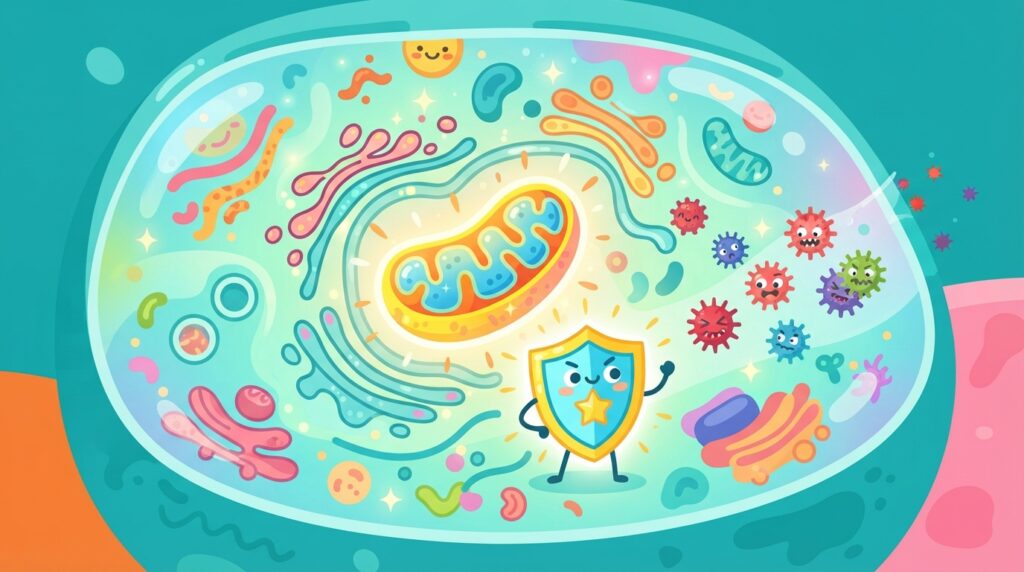
Have you ever wondered how your body knows when an unwelcome germ creeps inside? On 22 October 2026, researchers in Hyderabad, Telangana, announced an exciting cell alarm switch discovery that solves part of this deep biological puzzle.
The study was led by Dr. Santosh Chauhan, Senior Principal Scientist at the CSIR-Centre for Cellular and Molecular Biology (CSIR-CCMB), alongside Dr. Rinku Sahu and national and international collaborators. Together, they revealed how a microscopic human protein detects viral intruders and wakes up the cell’s safety shields.
What happened?
Inside every human cell, tiny proteins carry out important jobs to keep us healthy and energetic. The scientists discovered that one special protein, named DZIP3, has a surprising dual action. This means it can perform two clever tricks at the same time: it watches for danger like a guard, and it sounds the alarm like a security bell!
When an invading virus enters a human cell, DZIP3 immediately identifies the foreign viral RNA. Spotting this strange material causes DZIP3 to undergo a structural shape change, which effectively turns the protein on.
Once this alarm switch is active, DZIP3 travels over to the cell’s energy-producing centres, which are called mitochondria. At the mitochondria, DZIP3 tags and turns on critical immune defence proteins.
This action sets off the release of Type-I interferons, which are powerful defensive molecules made by our bodies. These molecules work rapidly to stop the virus from multiplying and spreading from cell to cell.
The research team tested this pathway in their laboratory against multiple dangerous viruses. They discovered that DZIP3 provides a strong natural defence against SARS-CoV-2, Chikungunya, and Japanese Encephalitis.
This scientific breakthrough, published in the respected science journal The EMBO Journal, confirms a scientific hypothesis first proposed by Dr. Chauhan’s team seven years ago. Today, with funding from India’s Department of Biotechnology (DBT), the scientists are working on small-molecule drug candidates to boost DZIP3 activity and create broad-spectrum antiviral medicines.
Why does it matter to you?
Our bodies are made of trillions of tiny living cells, and each one has its very own built-in security system to protect us from getting sick. In India, viruses like Chikungunya and Japanese Encephalitis can cause high fevers and make people feel very unwell.
By understanding how the DZIP3 alarm switch works, Indian scientists can design brand-new antiviral medicines. Instead of fighting only one specific bug, these medicines could help your own cells defend themselves against many sicknesses. This remarkable research could soon help doctors protect you, your classmates, and your family whenever seasonal viruses begin to spread!
Words to know
- Protein: Tiny microscopic structures inside living cells that perform essential tasks to keep our bodies working.
- Mitochondria: The special energy-producing centres inside a cell that supply the power needed for cellular life.
- Type-I interferons: Powerful protective molecules released by cells to block viruses from multiplying.
- RNA: The unique genetic material used by many viruses to deliver instructions inside living cells.
Did you know?
The research team at CSIR-CCMB worked patiently for seven whole years to prove their original scientific idea before publishing their findings!
Think about it
Why do you think it is helpful for cells to have proteins that can detect danger and activate defences at the same time? If you were a scientist in a laboratory, what kind of experiment would you design next?
Quick quiz
What is the name of the dual-action protein discovered by scientists at CSIR-CCMB?
- DZIP3
- SARS-2
- DBT-7
See the answer
DZIP3
Sources
This story was prepared by the Kids Gazette news desk with the help of AI research and writing tools, using the sources listed above.