
How Your Liver’s Clock Controls Hunger
Scientists have found a special pathway linking the liver's internal clock directly to the brain, helping explain when and why we feel hungry!
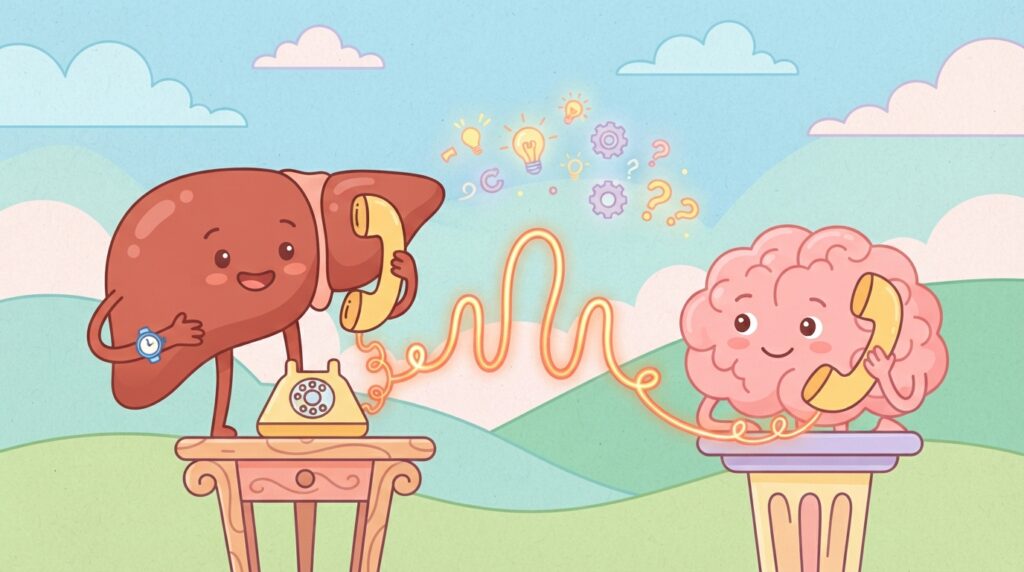
Have you ever wondered why your tummy starts rumbling right around your lunchtime break at school? On 7 November 2024, scientists in Philadelphia in the United States shared a fascinating discovery about your body clock and hunger. It turns out that your brain is not the only organ keeping time during the day!
Researchers at the Perelman School of Medicine at the University of Pennsylvania found that your liver has its own biological clock. Even more surprising, this liver clock talks directly to feeding centres inside your brain to decide when it is time for a meal.
What happened?
The landmark investigation was led by senior author Dr Mitchell A. Lazar and postdoctoral researcher Dr Lauren N. Woodie. Their exciting study was published in the world-renowned scientific journal Science.
Most people know that the brain holds a master timekeeper that follows a 24-hour cycle known as a circadian rhythm. However, scientists discovered that peripheral organs, including the liver, maintain their own internal molecular clocks as well. The research team examined special clock proteins called REV-ERBα and REV-ERBβ inside the liver cells of mice. Normally, these clever proteins work like tiny schedulers to keep daytime and nighttime metabolic tasks running right on time.
When the scientists switched off these REV-ERB clock genes in mice, the liver clock stopped working properly. As a result, the animals began eating significantly more food during their usual resting periods! The researchers observed very similar disruptions to eating habits and nerve signalling when mice were fed a high-fat diet.
The team discovered that the liver sends its messages through a specific pathway called the hepatic vagal afferent nerve. When the liver clock gets confused, it sends faulty feedback across this nerve. The brain then overcompensates by triggering untimely hunger signals. Remarkably, when the scientists safely disconnected this nerve route, the mice returned to normal eating schedules and avoided excess body weight gain!
Why does it matter to you?
Whether you are getting ready for morning assembly, studying in class, or playing football with friends, your body needs steady energy. This discovery reveals that your liver and brain work together like a well-drilled cricket team to regulate your appetite.
When you eat at odd hours or enjoy late-night snacks, your liver clock can fall out of sync with your brain. Eating your meals at regular times each day keeps these internal clocks communicating smoothly. When your clocks tick together in harmony, your body gets the right fuel at the right moments for school, sports, and playtime!
Words to know
- Circadian rhythm: The natural 24-hour cycle that controls when living bodies sleep, wake, and perform daily tasks.
- Hepatic vagal afferent nerve: A special nerve pathway that carries chemical and electrical signals from the liver to the brain.
- Proteins: Tiny working molecules inside cells that help the body carry out essential daily jobs.
- Metabolic: Relating to metabolism, the chemical process by which the body turns food into usable energy.
Did you know?
Your brain is not the only timekeeper in your body! Peripheral organs such as your liver run their own built-in molecular clocks to keep everyday chemical processes on schedule.
Think about it
Do you notice yourself feeling hungry at the exact same time every afternoon? How might having a fixed timetable for breakfast, lunch, and dinner help your body feel more energetic throughout the school day?
Quick quiz
What is the name of the nerve pathway that carries clock signals from the liver to the brain?
- The hepatic vagal afferent nerve
- The optic sensory nerve
- The central spinal pathway
See the answer
The hepatic vagal afferent nerve
Sources
This story was prepared by the Kids Gazette news desk with the help of AI research and writing tools, using the sources listed above.