OpenAI Plans to Build Humanoid Robots by 2027
OpenAI CEO Sam Altman has confirmed plans to build a humanoid robot by 2027. Learn how smart software is preparing to enter our physical world.
Imagine a smart computer programme that does not just stay locked inside a flat monitor, but actually steps out into our physical world with mechanical arms and legs. On October 17, 2026, OpenAI Chief Executive Officer Sam Altman confirmed from San Francisco, California, that his company is officially developing its very own OpenAI humanoid robot.
When asked directly during an appearance on the Sources podcast whether OpenAI would build a humanoid robot, Altman responded with a clear two-word confirmation: “We will.” This big announcement means artificial intelligence is preparing to leave computer screens behind and explore our physical surroundings.
What happened?
Altman explained that choosing a human-like form factor makes a lot of practical sense. Our everyday infrastructure is built specifically for people. Items like door handles, computer keyboards, and handheld tools were all designed around human bodies, so a machine shaped like a person can naturally use the exact same spaces and tools that we do every single day.
However, Altman pointed out that assembling the machine’s mechanical body is not the hardest part of the project. The primary challenge is engineering the intelligent “brain” required to operate it safely and effectively.
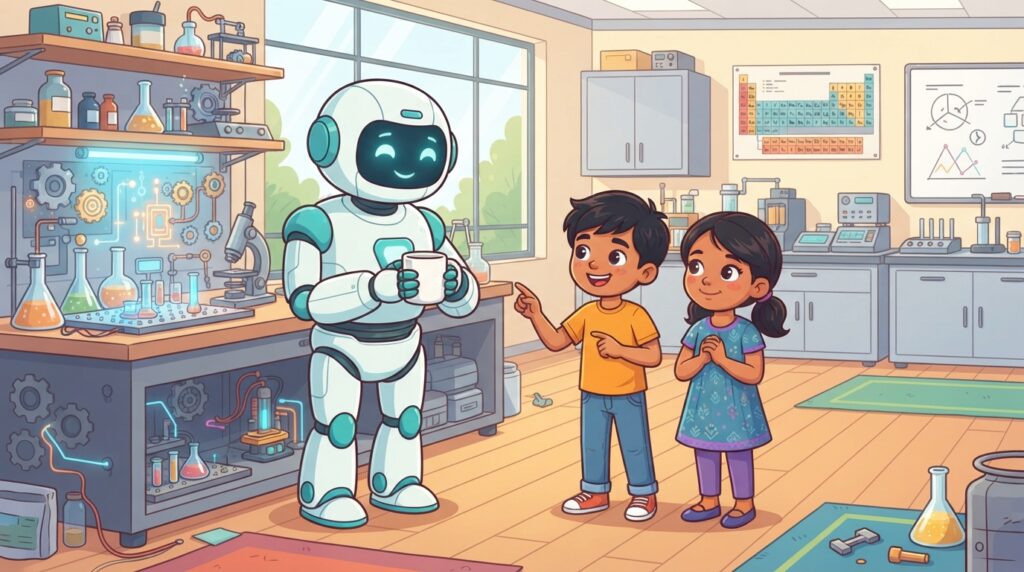
Robotics experts explain that everyday human actions require complex software coordination. For instance, when picking up a simple mug, a machine must first recognise the mug, pinpoint its handle, calculate the correct grip pressure, and coordinate delicate motion so nothing breaks or spills. For humans, this feels effortless, but for a robot, it requires intense computing power!
Altman told Fortune magazine that OpenAI expects to showcase a compelling demonstration prototype of the robot in 2027. Even so, he clarified that autonomous robots will not be walking the streets or working in public spaces for several more years after that initial demo.
To prepare for this ambitious mission, OpenAI recently posted 27 dedicated robotics roles on its careers portal. These openings include jobs for actuator development, motion control, state estimation, and physical AI machine learning infrastructure. The company explained that its near-term goal is creating general-purpose machines to assist human workers with infrastructure tasks, while personal household assistant robots remain a long-term goal.
Why does it matter to you?
This major development shows how artificial intelligence is gradually moving off computer monitors and entering the real world as helpful physical machines. For students in India who love science, computers, and tinkering, this signals an exciting shift in how technology works.
Learning about the complex coding, smart sensors, and motor controls behind these machines can inspire you to explore future careers in robotics and engineering. By understanding how software connects to physical gears and motors, you can begin imagining the helpful machines that might assist human workers in the future.
Words to know
- Humanoid robot: a machine designed with a body shape similar to a human, including a head, torso, arms, and legs.
- Prototype: an early working model of a machine built to test ideas and see how well a design performs.
- Actuator: a mechanical part inside a robot that works like a muscle to create movement.
- Autonomous: able to operate, navigate, and make decisions independently without needing a person to control every step.
- Infrastructure: the basic physical structures, equipment, and facilities built for everyday use, such as doors, desks, and tools.
Did you know?
OpenAI previously explored robotic manipulation back in 2019 through its Dactyl project! In that experiment, a robotic hand was trained using simulated learning until it successfully solved a colourful Rubik’s Cube all on its own.
Think about it
If you were an engineer designing a general-purpose helper robot, what is one delicate infrastructure task you would train its robotic hands to practice first?
Quick quiz
What year does OpenAI expect to showcase a demonstration prototype of its humanoid robot?
- 2026
- 2027
- 2030
See the answer
2027
Sources
This story was prepared by the Kids Gazette news desk with the help of AI research and writing tools, using the sources listed above.