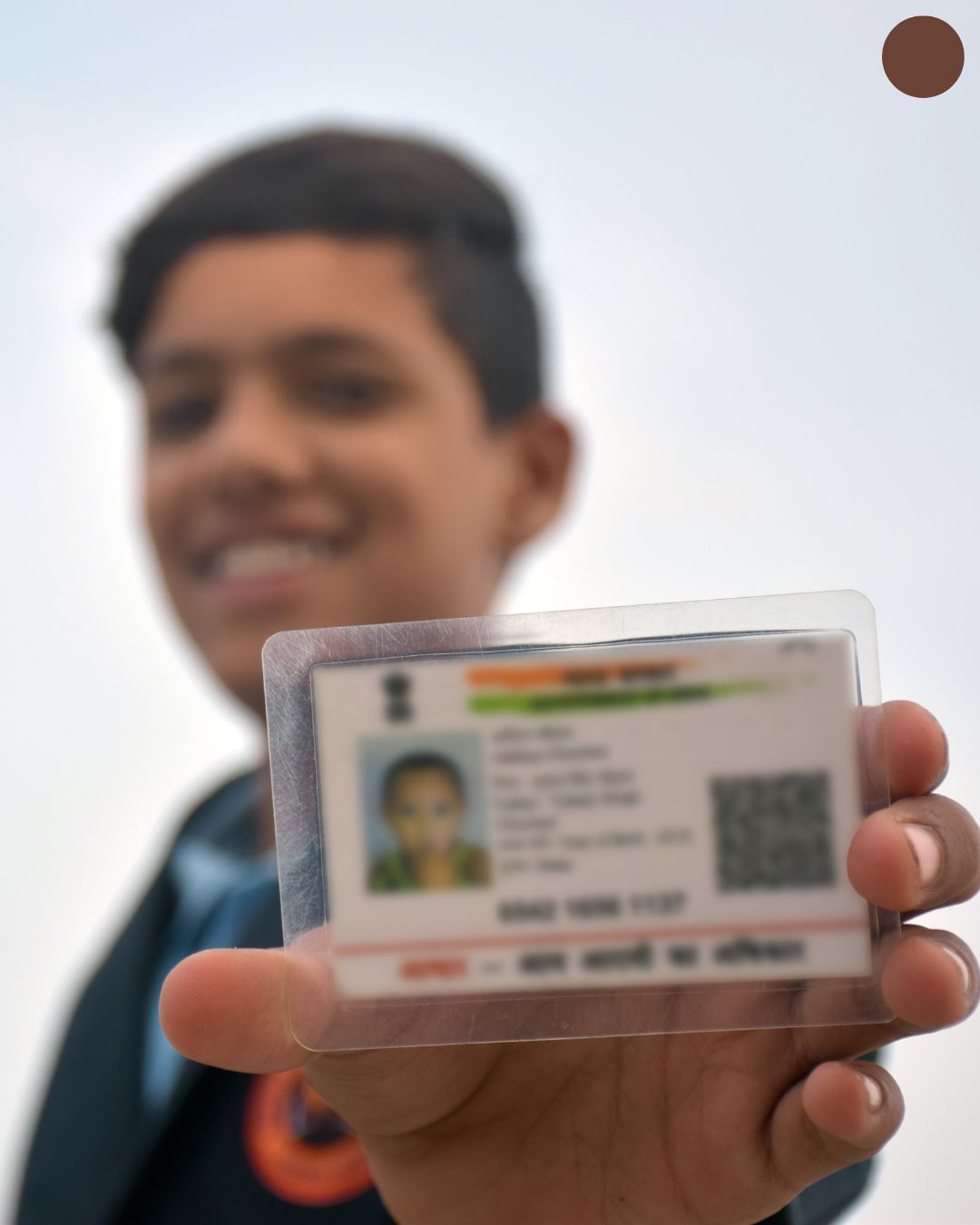
Parents across India can now breathe a sigh of relief. The Unique Identification Authority of India (UIDAI) has announced that biometric updates for children’s Aadhaar cards will remain free till October 2026. The decision has been widely welcomed by families and schools alike, as it removes one more financial hurdle in keeping children’s identification records up to date.
Aadhaar has become an essential document for every Indian citizen. It is required for school admissions, scholarships, government benefits, and even health insurance. For children, Aadhaar is usually created soon after birth, but biometric details such as fingerprints and iris scans are added only when they turn five and again at fifteen. This ensures that the digital identity remains accurate as they grow.
Until recently, parents had to pay a small fee for these biometric updates. But the UIDAI’s new decision has waived that cost. Officials said that the step aims to help families update their children’s data on time, so services linked to Aadhaar remain smooth and uninterrupted.
The announcement came after reports showed that many families were missing update deadlines. As a result, their children’s Aadhaar numbers often failed verification checks during school enrollments or welfare scheme applications. The new rule hopes to prevent such issues by encouraging timely updates.
The update process itself has become easier. Parents can visit the official UIDAI website, book an appointment at the nearest Aadhaar Seva Kendra, and carry their child’s birth certificate along with their own Aadhaar card. The biometric data is taken in a few minutes and added securely to the system. For children under five, no biometrics are recorded; their Aadhaar is linked to one parent’s card instead.
Officials clarified that only biometric updates are free at physical Aadhaar centers. Demographic changes like name, address, or mobile number still carry a small service charge if done offline. However, basic details can be changed free of cost on the UIDAI website once every few years.
For schools, this update is a relief too. Many institutions rely on Aadhaar verification for scholarships and government record submissions. In some cases, errors in children’s fingerprints or mismatched photographs caused delays. Free biometric updates mean schools can now coordinate Aadhaar drives without worrying about the cost burden on families.
Parents’ groups across social media welcomed the news. “It’s a small but meaningful move,” said Mumbai parent Meenakshi Rao, whose daughter’s biometric update had been pending for months. “Earlier, we had to plan a special visit and pay for it. Now we can finish it during a regular Aadhaar camp at school.”
The UIDAI has also been working on improving accessibility. Over 50 million children have already received updated Aadhaar records since 2023. To make the process smoother, many states are setting up mobile update vans in rural and tribal areas. These vans travel to schools and community centers where parents can update records without visiting city offices.
The initiative also supports the government’s larger goal of digital inclusion. As India expands e-governance services, accurate and updated Aadhaar data ensures that no child is left out of benefits such as mid-day meals, education grants, or health insurance programs.
Cyber experts note that the free-update window is also a good time to teach families about digital safety. When visiting Aadhaar centers, parents are advised to verify the official UIDAI logo and never share OTPs or photocopies of the card with unverified agents. Data privacy remains a concern, and UIDAI repeatedly reminds citizens that no agency can demand Aadhaar copies without clear authorization.
The biometric update also helps fight identity fraud. With fresh fingerprints and iris scans, duplication becomes nearly impossible. This is particularly helpful in cases where children share similar names or birth dates, such as twins or cousins in large families. Updated biometrics make their digital identities unique and secure.
Technology has made the process faster than ever. Earlier, updates could take weeks to reflect in the system. Now, most Aadhaar biometric records appear within 24 hours. Parents receive an SMS confirmation and can download the new e-Aadhaar instantly from the official portal.
Experts in education policy view this decision as more than just an administrative change. It represents a shift toward recognizing how identification systems can support equity. In many low-income communities, even a small service fee becomes a barrier. Making updates free means more children can access government benefits without delays or rejections.
This step also aligns with the “Digital India” mission’s focus on ease of living. By linking Aadhaar updates to schools and local offices, the government hopes to make digital identity management as routine as school attendance. For students, this means fewer forms and faster approvals for scholarships and exams that require verification.
While most reactions have been positive, experts remind families to check the fine print. The waiver lasts till October 2026. After that, UIDAI will review whether the free-update scheme should continue. Therefore, parents are encouraged to complete their child’s biometric update before the deadline.
The next wave of updates will focus on children turning fifteen between 2025 and 2026, since they are required to re-verify biometrics at that age. Many schools have already begun coordinating with Aadhaar centers to conduct group drives during the academic year.
For India’s 250 million school-age children, this decision is a practical example of how digital policy touches everyday life. It reduces costs, saves time, and brings public services closer to citizens. In a world where identity verification is central to almost every process, ensuring every child has an accurate and secure Aadhaar card is an important step toward inclusion.
The free biometric update scheme may seem like a small reform, but for millions of parents balancing education costs, it is a thoughtful gesture. It not only simplifies life today but also prepares a smoother path for a generation growing up in a digital nation. When identity becomes a tool for empowerment, even a simple update can open new doors of opportunity for every child in India.