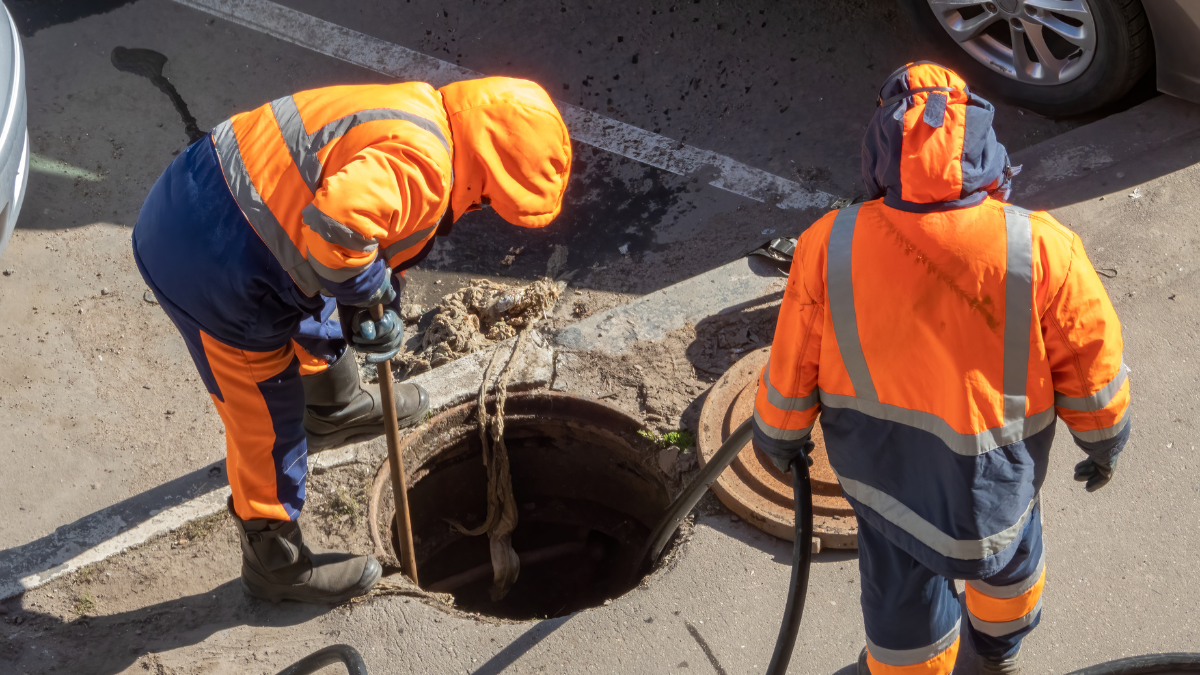
Deep beneath London’s streets, something disgusting and enormous was growing — a mountain of grease, oil, wet wipes, and trash. When city workers finally discovered it, they were stunned. A “fatberg” the size of six double-decker buses had blocked a major sewer, threatening to flood an entire neighborhood. It weighed nearly 100 tonnes and stretched more than 70 meters. It took teams of workers weeks to clear.
But beyond the shock value, this massive lump of waste carries a powerful message — one that every child can understand. What we throw away never really disappears. It travels, changes form, and sometimes comes back to haunt us.
The term fatberg comes from “fat” and “iceberg.” It describes the huge, sticky masses that form underground when oils, fats, and non-biodegradable waste combine in drains. The latest one found under East London made headlines worldwide. Engineers had to use high-pressure water jets and shovels to break it down piece by piece. The process was messy, smelly, and dangerous — but necessary to keep the city’s sewage system running.
“It’s like a monster made of everything people shouldn’t have flushed,” said Daniel Carter, a maintenance engineer with Thames Water, the company that discovered it. “People think wet wipes disappear, but they don’t. They mix with oil, grease, and food waste to create a cement-like blob. That’s what happened here.”
The problem isn’t limited to London. Cities around the world — from New York to Mumbai — face similar issues. In 2019, a fatberg nearly blocked part of Mumbai’s sewage network after heavy monsoon rains. In Australia, one was found in Sydney’s pipes weighing as much as an elephant. Scientists warn that modern lifestyles, with fast food, disposable products, and careless flushing habits, are making fatbergs more common than ever.
So why is this a topic for kids? Because it’s not just about city pipes — it’s about awareness and daily choices. Every home contributes to what ends up underground. When we pour leftover oil down the sink, or flush wipes and sanitary items, we help build the next fatberg. Understanding this helps children learn the connection between small actions and big environmental problems.
Teachers in London are already using the fatberg story in classrooms. Students watch videos of the sewer cleanup and then discuss where waste goes after it leaves their homes. Many are shocked to learn that pipes aren’t magic tunnels that make things vanish. They see how food scraps and grease harden in cold pipes, and how wipes can wrap around them, forming huge blockages.
Thames Water has even turned the incident into an educational program. Schools receive posters and experiments showing how fats and oils behave when mixed with cold water. Children are asked to predict what happens when waste travels through pipes. “The idea is to make science real,” said Sophie Lawson, an environmental educator with the program. “Kids love gross stories, and this one teaches a clean lesson — waste belongs in bins, not drains.”
The environmental impact of fatbergs goes far beyond clogged pipes. When sewers overflow, polluted water can enter rivers, harming fish and aquatic plants. Cleaning them also releases methane, a greenhouse gas that contributes to global warming. What starts as a careless act in the kitchen can end up as a chain reaction in the planet’s ecosystem.
Experts say that proper waste segregation and sustainable habits can prevent most fatbergs. Families can collect used cooking oil in bottles and recycle it as biofuel. They can wipe greasy pans with tissue before washing them. Switching to biodegradable wipes or avoiding them altogether helps too. These are small steps, but together, they can stop huge problems.
For children, stories like this connect science with responsibility. Learning about waste helps them understand the invisible systems that keep cities alive. Every flush, every drain, and every drop of water is part of a larger story about how humans interact with nature.
Interestingly, part of the London fatberg has now been preserved in the Museum of London. It’s stored behind glass — sealed, frozen, and treated like an artifact. Visitors can see it (and smell it, faintly) to understand the scale of the problem. Museum curator Vicky Barker says kids are fascinated by it. “They can’t believe something so gross is real,” she said. “But it’s one of our most visited exhibits because it makes everyone rethink their daily habits.”
The museum’s exhibit also tracks where fatbergs form, using live data from city sensors. It shows maps dotted with red lights — each representing a growing blockage. Children visiting the exhibit can simulate pipe cleaning, learn about wastewater treatment, and pledge to “defeat the fatberg” by changing habits at home.
In India, environmental educators have begun drawing parallels between London’s fatberg and local waste challenges. School campaigns in Chennai and Bengaluru teach kids about “drain diets” — what drains should and shouldn’t “eat.” Using colorful posters, they compare drains to human digestive systems: too much junk causes blockage. It’s a fun but powerful metaphor that sticks in children’s minds.
Parents can play a role too. Talking about fatbergs can lead to discussions on hygiene, recycling, and sustainability. Many families now keep “grease jars” or “oil cans” in the kitchen to collect waste oil safely. Children often remind adults — “Don’t feed the drain!” — turning the message into a family rule.
The story of London’s fatberg is gross, yes, but also deeply educational. It shows how human habits affect not just cities, but the planet. It’s a story about consequences — and about solutions.
As environmental expert Dr. Lina Patel puts it, “The fatberg is humanity’s mirror. It shows what happens when we ignore waste. But it also shows what we can fix if we care.”
In the end, this isn’t just about plumbing or pollution. It’s about understanding that every household is part of a much larger network — one that starts at our sink and ends in our seas.
If kids remember one thing from the fatberg, it should be this: nothing disappears when we throw it “away.” It just travels, transforms, and waits for someone else to clean it up. Better to stop it before it starts — because the cleanest city begins with the smallest habit at home.