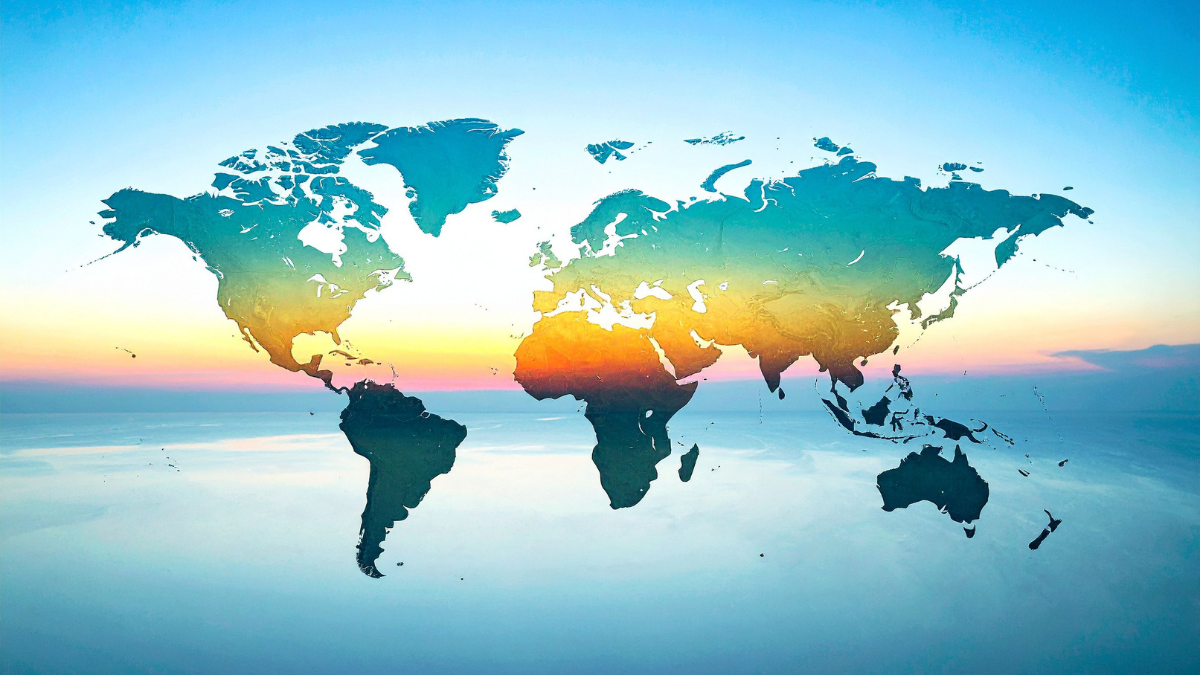
Scientists have a new warning for the world: a Super El Niño may be forming — and it could reshape global weather patterns by 2026. A new study from the World Meteorological Organization (WMO) and leading climate research institutes suggests that ocean temperatures in the Pacific are rising faster than expected, signaling the return of one of Earth’s most powerful natural phenomena.
El Niño occurs when the Pacific Ocean becomes unusually warm, affecting wind and rain patterns around the globe. Its opposite, La Niña, cools the same region and often brings the reverse effects. But a Super El Niño is a much stronger version—capable of intensifying floods, droughts, heat waves, and even food shortages across continents.
Dr. Rohan Deshmukh, a senior climate scientist with the Indian Institute of Tropical Meteorology, says, “A Super El Niño can shift the world’s climate like a seesaw. It doesn’t just make some places wetter and others drier. It changes entire systems—monsoons, crops, and ocean currents.”
According to the new climate models, the Pacific’s surface temperature has already risen by about 1.2°C above normal, and deep-sea heat storage continues to climb. This buildup suggests that by mid-2026, El Niño could reach record-breaking strength—potentially surpassing the 1997–98 and 2015–16 events that caused billions in damage worldwide.
For India and South Asia, that could mean weaker monsoons, heat waves, and reduced crop yields, especially for rice and pulses. For regions like South America, El Niño often brings heavy rains and landslides, while parts of Africa and Australia may face severe drought. North America typically experiences warmer winters and more wildfires in the western states.
But this story is not just about weather charts—it’s about people. In 2015, the last strong El Niño affected over 60 million people globally. Rivers dried up, farms failed, and diseases like dengue and cholera spread faster as temperatures rose. “Children and families in rural areas are often the first to feel the impact,” says Dr. Maria Cortez, a UNICEF climate resilience expert. “When crops fail or floods hit, education and nutrition suffer too.”
The WMO report emphasizes that 2024 and 2025 already saw record global heat. El Niño’s expected return in 2026 could push the planet’s average temperature temporarily beyond 1.5°C, the critical threshold outlined in the Paris Climate Agreement. This doesn’t mean the goal is permanently lost—but it’s a warning that climate action must accelerate now.
So, what causes El Niño in the first place? It starts deep beneath the ocean’s surface. Normally, strong trade winds blow warm water westward across the Pacific, piling it up near Indonesia. But during El Niño, these winds weaken. Warm water flows back east toward South America, changing the balance of the atmosphere. Clouds, rain, and storms shift, affecting weather thousands of kilometers away.
Scientists call it a “teleconnection”—a distant ripple effect. That’s why a warm ocean in the Pacific can change rainfall in India or temperature in Africa. “It’s nature’s chain reaction,” explains Dr. Deshmukh. “One ocean current can change the life of a farmer half a world away.”
This upcoming Super El Niño is also expected to interact with climate change, creating what experts describe as a “climate amplifier.” Human-driven warming adds extra energy to the system, making each natural event more intense. Oceans store about 90 percent of this heat, so even small changes there can unleash huge atmospheric effects.
For schools and families, understanding El Niño can be an educational opportunity. Many teachers are using weather models and satellite maps to explain climate patterns to students. In Chennai and Mumbai, geography clubs are tracking ocean temperature data using NASA and Indian Meteorological Department updates. Students learn how global phenomena connect to local events—why a change in Pacific currents might decide whether their city floods or stays dry.
Experts say awareness is key. “We can’t stop El Niño,” says Professor Ellen Wright of the UK Met Office. “But we can prepare for it.” She suggests that governments strengthen early-warning systems, farmers adjust planting cycles, and schools include climate adaptation lessons in their curriculum. These steps help build resilience long before the storm clouds arrive.
Communities that faced El Niño before have learned valuable lessons. In the Philippines, school roofs are being reinforced to withstand typhoons. In Peru, farmers are switching to faster-growing crops that can survive erratic rains. In southern India, NGOs are building water reservoirs and teaching students how to monitor local rainfall. These small actions, experts say, can save lives.
Scientists are also developing AI-powered climate models that simulate how El Niño interacts with global warming. The new WMO forecast relies on such systems, which process trillions of data points from satellites, buoys, and deep-ocean sensors. This technology has improved prediction accuracy by nearly 40 percent compared to models from a decade ago.
However, predictions are only as useful as the action that follows. “Knowing early doesn’t matter if we don’t use that knowledge,” warns Dr. Cortez. “Governments must link forecasts to community plans—where to store food, how to protect children, and how to manage heat stress in schools.”
The Super El Niño forecast is a reminder of how connected the planet is. A single ocean current can influence rain in India, snow in Canada, and fires in Australia. For young readers, it’s also a lesson in how science can see the future—and how humans can change its outcome through care and cooperation.
While the idea of more extreme weather sounds frightening, experts emphasize that awareness leads to action. Children can learn about water conservation, tree planting, and energy efficiency—the building blocks of climate resilience. “Every student who understands climate patterns is part of the solution,” says Dr. Deshmukh.
The world may face stronger storms and hotter summers in 2026, but knowledge is a kind of umbrella. If families, schools, and governments prepare together, this El Niño doesn’t have to become a disaster. It can become a turning point—a reminder that the forces shaping our weather also shape our choices.
The ocean is sending signals, scientists say. The question now is whether we’re ready to listen.