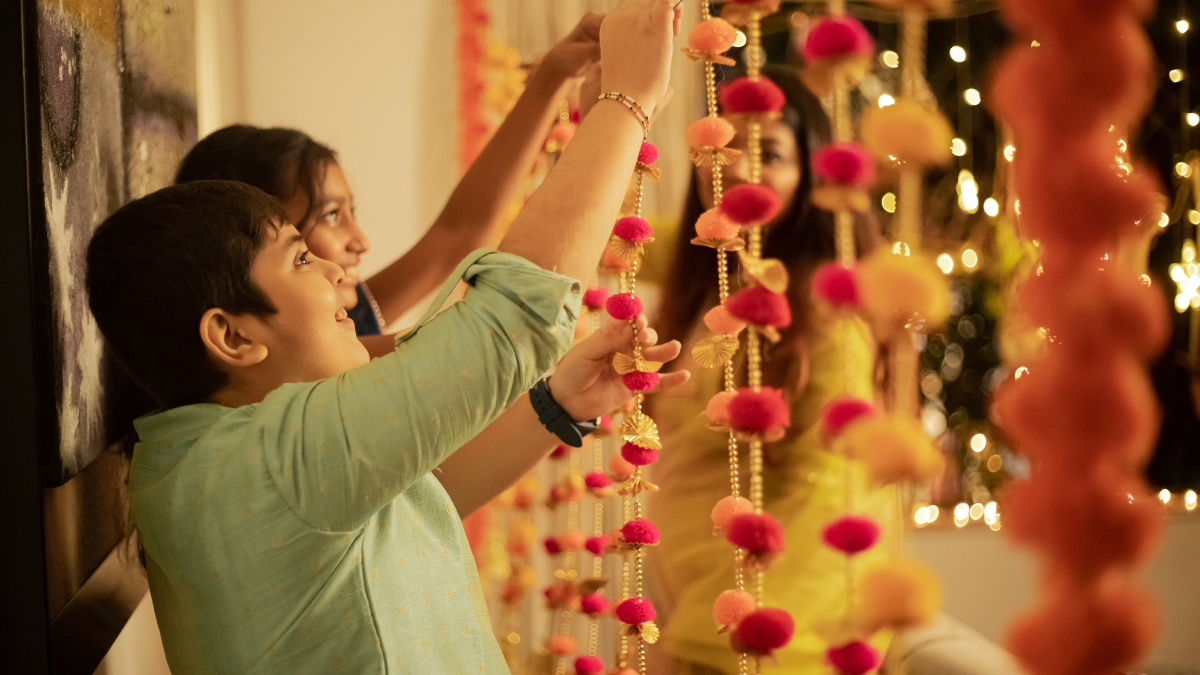
For the first time in history, California has officially recognized Diwali — the Festival of Lights — as a school holiday, marking a milestone moment for cultural inclusion in the United States. The announcement, made earlier this month, has been celebrated by Indian-origin families, students, and educators across the state as a victory for diversity and representation in education.
The decision comes after years of petitions and community advocacy led by parents, teachers, and lawmakers from California’s growing South Asian population. The move ensures that public schools across the state will now remain closed on Diwali, allowing students and teachers to celebrate the festival with their families without having to miss classes or exams.
California Governor Gavin Newsom and State Assembly member Ash Kalra supported the bill that officially designates Diwali as a state-recognized school holiday. “California thrives on diversity,” Kalra said during the signing ceremony. “Recognizing Diwali is more than adding a holiday — it’s acknowledging the values of light over darkness, knowledge over ignorance, and hope over despair.”
For Indian-American families, the news is deeply emotional. For decades, students who wished to celebrate Diwali often had to request leave or miss school activities. “My daughter used to rush her prayers before the school bus came,” said Priya Nair, a parent from Fremont. “Now she can celebrate freely — dress up, visit friends, and light diyas without guilt. It’s a proud moment for us.”
California is now the second U.S. state after New York to formally recognize Diwali as an official public school holiday. Earlier in 2023, New York City’s school board added the festival to its academic calendar after strong community campaigns. Other states, including New Jersey, Illinois, and Texas, are reportedly considering similar steps as their South Asian populations continue to grow.
The recognition reflects the changing face of America’s classrooms. According to U.S. census data, over 600,000 Indian-origin residents live in California, making it home to one of the largest Indian diaspora communities outside India. In districts such as Cupertino, Fremont, and San Ramon, Indian-origin students make up more than 20% of total school enrollments.
Teachers say the move sends a strong message about inclusion and cultural respect. “When we teach students about global festivals, we tell them the world is diverse,” said Ms. Rodriguez, an elementary school teacher in Los Angeles. “Now our calendar reflects that truth. Every child deserves to see their culture respected.”
Students are equally thrilled. “I used to explain Diwali to my friends every year,” said 13-year-old Aarav Patel, a middle school student from San Diego. “Now it’s on the calendar like Christmas and Hanukkah. It makes me feel seen.”
Schools across California plan to integrate Diwali-themed educational activities in the weeks leading up to the holiday. Some teachers have already begun designing lesson plans on the cultural, historical, and environmental significance of Diwali — exploring how the festival is celebrated across different religions such as Hinduism, Sikhism, Jainism, and Buddhism.
Beyond cultural pride, the decision also carries lessons in civic inclusion. Education experts say recognizing diverse festivals helps students build empathy and respect for global traditions. “Children learn that diversity is not a topic — it’s our shared reality,” said Dr. Maria Lee, an education sociologist at UCLA. “When schools recognize Diwali, they signal that inclusion isn’t just celebrated; it’s practiced.”
For many Indian families who migrated to the U.S. in the past few decades, the move feels like a generational bridge. “When we first arrived in the 1990s, explaining Diwali to neighbors felt like teaching a new language,” said Suresh Iyer, a community volunteer. “Now our children are growing up in a country that understands their roots. It’s integration, not assimilation.”
The recognition also aligns with broader discussions about representation in American education. Over the past few years, schools have begun expanding their holiday calendars to include observances like Eid, Lunar New Year, Juneteenth, and Indigenous Peoples’ Day, ensuring no cultural group feels excluded. Diwali’s inclusion adds another chapter to that ongoing evolution.
Even non-Indian communities have welcomed the change. Many parents see it as a learning opportunity for their children. “We plan to attend our neighbor’s Diwali celebration this year,” said Jennifer Blake, a parent from Sacramento. “My son is curious about the lights, sweets, and stories. That’s what America is about — sharing.”
The economic impact of the decision is also being noted. Diwali, which often involves family gatherings, gift exchanges, and community fairs, could boost local businesses and cultural events. California’s Indian Cultural Centers and Hindu temples are preparing for larger crowds this year, with some planning open community celebrations that welcome all faiths.
The symbolic meaning of Diwali — victory of light over darkness and good over evil — resonates beyond religion. Lawmakers emphasized that the festival’s universal message of hope makes it especially relevant in today’s times. “In an age of division, Diwali reminds us to shine light on understanding and compassion,” Governor Newsom said during a public address.
For Indian-American children, the recognition goes beyond a day off from school. It’s about belonging. “This holiday tells our kids that who they are matters,” said community leader Poonam Verma, who helped organize advocacy campaigns. “It shows that their identity is not just tolerated — it’s celebrated.”
Several U.S. universities, including Stanford, UC Berkeley, and UCLA, have also started holding Diwali events on campus, blending music, dance, and cultural storytelling. “It’s a way for young people to stay connected to their heritage,” said Professor Raj Malhotra, who organizes cultural nights at UC Berkeley. “When institutions recognize these moments, it validates students’ cultural confidence.”
As California’s school districts prepare to observe the first official Diwali holiday, the move is being hailed as a milestone in multicultural education. Experts predict that this recognition will inspire other states — and perhaps other countries — to follow suit.
For now, the joy is simple. Across California, children are already counting down to Diwali — planning lantern crafts, rangoli designs, and family feasts. “This year,” said Aarav, smiling, “I won’t have to explain why I missed class. The whole school will know it’s Diwali.”
A small change in the calendar has turned into a big moment for cultural unity — a reminder that when light shines in one classroom, it can brighten the world.