The quiet town of Khed in Maharashtra has found a new reason to celebrate. A small government school here has achieved what many elite institutions only dream of — a Global Education Impact Award for innovative learning and community-driven teaching. The recognition, presented by an international education forum, has drawn national attention. India’s Union Education Minister Dharmendra Pradhan praised the school for showing how vision, teamwork, and compassion can transform even the simplest classrooms into centers of excellence.
In an event that turned the school’s dusty courtyard into a stage of pride, the minister congratulated the teachers, students, and local panchayat for redefining rural education. “Khed has shown that true innovation does not need big budgets or fancy buildings,” he said. “It begins with belief — belief that every child, wherever they are born, deserves the best education possible.” His words echoed across the crowd of parents, teachers, and children waving paper flags and handmade posters that read “Our School, Our Pride.”
The Zilla Parishad Primary School, Khed, stood out among 3,000 global entries for its unique ‘Learning by Living’ model, a system that blends classroom subjects with real-life community projects. Students learn mathematics through farming data, study environmental science by maintaining local water bodies, and practice English through storytelling sessions with senior citizens. This model, both local and inclusive, impressed global juries who hailed it as an example of “education that grows from the soil.”
For Headmaster Vijay Patil, the award is more than a trophy. “It’s a victory for every rural child who dreams big,” he said, smiling beside his team. “Our students are not only learning lessons — they are living them. We wanted to make education relevant to their lives.”
The story of the Khed school is a story of transformation through persistence. Ten years ago, the school struggled with poor attendance, crumbling walls, and limited staff. Dropout rates were high, and many parents preferred sending their children to work in nearby fields. In 2015, a group of teachers decided to rebuild not just the school, but the community’s trust in education. They introduced hands-on projects, weekend parent sessions, and student-led clean-up drives. Gradually, the school became the heart of the village.
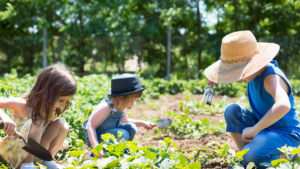
Today, classrooms are alive with experiments, models, and wall murals painted by students. The school library — once a single shelf of old textbooks — now hosts story circles, where children read aloud in Marathi, Hindi, and English. The school’s “Eco Rangers Club” maintains a vegetable garden that supplies mid-day meals. Even visitors from abroad have admired how effectively the school connects Sustainable Development Goals (SDGs) with daily learning.
The Global Education Impact Award, given annually by the World Schools Forum in Singapore, recognizes schools that integrate innovation, sustainability, and inclusion. Khed’s selection marks the first time a rural Indian government school has received this honor. The award panel cited the school’s success in linking traditional learning with social responsibility — a model that “teaches empathy as deeply as arithmetic.”
During the felicitation, the Education Minister praised the school’s efforts as a model for the entire country. “When education grows out of community, it grows stronger roots,” he said. “We will take Khed’s model to every district in India.” The ministry has announced plans to include the school in its upcoming ‘Best Practices Repository’, allowing other schools to learn from its journey.
Students, meanwhile, are already dreaming bigger. Eleven-year-old Sonal Jadhav, who led a project on recycling rainwater, said, “We didn’t know people from other countries would notice us. Now we want to make a book of our ideas.” Her classmate Rahul, who helped build a bamboo compost pit, added, “It’s fun to study like this. We learn from our mistakes and from nature.”
Teachers attribute the school’s rise to collective effort. “Every child matters here — that’s our philosophy,” said teacher Anita More, who runs reading workshops for early learners. “We mix modern methods with local wisdom. If a child learns measurement by helping her mother in the kitchen, that’s learning too.”
The Education Department has also recognized the Khed team’s success in integrating technology with local curriculum. Using a low-cost digital lab powered by solar panels, teachers record video lessons in Marathi and share them with neighboring schools via WhatsApp. The school’s ‘Digital Dada-Dadi’ initiative, where grandparents learn smartphone use from children, has become a community favorite.
Officials say such examples are vital as India implements NEP 2020, which emphasizes foundational literacy, creativity, and experiential learning. “Khed proves that NEP’s spirit can thrive even without luxury,” said Joint Education Director Sunil Deshmukh. “It shows how policy becomes practice when people believe in change.”
Beyond accolades, Khed’s success carries a powerful message about equity. It challenges the idea that excellence is urban. “We want this award to remind everyone — talent is not limited to cities,” said headmaster Patil. “The soil of rural India is full of innovation. It just needs recognition.”
The Minister’s visit also brought practical promises. The government plans to allocate funds for new classrooms, smart boards, and a science laboratory. The school will mentor five neighboring institutions under a ‘Cluster Leadership Program’, helping them replicate its model of participatory learning.
The community’s pride is unmistakable. Parents who once hesitated to send children to school now volunteer during weekend workshops. Local farmers donate part of their harvest for school meals. The panchayat built a small amphitheater for children’s performances. “This school gave us dignity,” said Savita Gaikwad, a mother of two. “Now our children teach us to dream.”
Educationists across India are taking note. The Khed story is being cited at national seminars and education summits. Several states, including Odisha, Assam, and Madhya Pradesh, have requested documentation of its learning practices. The UNESCO India office has reportedly reached out to study the model for a future case report on grassroots innovation.
As the sun set on the felicitation ceremony, children danced barefoot on the school grounds — a spontaneous celebration of pride and possibility. Their laughter mixed with applause, and for a moment, Khed felt like the center of the educational world.
In a time when schools everywhere chase technology, rankings, and metrics, Khed reminds the world that the heart of education still beats in connection — between teachers, learners, and their land. Its award is not just a medal. It is a mirror reflecting what India’s schools can become when passion leads policy and learning begins with life itself.
As the minister said before leaving, “If one rural school in Khed can win the world’s heart, imagine what a thousand such schools can do for India’s future.”