At just sixteen, Ridhima Pandey from Uttarakhand has already spoken at the UN, inspired schoolchildren across India, and filed petitions demanding climate accountability. But this week, her voice reached one of the world’s most influential listeners — Pope Francis.
Ridhima was among a small group of global youth invited to the “Faith and Climate Summit 2025” held at the Vatican City, where religious and environmental leaders gathered to discuss moral responsibility toward the planet. Dressed in a simple white kurta and carrying a green folder of handwritten notes, Ridhima stepped to the podium and delivered a message that moved the audience to a standing ovation. “We, the children, are not asking for miracles,” she said softly. “We are asking you to stop breaking your promises to our planet.”
The meeting, part of the Vatican’s ongoing “Laudato Si’ Mission for Earth”, marked a rare moment where faith and science shared the same stage. Pope Francis, who has long called climate change a “moral crisis,” listened attentively as the Indian student described how floods and landslides have devastated her home state of Uttarakhand. “My school was closed for weeks because of landslides,” Ridhima told him. “We watched trees fall, bridges break, and families lose homes. For us, climate change isn’t in books; it’s in our backyard.”
After her speech, Pope Francis personally met the young activist. Witnesses say he smiled warmly, placing his hand on her shoulder, and told her, “You remind us that courage begins young.” The meeting symbolized how youth activism and moral leadership can align for a shared goal: protecting the planet for future generations.
Ridhima’s journey began when she was just nine years old. Disturbed by flash floods in Kedarnath and the melting glaciers of the Himalayas, she filed a legal petition against the Indian government in 2017, demanding stricter enforcement of environmental laws. Since then, she has been recognized by UN Environment, BBC 100 Women, and TIME Magazine’s Young Leaders for Change.
At the summit, she shared the stage with youth representatives from the Philippines, Brazil, Kenya, and Sweden, all highlighting how climate change is not just an environmental issue but a question of fairness. “Children from poor countries suffer the most even though they pollute the least,” she said. “That’s not just science; that’s injustice.”
The event’s organizers emphasized that involving young voices like Ridhima’s brings urgency to slow-moving climate talks. Cardinal Pietro Parolin, Vatican Secretary of State, said, “The voices of children awaken conscience faster than any policy report. They remind us what is truly sacred — life itself.”
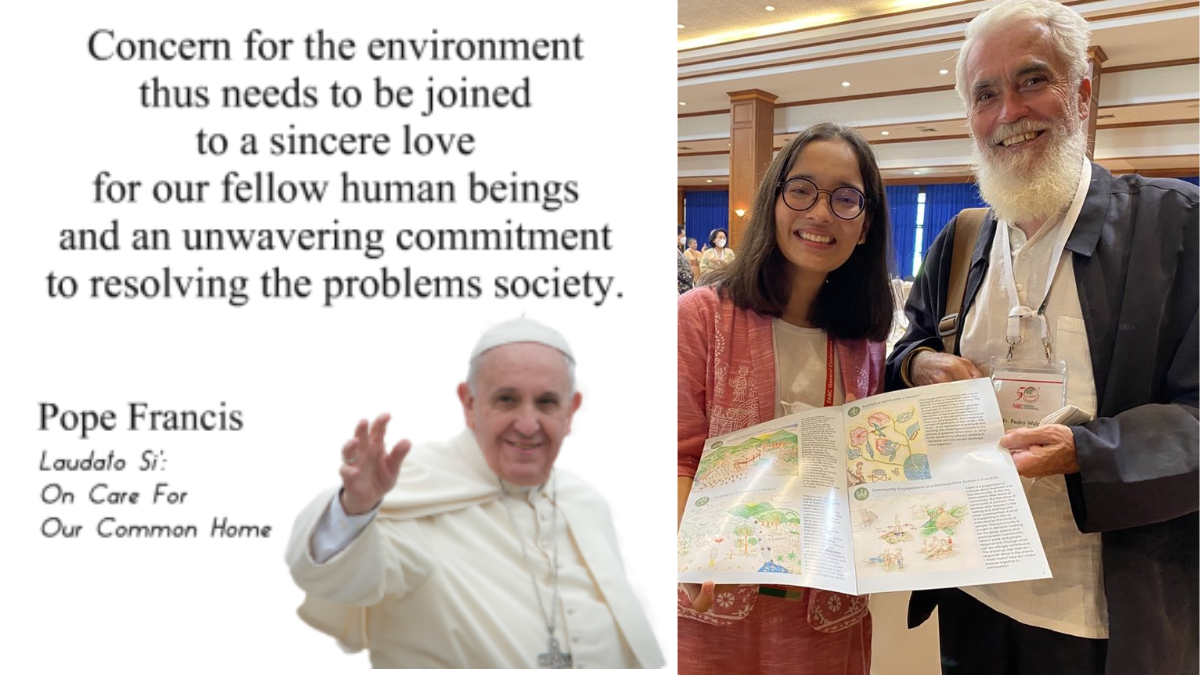
In her address, Ridhima also quoted from Pope Francis’s own encyclical Laudato Si’ (“On Care for Our Common Home”), urging world leaders to act beyond promises. “When we destroy forests, pollute rivers, or burn coal, we destroy the future we say we love,” she said. Her words echoed through the ornate hall, bridging generations, faiths, and languages.
The Pope later issued a joint statement with youth delegates, calling for “climate justice rooted in compassion and action.” It urged nations to phase out fossil fuels, protect indigenous lands, and integrate environmental education in all schools by 2030. The Vatican announced plans to create a Global Faith Youth Network that will connect religious institutions with student climate clubs worldwide — an idea first proposed by Ridhima during a preparatory workshop.
Environmental experts praised the meeting as symbolic yet powerful. “This is the diplomacy of hope,” said Dr. Vandana Shiva, environmentalist and author. “When a teenager from India can influence spiritual leaders and policymakers at the Vatican, it shows how youth are rewriting the rules of global engagement.”
Back in India, Ridhima’s school in Haridwar held a special assembly to watch her speech livestream. Students cheered when she mentioned India’s monsoon challenges and urged her peers to “study climate science as seriously as math.” Teachers said the moment reminded them of Greta Thunberg’s address at the UN, but with an Indian voice that blended courage with calm.
Ridhima told reporters that she doesn’t see herself as a celebrity or activist. “I’m just a student who loves rivers and trees,” she said. “When nature hurts, I feel responsible to speak.” Her humility, mixed with determination, has made her a role model across South Asia, where climate disasters affect millions of children every year.
Experts say the Vatican’s recognition of youth climate leaders like Ridhima can influence global policy in subtle but meaningful ways. “Religious institutions reach billions of followers,” said Dr. Michael Haines, an environmental sociologist. “When faith and science stand together, change accelerates.”
The meeting also carried a deeply personal message for children everywhere. It showed that activism doesn’t require anger — it needs clarity, empathy, and persistence. As Ridhima left the Vatican courtyard surrounded by reporters, she smiled shyly and said, “If one child can speak, maybe a thousand will act.”
Her next goal is to expand her environmental education initiative “Earth Guardians India,” which helps schools conduct green audits and tree-planting drives. She plans to work with both government and NGOs to include climate awareness modules in middle-school curricula.
The story of Ridhima Pandey’s meeting with Pope Francis is not just about two individuals from different worlds — it’s about how hope can cross borders, faiths, and generations. In her words, “The Earth doesn’t belong to us; we belong to the Earth.”
As she returned home to India, the teenager carried no medal or trophy — only a handwritten note from the Pope that read: “Keep speaking, child. The world needs your voice.”
And perhaps that, more than any award, is the sign of a world slowly learning to listen.