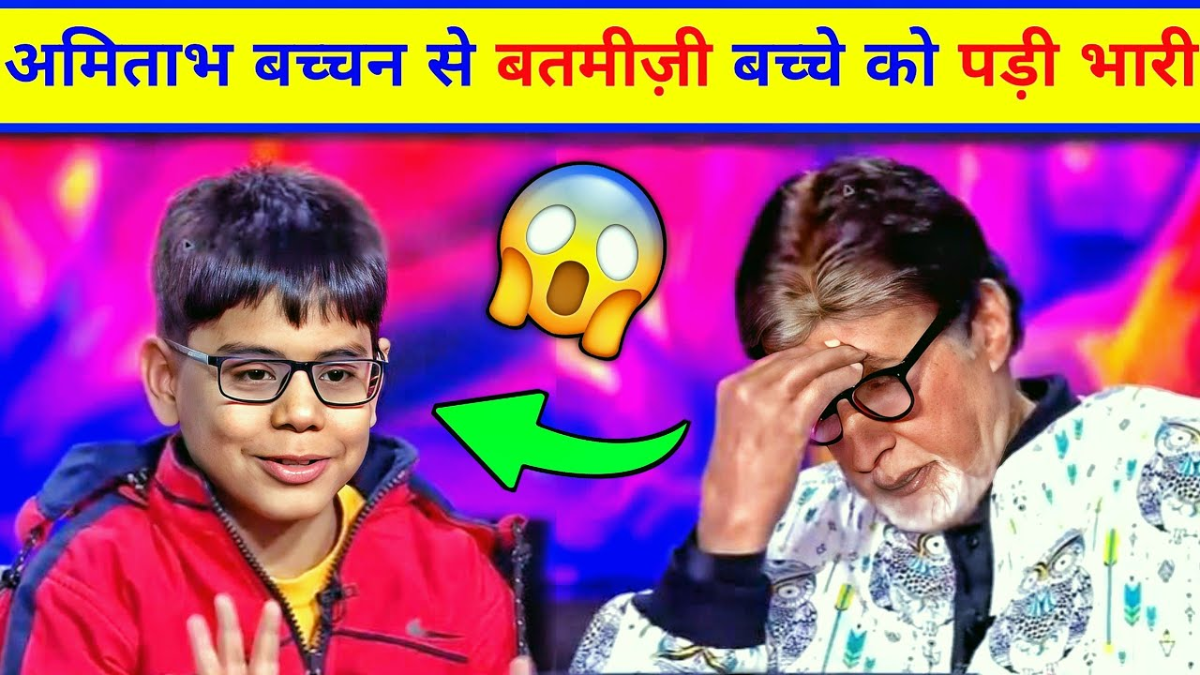
A 10-year-old’s brief exchange on a national quiz show has ignited a national conversation about children and public scrutiny. During a recent episode of Kaun Banega Crorepati (KBC 17), young contestant Ishit Bhatt from Gujarat asked host Amitabh Bachchan to skip rule explanations, asserting he already knew them. The moment, caught on camera, went viral — but what followed was far more than entertainment: it exposed how society views confidence, childhood, and media judgment.
In the episode, the child said, “Mere ko rules pata hai, isliye aap mereko abhi rules samjhane mat baithna (I know the rules, so don’t explain them to me now).” He also urged the host to proceed, saying, “Arre option daalo (Give me the options).” These remarks, coupled with his assertive tone, triggered a wave of online reactions. Many labeled him “disrespectful” or “arrogant,” while others defended his boldness. The Times of India+4India Today+4The Economic Times+4
The Backlash and the Defense
Social media exploded. Some users criticized Ishit’s manners and questioned parenting styles. Others saw the backlash as excessive, turning a child into a public punching bag. Singer Chinmayi Sripaada called out netizens: “Adults on Twitter were abusive themselves, yet they pick on a kid.” The Times of India+2The Economic Times+2 Meanwhile, a Chandigarh-based teacher defended the child, citing a phenomenon he called “six-pocket syndrome” — the idea that children today are raised by many caregivers, which can lead to overconfidence or entitlement. Moneycontrol
Some media analysts questioned whether the clip was edited or presented for emotional impact. Was Ishit fully aware he was on national television? Did he receive coaching for the show? Should children be judged so harshly for a few seconds of screen time? These questions lie at the heart of this debate. The Times of India+2The Economic Times+2
Confidence, Respect, and Childhood Boundaries
Defining the boundary between confidence and arrogance is tricky at any age — but for children, it’s even more complex. On one hand, confidence is essential; on the other, traits like patience, humility, listening, and respectful tone matter in social settings. Reality TV provides little room for reflection or growth in those moments.
Psychologists warn that children often mimic what they see. If media rewards boldness without tempering it with respect, young viewers may misunderstand where confidence ends and rudeness begins. A child’s impulse, nerves, or excitement may appear aggressive on camera. That does not always equal poor character.
Moreover, media environments often lack safeguards. Young contestants may not fully grasp the consequences of what they say when millions watch. The pressure to perform, the stakes of social media virality, and inadequate guidance before going on air can all contribute to impulsive behavior.
For Parents, Producers, and Viewers
This incident offers lessons for everyone involved:
-
Parents and Guardians: Children need guidance on public behavior, media presence, and emotional control before they enter the spotlight. Confidence should be balanced with respect, not suppressed.
-
Media Producers: When children are on public platforms, they should be briefed thoroughly, supported emotionally, and protected from harsh post-show criticism.
-
Viewers and Netizens: Public criticism of children — especially on social media — can leave deep emotional scars. Critique ideas or behavior, not personalities. Empathy matters more than clicks.
Amitabh Bachchan’s response to the situation was calm and graceful. He later remarked that “sometimes children make mistakes because of overconfidence.” Many viewers praised him for handling the moment with dignity rather than humiliation. The Economic Times+2The Economic Times+2
A Moment, Not a Judgment
Ishit did not win the show, but he won a place in public debate. In that moment, the screen held not just a child contestant, but a mirror for how society treats children in public spaces — demanding greatness instantly, yet quick to judge when norms are crossed.
The debate is far from over. It touches on how we raise children, how we frame confidence, and how media should balance viewership with responsibility. In the end, one truth is clear: children deserve space to be more than their 30 seconds on camera. They deserve kindness, guidance, and a chance to learn in a world that often forgets they are still growing.
Would you like me to prepare a sidebar or teachable-moment box for kids (ages 8–12) to accompany this article — explaining “confidence vs arrogance,” digital safety, and media empathy?