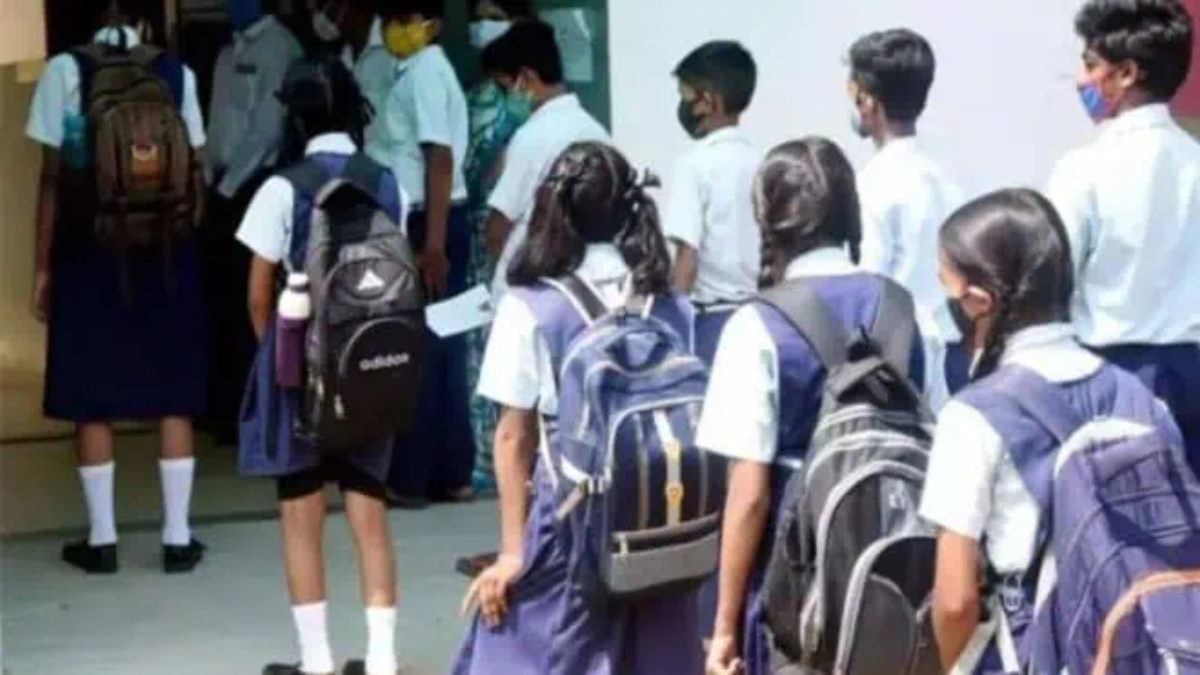
The right to education remains one of humanity’s most urgent promises — yet a staggering 272 million children and youth around the world are still not attending school, according to a new UNESCO Global Education Monitoring Report (2025). The figure, which covers preschoolers to secondary-level students, represents almost one in every six children globally.
The report, titled “Out of School: The Global Education Divide,” paints a worrying picture of what experts call a “silent learning crisis.” While the number of enrolled children has grown since 2000, progress has sharply stalled in the last five years. Conflicts, climate change, poverty, and digital inequality have all deepened the divide between children who can access classrooms and those who cannot. (unesco.org)
“Education is not recovering fast enough after the pandemic,” said Audrey Azoulay, UNESCO’s Director-General. “Millions of children, especially girls, are still excluded because of where they live or how much their families earn. The world is failing them.”
The data shows that 129 million girls and 143 million boys are currently out of school. Sub-Saharan Africa remains the hardest hit, accounting for more than half of all out-of-school children worldwide. In some war-torn countries like Sudan, Syria, and Afghanistan, entire generations risk growing up without formal education.
The problem isn’t limited to developing nations. In wealthier countries too, migrant children, refugees, and students with disabilities face growing barriers to learning. UNESCO found that even in parts of Europe and North America, marginalized children are more likely to drop out or never enroll due to language gaps, discrimination, or lack of support services.
India, despite major strides through initiatives like the Right to Education Act and Samagra Shiksha Abhiyan, still struggles with regional disparities. Rural areas, tribal belts, and conflict-affected zones have dropout rates two to three times higher than urban regions. Experts say COVID-19 widened this gap, as many students never returned after schools reopened.
Digital exclusion is another major factor. The shift to online learning during the pandemic benefited tech-enabled families but left millions behind. UNESCO estimates that one in three children globally still lack access to reliable internet or digital devices. “Learning cannot depend on luck or location,” said Manos Antoninis, Director of the Global Education Monitoring Report. “If a child is born in the wrong ZIP code, their future should not be predetermined.”
Climate change is also fueling school disruptions. In 2024 alone, floods in Pakistan, droughts in East Africa, and cyclones in Southeast Asia destroyed hundreds of schools, forcing thousands of children into temporary shelters. “Education is the first casualty of crisis and the last to recover,” said Dr. Stefania Giannini, UNESCO’s Assistant Director-General for Education.
Girls remain disproportionately affected. Cultural barriers, early marriage, and safety concerns continue to keep millions out of classrooms. In some regions, especially parts of the Middle East and South Asia, parents still prioritize sons’ education over daughters’. “Every time a girl drops out, we lose not only a student but an entire generation’s potential,” Giannini emphasized.
The report warns that without urgent intervention, the world will miss Sustainable Development Goal 4 (SDG 4) — ensuring inclusive, quality education for all by 2030. The organization calls for immediate investment in teachers, school infrastructure, and gender equality initiatives.
But amid the sobering statistics, there are glimmers of hope. Countries like Bangladesh, Kenya, and Vietnam have expanded community-based schooling and digital learning hubs that reach remote learners. India’s PM SHRI Schools initiative is modernizing government schools with smart classrooms, green campuses, and inclusive facilities. These examples show that progress is possible with commitment and creativity.
UNESCO’s new campaign, #EveryChildInSchool, aims to mobilize global citizens, governments, and tech companies to bridge educational gaps. It calls for collective responsibility — not just from policymakers, but from communities and individuals. “When we educate a child, we strengthen peace and prosperity,” Azoulay said. “When we leave one behind, we all lose.”
Education experts say the crisis demands a mindset shift. “We must stop treating education as charity and start seeing it as infrastructure — as essential as roads or electricity,” said Dr. Kiran Bedi, an education reform advocate in India.
Children’s rights groups are now urging action from the G20, where India continues to push global education as a development priority. They recommend doubling education aid, forgiving debts for low-income countries that reinvest in schooling, and expanding free secondary education for all genders.
For students, teachers, and parents worldwide, the 272-million figure is not just a number — it’s a reminder of the unfinished work in making education a universal reality. Each child outside the classroom represents a story untold, a dream deferred, and a chance lost for a better tomorrow.
The report concludes with a powerful message: “No child chooses to be left out of school. The world chooses when it looks away.”
As the global community reflects on that truth, the challenge is clear — ensuring every child, no matter where they are born, gets the chance to learn, grow, and light their own path forward.