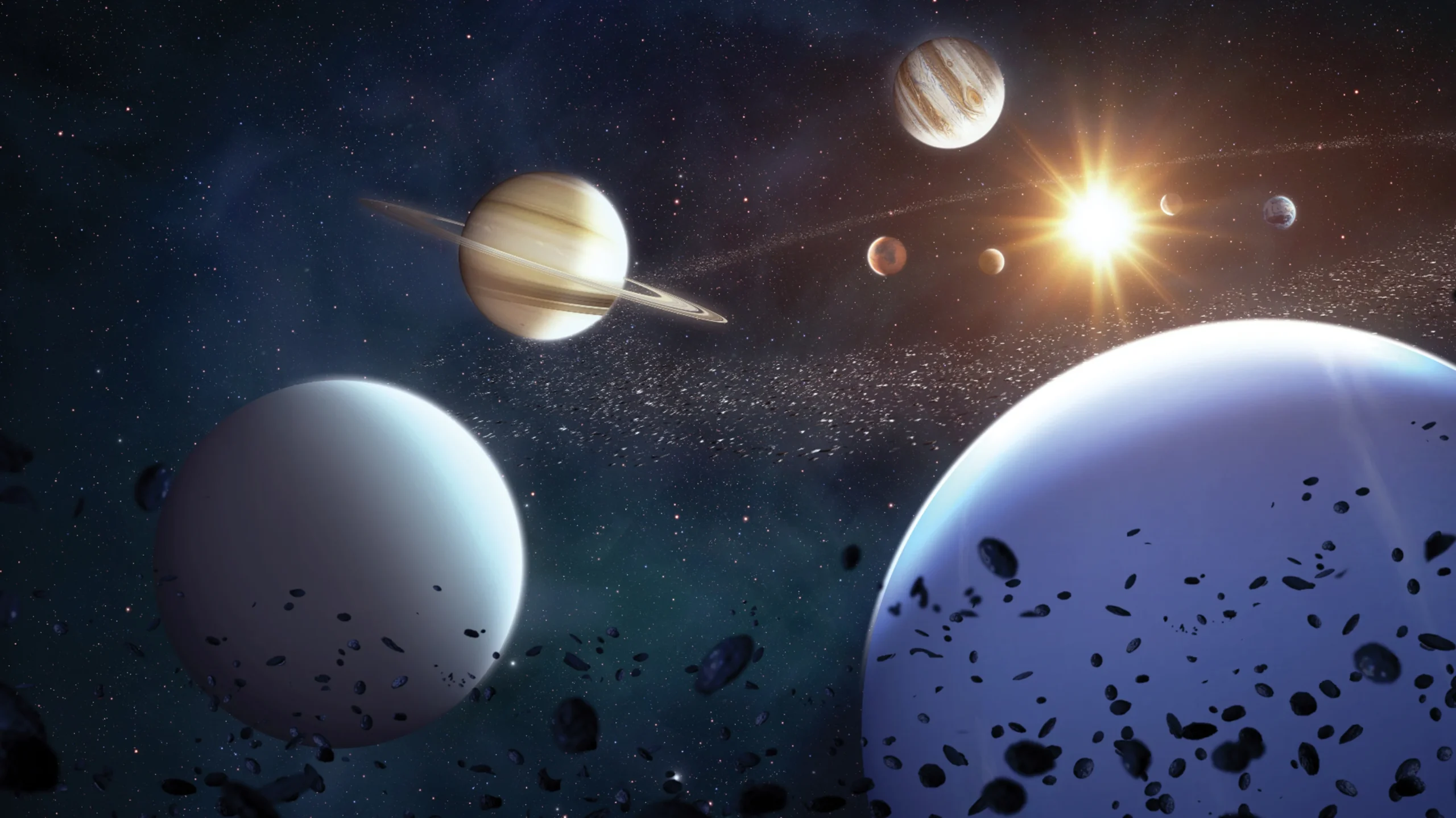
Scientists have discovered a new planet outside our solar system that may have water, and this exciting space news is trending because water is one of the key ingredients needed for life.
The planet, called an exoplanet, was found using powerful space telescopes. It orbits a distant star and lies in what scientists call the “habitable zone” — a region where temperatures may be just right for liquid water to exist.
What is an exoplanet?
An exoplanet is a planet that:
-
Orbits a star other than the Sun
-
Is far beyond our solar system
-
Can be rocky like Earth or large like Jupiter
Thousands of exoplanets have been discovered so far, but only a few show signs that they might support water.
Why this discovery is special
Scientists found clues that suggest:
-
The planet may have water vapour in its atmosphere
-
Temperatures might not be too hot or too cold
-
The planet could help scientists understand how Earth-like worlds form
This does not mean aliens have been found — but it helps scientists learn where life could exist in the universe.
How scientists find planets
Scientists use:
-
Space telescopes to watch stars carefully
-
Tiny changes in light when a planet passes in front of a star
-
Computer models to study planet size and atmosphere
Artificial intelligence is also helping scientists analyse space data faster than ever.
Why kids should care
-
Space discoveries spark curiosity and imagination
-
Future explorers may study planets like this
-
Learning science helps understand our place in the universe
Teachers say space science encourages big questions like “Are we alone?” and “How did Earth form?”
In short: Scientists have discovered a new planet that may have water, helping researchers search for Earth-like worlds in space.
Learning takeaway: Exploring space teaches us about science, curiosity and the endless possibilities beyond our planet. 🌍✨