Magnets may look simple, but they have a special power called magnetism, and this topic is popular because magnets are used everywhere — from school science kits to trains and technology.
A magnet is an object that can pull certain metals, like iron, towards itself. This pulling force is invisible, but very strong.
What makes a magnet special?
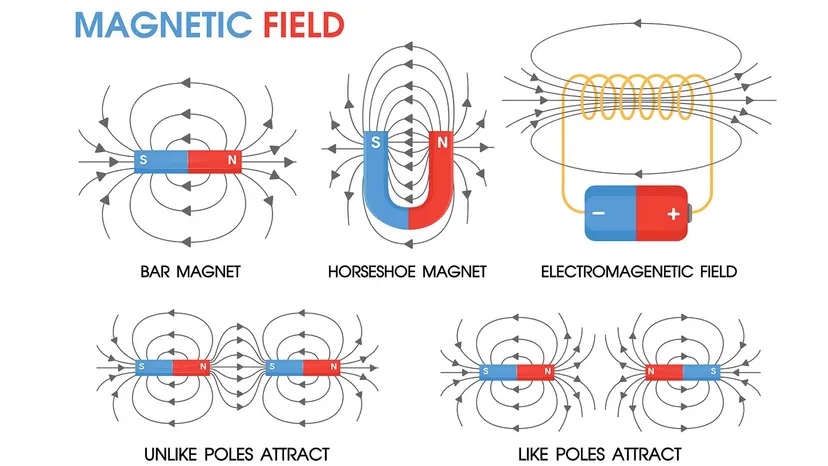
Magnets have two ends called:
-
North pole
-
South pole
These poles decide how magnets behave:
-
Opposite poles attract (pull together)
-
Same poles repel (push away)
That’s why two magnets sometimes stick together and sometimes push each other apart.
How magnets work
Inside a magnet are tiny particles called domains. When these domains are lined up in the same direction, the object becomes magnetic.
Some materials can become magnets, while others cannot. For example:
-
Iron, steel and nickel → magnetic
-
Wood, plastic and paper → not magnetic
Where do we use magnets?
Magnets are used in many everyday things, such as:
-
Refrigerator doors
-
Speakers and headphones
-
Electric motors
-
Credit cards and metro cards
-
Compasses for finding direction
High-speed trains in some countries even use powerful magnets to float above tracks!
Why kids should care
-
Magnets make science fun and hands-on
-
They help us understand forces we can’t see
-
Learning magnetism builds curiosity and problem-solving skills
Teachers say magnet experiments are a great way to explore physics in a playful way.
Scientists are also using magnetism in medical machines, space research and clean energy projects.
In short: Magnetism is a special force that allows magnets to attract or repel objects.
Learning takeaway: Invisible forces like magnetism help us understand how the world works — even when we can’t see them. 🧠✨