Have you ever wondered how we hear voices, music, thunder or bird sounds? This topic is popular in classrooms because sound is everywhere, yet it is invisible. Scientists say sound travels through vibrations, helping us communicate and understand the world.
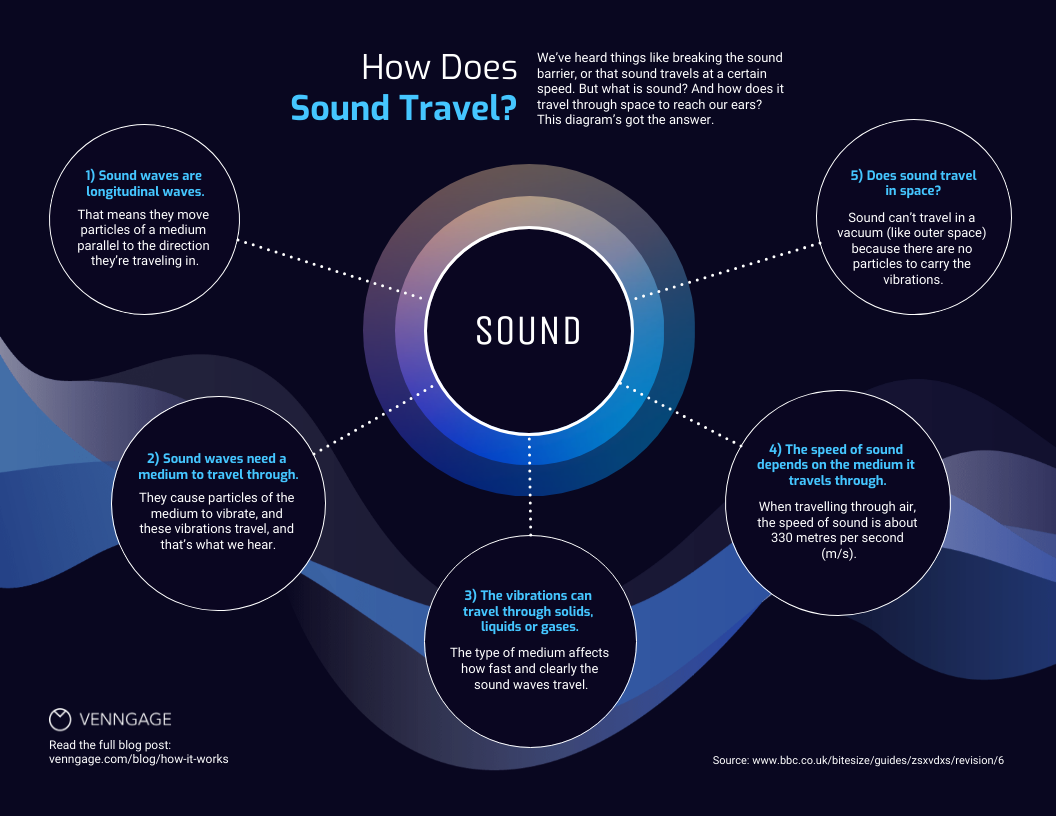
Sound is a type of energy made when something vibrates. These vibrations move through air, water or solid objects and reach our ears.
How sound is made
Sound is created when:
-
A guitar string is plucked
-
Hands clap together
-
A drum is beaten
-
Someone speaks or sings
These actions cause vibrations. The vibrations travel as sound waves.
How sound reaches our ears
Sound waves travel through:
-
Air (talking, music)
-
Water (whale songs travel very far underwater)
-
Solids (knocking on doors or walls)
When sound waves reach our ears, they make tiny parts inside our ears vibrate. Our brain then understands these vibrations as sound.
Why sound travels differently
Sound travels:
-
Faster in water than in air
-
Fastest in solid objects
-
Slower in air
That’s why you may hear a train through the tracks before hearing it through the air.
Loud and soft sounds
-
Loud sounds have strong vibrations
-
Soft sounds have weak vibrations
Very loud sounds can hurt our ears, which is why scientists advise keeping volume low while using headphones.
Why kids should care
-
Sound helps us talk, learn and enjoy music
-
Understanding sound helps in science and music
-
Future careers include sound engineers and scientists
Teachers say learning about sound helps children understand physics in daily life.
Scientists also use sound to study oceans, space and even earthquakes.
In short: Sound is made by vibrations and travels through air, water and solid objects to reach our ears.
Learning takeaway: Even things we cannot see — like sound waves — play an important role in how we live, learn and connect with others. 🔔🧠