Have you ever noticed that the Moon looks different on different nights? Sometimes it is round, sometimes half, and sometimes it almost disappears. This topic is popular because children often wonder why the Moon keeps changing its shape, even though it is always there in the sky.
The Moon does not actually change shape. What changes is how much of it we can see from Earth.
What is the Moon?
The Moon is:
-
Earth’s only natural satellite
-
A rocky object that orbits Earth
-
About one-fourth the size of Earth
The Moon does not have its own light. It shines because it reflects sunlight.
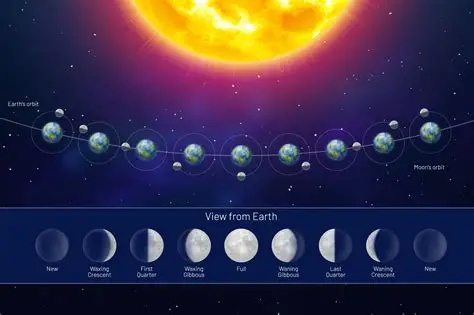
Why the Moon looks different
As the Moon moves around Earth:
-
The Sun lights up different parts of it
-
We see only the lit portion
-
The shape we see changes night by night
These changing shapes are called phases of the Moon.
The main phases of the Moon
The Moon goes through several phases, including:
-
New Moon – the Moon is not visible
-
Crescent Moon – a small curved shape
-
Half Moon – half of the Moon is visible
-
Full Moon – the entire Moon is bright
This full cycle takes about 29 days.
Why the Moon is important
The Moon helps Earth by:
-
Controlling ocean tides
-
Keeping Earth’s tilt stable
-
Lighting up the night sky
Tides affect sea life, fishing and coastal areas.
Moon myths and stories
Across cultures, people have:
-
Written stories and poems about the Moon
-
Used the Moon to track time and months
-
Celebrated festivals based on the full Moon
The Moon has inspired humans for thousands of years.
Why kids should care
-
Moon phases teach space science
-
Observing the Moon builds curiosity
-
It connects science with culture and history
Teachers often encourage children to keep a Moon diary to track its phases.
Fun fact
You always see the same side of the Moon from Earth!
In short: The Moon changes appearance because of how sunlight falls on it as it orbits Earth.
Learning takeaway: Watching the Moon helps us understand space, time and the beautiful rhythm of nature. 🌌🌕