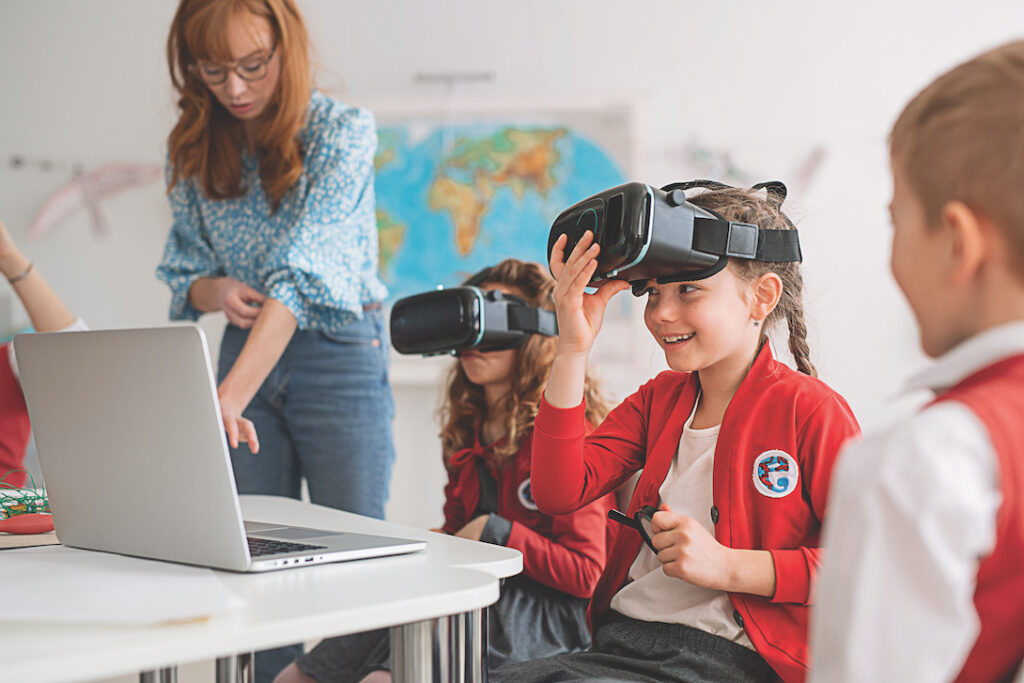
Teachers, education experts, and technology researchers are studying how virtual reality, often called VR, is changing the way children learn in classrooms, making this a trending education and technology news story. Virtual reality uses special headsets and software to create computer-made worlds that students can explore as if they were really there.
Virtual reality allows students to step inside their lessons. Instead of only reading about history or science in books, children can take virtual trips to ancient cities, deep oceans, rainforests, or even outer space. Teachers explain that this makes learning more exciting and easier to understand because students can see and experience things up close.
In science classes, VR helps students explore the human body, planets, and chemical reactions safely. For example, students can travel inside a cell or walk on the surface of Mars without leaving the classroom. Scientists say this kind of learning helps students remember lessons better because it feels real and interactive.
History lessons are also changing with VR. Students can visit historical places such as old castles, pyramids, or famous monuments and learn how people lived long ago. Teachers say this helps children imagine the past more clearly and understand different cultures and time periods.
For kids, this news matters because VR makes school more fun and engaging. Lessons feel like adventures instead of just reading or listening. Students who find it hard to concentrate in regular classes may find VR lessons easier to follow because they are more active and visual.
Virtual reality can also help students who cannot easily go on school trips. With VR, children can visit museums, zoos, and faraway countries without traveling. Experts say this makes learning more fair and accessible for all students, no matter where they live.
Teachers are also using VR to help students practice skills. In some schools, students use virtual classrooms to practice speaking in front of others or working as a team. Scientists say this can help build confidence and communication skills in a safe environment.
However, experts remind schools to use VR carefully. Wearing headsets for too long can cause eye strain or dizziness. Teachers plan short VR sessions and make sure students take breaks. Scientists say balance is important when using any technology.
Parents and teachers agree that VR should support learning, not replace teachers or real-life experiences. Classroom discussions, hands-on activities, and outdoor learning are still very important for children’s growth.
Schools are slowly adding VR tools as technology becomes more affordable. Some schools share VR equipment or use simple cardboard headsets with smartphones. This allows more students to experience virtual learning without high costs.
Experts believe virtual reality will continue to grow in education. As programs improve, lessons may become even more interactive and realistic. Learning could feel more like exploring and discovering than memorizing facts.
The study of virtual reality in education shows how technology can bring lessons to life. By using VR wisely, schools can help children learn in creative ways, spark curiosity, and make education more engaging for the digital generation.