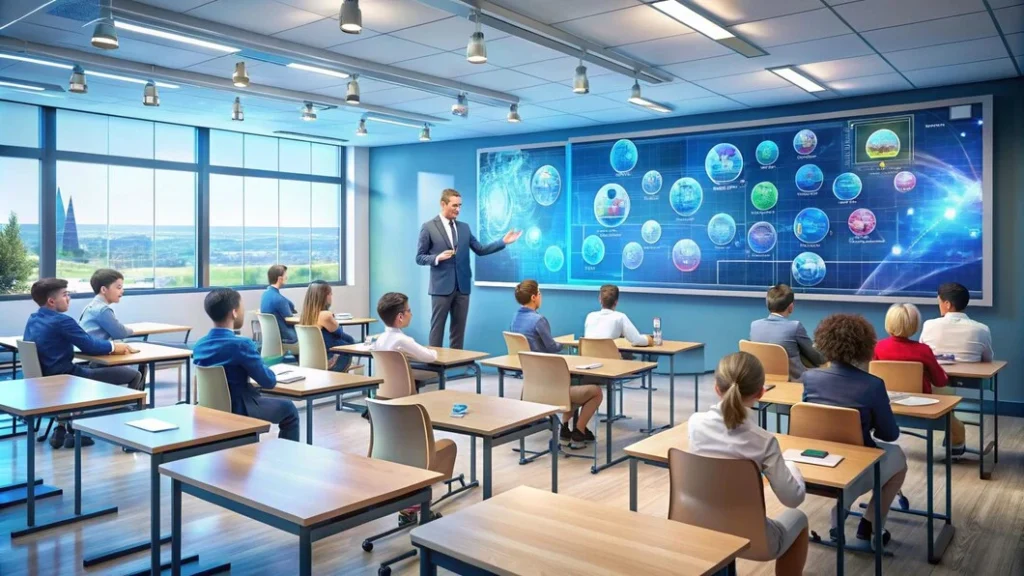
Educators, school leaders, and technology experts are studying how smart classrooms are making learning more interactive and engaging for students, making this a trending education and technology news story. Smart classrooms use digital tools such as interactive boards, tablets, projectors, and learning software to support teaching and help students understand lessons better.
In a smart classroom, traditional blackboards are often replaced with interactive screens. Teachers can display videos, diagrams, quizzes, and animations during lessons. Scientists explain that seeing moving images and colorful visuals helps students understand complex ideas more easily, especially in subjects like science, math, and geography.
Smart classrooms allow students to take part in lessons instead of just listening. Children can answer questions on tablets, solve puzzles on screens, or work together on digital projects. Teachers say this active participation helps students stay focused and interested, making learning feel more like teamwork than a lecture.
Technology also helps teachers understand how students are learning. Smart systems can show which topics students find difficult and which ones they understand well. This allows teachers to adjust lessons and give extra help where needed. Experts say this makes learning more personal and supportive.
For kids, this news matters because smart classrooms make school more fun and interactive. Lessons feel lively, and students can learn in different ways — by watching, listening, touching, and doing. This is helpful for children who learn better through visuals or hands-on activities.
Smart classrooms also support teamwork. Students often work in groups using shared screens or devices. This helps them learn communication, cooperation, and problem-solving skills. Scientists say these skills are important not only in school but also in future careers.
Another benefit is access to information. With internet-connected tools, teachers can show the latest facts, maps, or examples from around the world. This helps students connect lessons to real-life events and understand how learning applies outside the classroom.
However, experts remind schools to use technology wisely. Too much screen time can be tiring for the eyes, so teachers balance digital learning with reading, writing, discussion, and outdoor activities. Scientists say the goal is to support learning, not replace traditional teaching completely.
Parents and teachers also teach students about digital responsibility. Children learn how to use devices carefully, respect online rules, and stay safe while using technology. These lessons help students become smart and responsible digital citizens.
Many schools are slowly introducing smart classrooms based on their needs and budgets. Some start with just one smart board or a few tablets, while others build fully digital classrooms. Experts say even small steps can make a big difference in learning.
As technology continues to grow, smart classrooms are expected to become more common. New tools such as learning apps, virtual experiments, and interactive quizzes are being developed to support teachers and students.
The study of smart classrooms shows how education is changing with technology. By using smart tools in thoughtful ways, schools can create exciting learning spaces where students feel curious, confident, and ready to learn. Smart classrooms help combine the best of teaching and technology to prepare children for a bright and connected future.