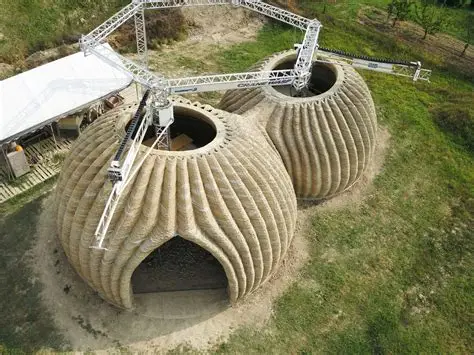
Scientists and engineers are developing 3D printing technology to build homes faster and more efficiently, making this an exciting science and innovation news story for children. 3D printing, once mainly used to create small objects like toys and tools, is now being used to construct full-sized houses.
A 3D printer works by building objects layer by layer. Scientists explain that instead of using ink like a normal printer, large construction printers use special concrete or building materials. The machine follows a computer design and carefully places material to form walls and structures.
One of the biggest advantages of 3D-printed homes is speed. Experts say some houses can be printed in just a few days. This makes the technology useful in areas where homes are needed quickly, such as after natural disasters.
For children, this news matters because it shows how technology can solve real-world problems. Faster construction means families can get shelter sooner. It also demonstrates how creativity and science work together.
3D printing can reduce waste. Traditional construction often leaves behind unused materials, but 3D printing uses only the exact amount needed. Engineers say this makes the process more environmentally friendly.
Another benefit is cost reduction. Scientists explain that automated construction reduces labor costs and materials, making housing more affordable in some areas.
Engineers carefully test printed homes to ensure safety and strength. The materials used must withstand weather, earthquakes, and other natural conditions.
Schools are introducing students to 3D printing in technology classes. Children use small 3D printers to design models and prototypes, helping them learn engineering basics.
Experts believe 3D printing could also be used in space exploration. Scientists are studying ways to use 3D printers to build shelters on the Moon or Mars using local materials.
Communities around the world are experimenting with this new construction method. Researchers continue improving printer speed, material quality, and design flexibility.
Parents and teachers encourage children to explore STEM subjects—science, technology, engineering, and mathematics—because innovations like 3D printing are shaping the future.
Scientists say 3D printing does not replace human workers entirely. Skilled professionals are still needed to design, supervise, and maintain projects.
The development of 3D-printed homes shows how innovation can address housing challenges. By using advanced technology, engineers are finding faster and more sustainable ways to build.
Learning about 3D printing teaches children that technology can create positive change. It highlights how imagination, computer design, and engineering come together to solve practical problems and improve lives worldwide.