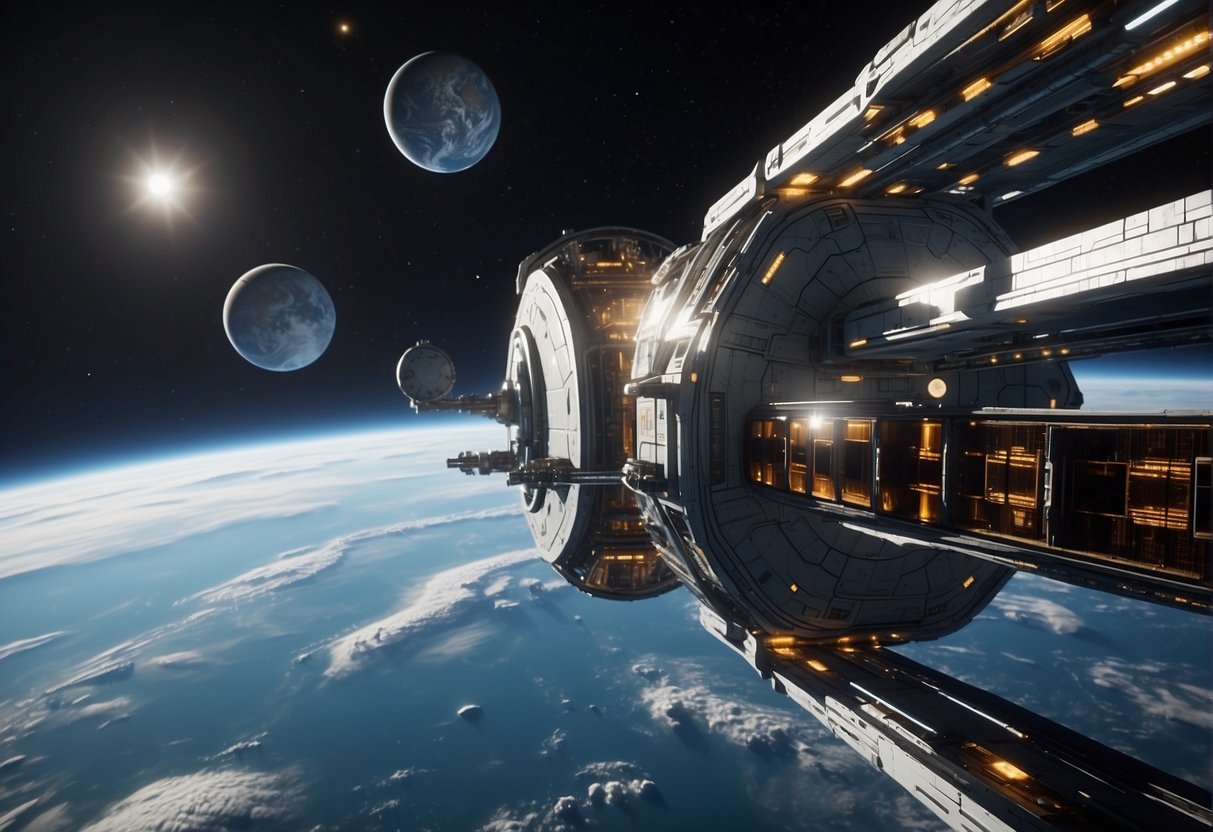
Scientists and space agencies are planning future space stations to support long-term missions beyond Earth, making this an exciting space science and exploration news story for children. Space stations are large structures placed in orbit around Earth where astronauts live and conduct research.
The current space stations allow astronauts to perform experiments in microgravity, which is a condition where gravity is very weak. Scientists explain that studying how plants, materials, and the human body behave in space helps improve knowledge for future missions.
Experts are now designing next-generation space stations that may orbit the Moon or support deeper space exploration. These stations could serve as stopping points for missions heading to Mars.
For children, this news matters because space research leads to discoveries that benefit life on Earth. Experiments conducted in space have improved medicine, materials science, and communication technology.
Future space stations may use advanced recycling systems to reuse water and air. Engineers are also designing compact habitats to provide astronauts with safe and comfortable living spaces.
Some private companies are collaborating with government space agencies to develop modular space stations. These modules can be connected to expand capacity.
Schools often introduce students to space science through interactive models and virtual tours.
Scientists emphasize the importance of international cooperation in building and operating space stations.
Researchers continue testing technologies such as artificial gravity and advanced solar panels.
The planning of future space stations shows how innovation prepares humanity for deeper exploration.
Learning about space habitats teaches children about engineering, teamwork, and scientific discovery.
By expanding space infrastructure, scientists aim to support safe, long-term missions that push the boundaries of exploration.