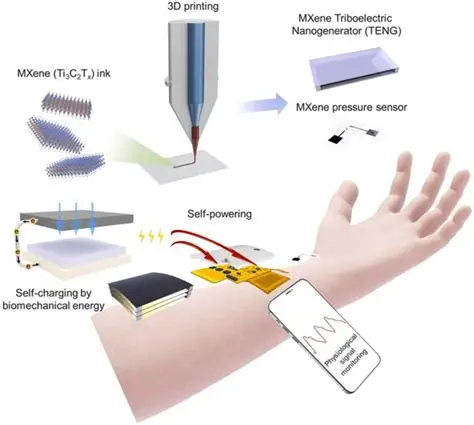
Scientists and biomedical engineers have developed a new wearable health patch that can monitor heart activity in real time, making this an important health and medical technology news story. The thin, flexible patch sticks to the skin and tracks heart rate, rhythm, and other important signals without needing bulky machines.
Heart monitoring is usually done in hospitals using large equipment. Experts explain that wearable patches make it easier for doctors to track patients remotely. The device collects data and sends it wirelessly to a smartphone or computer.
For children, this news matters because wearable health technology can make medical checkups simpler and less stressful. Early detection of heart irregularities can help doctors provide faster treatment.
The patch uses tiny sensors that detect electrical signals produced by the heart. These signals are similar to what is measured during an ECG (electrocardiogram) test.
Engineers designed the patch to be lightweight, waterproof, and comfortable to wear for long periods. Some versions can operate for several days on a single charge.
Researchers are testing the device in hospitals and clinics to ensure accuracy and safety.
Doctors say such wearable technology is especially helpful for patients living in remote areas who cannot visit hospitals frequently.
Schools teaching science and biology often use examples like wearable health devices to explain how technology supports medicine.
Experts emphasize that data privacy and secure transmission are important parts of digital healthcare.
Scientists continue improving battery life and sensor precision in wearable devices.
The development of real-time heart monitoring patches highlights how innovation can make healthcare more accessible.
Learning about medical technology teaches children how science helps protect human health.
By combining smart sensors and wireless communication, scientists are creating healthcare tools that are more convenient, efficient, and patient-friendly.