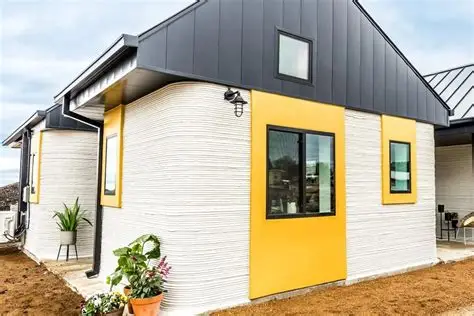
Scientists and engineers are developing 3D-printed homes that can be built faster and at lower cost, making this an important science and future technology news story. Using giant 3D printers, construction teams can now “print” the walls of a house layer by layer using special concrete mixtures.
A 3D printer used in construction works differently from a small desktop printer. Instead of ink, it uses a concrete-like material. Experts explain that the printer follows a digital design created by engineers and slowly builds the structure by placing material precisely where needed.
Traditional house construction can take months. With 3D printing technology, basic structures can be completed in just a few days. This speed can be especially helpful in areas affected by natural disasters where people need shelter quickly.
For children, this news matters because safe housing is essential for families and communities. Faster and more affordable homes can improve living conditions around the world.
Engineers say 3D printing reduces waste because the machine uses only the required amount of material. This makes the process more environmentally friendly compared to traditional construction methods.
Some 3D-printed homes are designed with energy-efficient features, including better insulation and solar panel compatibility.
Governments and organizations are testing pilot projects to evaluate durability and safety standards.
Schools often teach students about engineering and architecture to explain how technology shapes modern cities.
Experts emphasize that while 3D printing speeds up construction, skilled workers are still needed for electrical wiring, plumbing, and finishing work.
Researchers are exploring the use of recycled materials to make construction even more sustainable.
The development of 3D-printed homes shows how innovation can solve housing challenges.
Learning about advanced construction technologies teaches children how creativity and engineering can improve lives.
By combining digital design and smart materials, scientists are building a future where homes can be constructed more efficiently, sustainably, and affordably for communities worldwide.