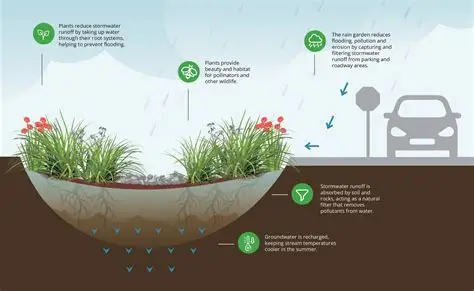
Cities around the world are building rain gardens to prevent flooding and protect water resources, making this an important environment and urban sustainability news story. Rain gardens are shallow, plant-filled areas designed to collect and absorb rainwater runoff from roads, rooftops, and sidewalks.
During heavy rainfall, water often flows quickly over concrete surfaces and enters drains, which can cause flooding and water pollution. Experts explain that rain gardens slow down this flow by allowing water to soak into the soil naturally.
Rain gardens are planted with native grasses, flowers, and shrubs that can survive both wet and dry conditions. Their deep roots help absorb water and filter pollutants before they reach rivers and lakes.
For children, this news matters because clean water and flood prevention are essential for safe and healthy communities. Rain gardens help reduce waterlogging on streets and protect local water bodies.
Environmental engineers say rain gardens can remove dirt, oil, and chemicals from rainwater. This natural filtration process improves water quality.
Cities are installing rain gardens in parks, school grounds, roadside areas, and residential neighborhoods.
Some schools are creating small rain gardens to teach students about water conservation and environmental science.
Experts emphasize that rain gardens also support biodiversity by providing habitats for butterflies, birds, and beneficial insects.
Urban planners consider rain gardens a cost-effective solution compared to large drainage systems.
Researchers continue studying plant varieties that improve water absorption and filtration.
The development of rain gardens shows how nature-based solutions can solve urban problems.
Learning about sustainable water management teaches children the importance of protecting natural resources.
By capturing rainwater and reducing pollution, rain gardens help cities become greener, safer, and more resilient to extreme weather.