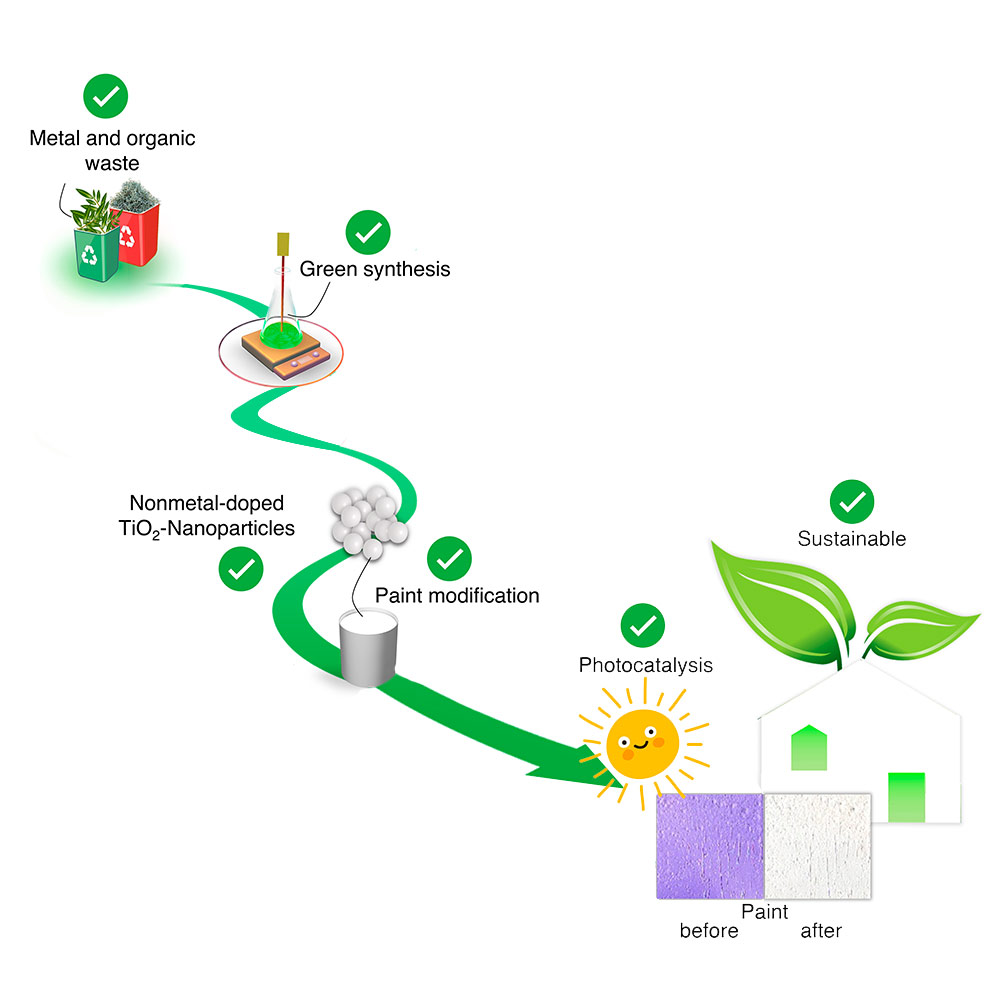
Scientists and environmental engineers are developing air-purifying paint that can help clean pollution from the air, making this an important science and environmental innovation news story. This special paint contains materials that break down harmful pollutants when exposed to sunlight.
Air pollution is a major problem in cities due to vehicle emissions, factory smoke, and dust. Experts explain that polluted air contains harmful substances such as nitrogen oxides and other chemicals that can affect breathing and health.
Air-purifying paint works using a process called photocatalysis. The paint contains a compound, often titanium dioxide, that reacts with sunlight to break down pollutants into less harmful substances. When applied to walls and buildings, the painted surfaces help reduce air pollution around them.
For children, this news matters because cleaner air supports healthy lungs and overall well-being. Reducing pollution also helps protect the environment.
Scientists say one painted wall can help neutralize pollutants produced by several vehicles each day. The paint works continuously as long as it is exposed to light.
Engineers are testing the paint on buildings, tunnels, schools, and public spaces to measure its effectiveness.
Some cities are using air-purifying coatings on roads and pavements to reduce pollution in busy traffic areas.
Environmental experts emphasize that while this technology helps reduce pollution, reducing emissions at the source remains essential.
Researchers are working to improve durability so the paint remains effective for many years.
Schools often teach students about air pollution and ways to protect the environment.
Experts believe air-cleaning paint could become part of smart city designs.
The development of air-purifying paint shows how simple innovations can improve urban air quality.
Learning about pollution control teaches children the importance of environmental responsibility.
By turning ordinary walls into pollution-fighting surfaces, scientists are helping create cleaner, healthier cities for future generations.