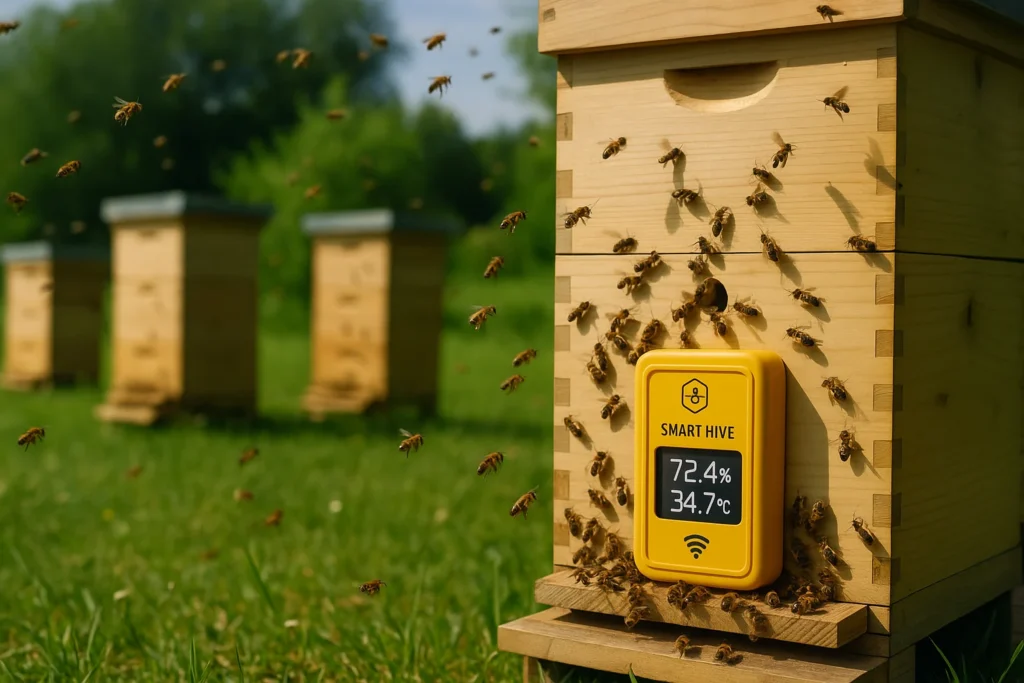
Scientists and environmental researchers are developing smart beehives to protect honeybees and support pollination, making this an important science and environmental protection news story. Honeybees play a vital role in nature by pollinating crops and plants that provide food for humans and animals.
In recent years, bee populations have declined due to habitat loss, pesticides, climate change, and diseases. Experts explain that protecting bees is essential because they help pollinate fruits, vegetables, nuts, and flowers.
Smart beehives use sensors and digital technology to monitor the health and activity of bee colonies. These hives can measure temperature, humidity, sound vibrations, and hive weight. The data helps beekeepers understand whether the bees are healthy and producing honey.
For children, this news matters because bees help grow many foods we eat every day, including apples, almonds, and strawberries. Without pollinators, food production could be affected.
Sensors inside the hive detect unusual changes, such as temperature drops or reduced bee movement, which may signal disease or environmental stress.
Some smart hives send real-time alerts to beekeepers through mobile apps, allowing quick action to protect the colony.
Researchers are also using sound monitoring technology to analyze bee buzzing patterns, which can indicate colony health.
Environmental experts say smart monitoring helps reduce bee losses and supports sustainable agriculture.
Farmers benefit from healthy bee populations because pollination improves crop yield and quality.
Schools often teach students about pollination and the importance of insects in ecosystems.
Scientists emphasize planting bee-friendly flowers and reducing pesticide use to protect pollinators.
Researchers continue improving sensor technology to make smart hives more affordable and accessible.
The development of smart beehives shows how technology can support environmental conservation.
Learning about pollinators teaches children the importance of protecting biodiversity and ecosystems.
By using smart technology to monitor and protect bees, scientists and farmers are helping ensure a healthy environment and a secure food supply for future generations.