Engineers are developing special lunar dust shields to protect equipment and astronauts during future Moon missions, making this an important science and space exploration news story. Lunar dust, also known as Moon dust or regolith dust, is extremely fine and can cause serious problems for machinery and human health.
The Moon’s surface is covered with sharp, powder-like dust formed by billions of years of meteor impacts. Experts explain that unlike Earth’s dust, lunar dust is jagged and abrasive because it has not been smoothed by wind or water. It can cling to surfaces, damage equipment, and irritate lungs and eyes.
During past Moon missions, astronauts noticed that dust stuck to their suits and tools, making movement difficult and causing wear and tear. Scientists now consider lunar dust one of the biggest challenges for long-term Moon exploration.
For children, this news matters because solving dust problems is essential for safe space travel. Future astronauts may live and work on the Moon, so protecting equipment and habitats is important.
Engineers are developing dust-resistant coatings that prevent dust from sticking to spacesuits, tools, and vehicles. Some coatings use special materials that repel dust particles.
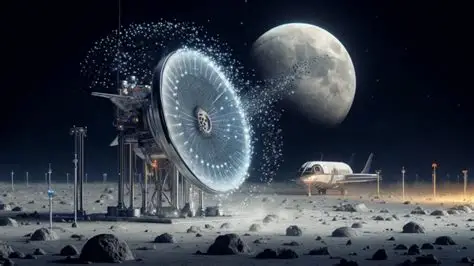
Scientists are also testing electrostatic dust shields that use electric fields to push dust away from surfaces such as solar panels, windows, and camera lenses.
Keeping solar panels dust-free is especially important because dust can block sunlight and reduce power generation.
Researchers are designing airlock systems for lunar habitats that remove dust from spacesuits before astronauts enter living areas.
Special brushes, magnetic tools, and air jets are also being tested to remove dust safely.
Scientists test these technologies in vacuum chambers and lunar dust simulators on Earth.
Future Moon missions aim to land near the lunar south pole, where dust control will be essential for building bases.
Space agencies are collaborating to develop dust protection systems for long-duration missions.
Schools often teach students about space challenges to inspire innovation and problem-solving.
Experts emphasize that managing lunar dust is essential for astronaut health, equipment durability, and mission success.
Researchers continue improving materials and cleaning technologies for extreme environments.
The development of lunar dust shields shows how science helps overcome challenges beyond Earth.
Learning about space hazards teaches children how careful planning and innovation make exploration possible.
By developing technologies to control harmful lunar dust, scientists are helping ensure safer Moon missions and preparing for a future where humans can live and work on the lunar surface.