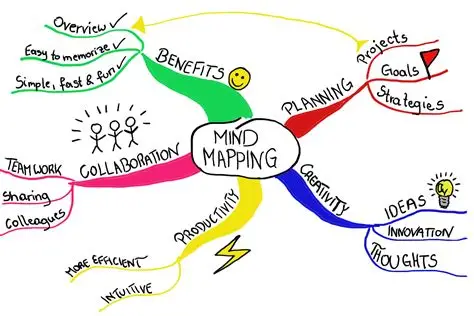
Education experts say using mind maps is an effective way for students to revise lessons and remember information easily, making this an important revision techniques and student learning news story. A mind map is a visual diagram that organizes ideas around a central topic.
Many students try to revise by reading long paragraphs again and again. Experts explain that mind maps help simplify complex information by breaking it into clear, connected ideas.
In a mind map, the main topic is written in the center of the page. Related ideas and key points branch out from the center like the branches of a tree.
For students, this news matters because mind maps make revision faster and easier before exams.
Experts recommend using keywords instead of long sentences when creating mind maps.
Adding colors, symbols, and small drawings can help the brain remember information better.
Mind maps are especially helpful for subjects such as science, history, and geography where many ideas are connected.
Teachers encourage students to create mind maps after completing a chapter to summarize important concepts.
Using arrows and lines to connect ideas helps students understand relationships between topics.
Experts say visual learning tools help students remember information longer than reading text alone.
Mind maps also improve creativity because students organize ideas in their own way.
Students can review mind maps quickly before exams instead of reading full chapters again.
Digital mind-mapping tools are also available for students who prefer creating diagrams on computers or tablets.
Parents can encourage children to use colorful pens and creative layouts when making mind maps.
Experts emphasize that mind maps should be simple and clear to make revision effective.
Students can create separate mind maps for each subject or chapter.
Sharing mind maps with classmates during group study sessions can help students learn from each other.
Teachers say mind mapping helps students see the “big picture” of a topic.
Students who use mind maps often feel more confident during revision.
By using mind maps for revision, students can organize information clearly, remember lessons more easily, and develop strong visual learning skills that support academic success.