New Orchid in Assam Discovered by Plant Experts
Botanists have discovered a rare terrestrial flower called Crepidium assamicum in Assam's Dibru-Saikhowa National Park after over a decade of fieldwork.
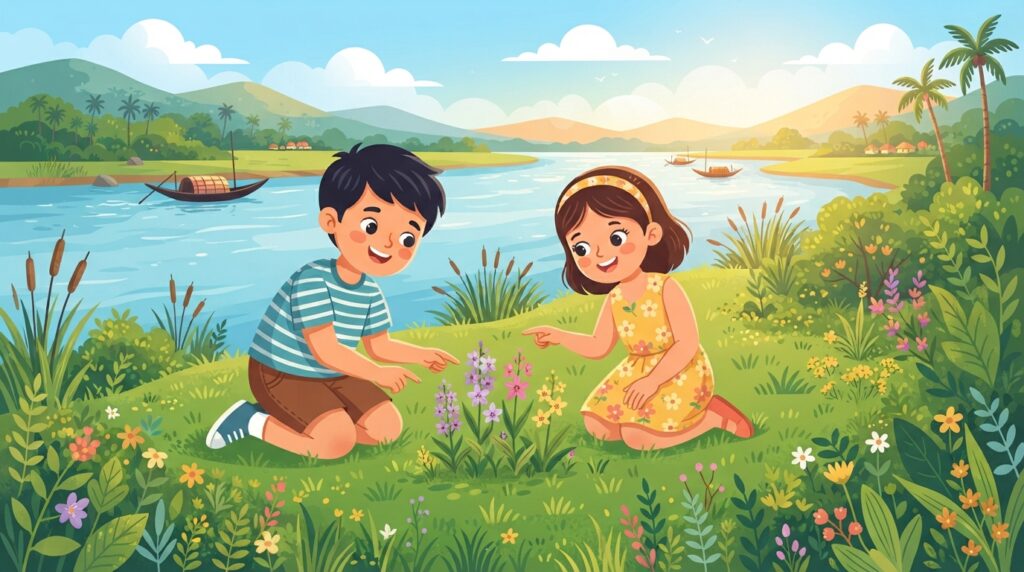
In exciting news for young nature explorers across India, scientists announced on 21 October 2024 that they have found a brand new orchid in Assam! This special green treasure was discovered thriving inside the famous Dibru-Saikhowa National Park, located in the Dibrugarh district of Assam.
The newly identified plant has received the official scientific name Crepidium assamicum. It was carefully identified by Dr. Jintu Sarma, an assistant professor of botany at Guwahati College, and Khyanjeet Gogoi, an expert who is widely celebrated by nature enthusiasts as the Orchid Man of Assam.
What happened?
Finding a new plant species is never quick work, and this big discovery took more than ten years of dedicated fieldwork! The botanical expeditions originally began way back in 2008 and 2009, requiring the researchers to spend years checking the wild riverlands before publishing their formal scientific description in the respected international botanical journal Feddes Repertorium.
When most people picture orchids, they imagine colourful blooms perched high up on leafy jungle branches. However, Crepidium assamicum is a terrestrial orchid, which means it anchors its roots directly into the ground. It avoids dark treetops, choosing instead to grow among open grasslands right along riverbanks.
This unique orchid produces its blossoms during the rainy monsoon season, flowering mainly between July and August. Researchers noticed that it features a larger flower structure than other related plants in its group. Curiously, it also emits little to no scent at all, proving that flowers do not need sweet perfumes to be remarkable!
The arrival of Crepidium assamicum increases India’s recognized count in the genus Crepidium to 19 species, while raising the worldwide total to 281. In the wild riverbanks of the national park, scientists estimate that only around 500 to 600 individual plants exist.
Why does it matter to you?
This thrilling discovery shows that India’s wild spaces still hold magnificent secrets waiting to be uncovered by curious eyes. You do not need to journey to distant planets or deep ocean trenches to make scientific breakthroughs; brand new living wonders might be resting quietly in our own grasslands and forests.
Finding this plant reminds us that science takes teamwork, keen observation, and immense patience. Dr. Sarma and the Orchid Man of Assam spent well over a decade returning to the wilderness to study this fragile plant. Because only 500 to 600 of these orchids are known to live in the park, learning about them helps us understand why we must protect wild riverbanks from being damaged.
Words to know
- Terrestrial: A plant or animal that lives and grows directly on the land or in the soil, rather than on trees or in water.
- Genus: A scientific grouping that brings together closely related plant or animal species that share similar features.
- Botany: The scientific branch of biology that focuses entirely on the study of plants, trees, and flowers.
- Expedition: An organised journey taken by scientists or explorers with a clear and useful purpose, such as finding rare wildlife.
Did you know?
Our planet is home to roughly 27,000 orchid species, and India shelters about 1,265 of them! What makes this even more special is that more than 800 of India’s orchid species flourish right in our Northeast region.
Think about it
Why do you think it took researchers more than a decade of exploration before they could officially name this quiet grassland flower? If you went on an expedition near a local river or park, what hidden plants would you look for?
Quick quiz
Where does the newly discovered orchid Crepidium assamicum naturally grow?
- High up on forest tree branches
- In open grasslands along riverbanks
- Floating underneath deep pond water
See the answer
In open grasslands along riverbanks
Sources
This story was prepared by the Kids Gazette news desk with the help of AI research and writing tools, using the sources listed above.