Meet Atlas: The Smart Electric Humanoid Robot
Boston Dynamics has revealed its electric Atlas humanoid robot, which can sort car parts and fix its own mistakes without human help.
Imagine walking into a workshop and spotting a tall machine busily lifting car parts all by itself. On 31 October 2024, American robotics company Boston Dynamics in Waltham, Massachusetts, released an exciting demonstration video showing off their newly redesigned electric Atlas humanoid robot at work.
In the video, titled "Atlas Goes Hands On", this clever machine carries out industrial sorting jobs completely on its own. It moves smoothly without any human steering it from afar or following pre-scripted motion paths.
What happened?
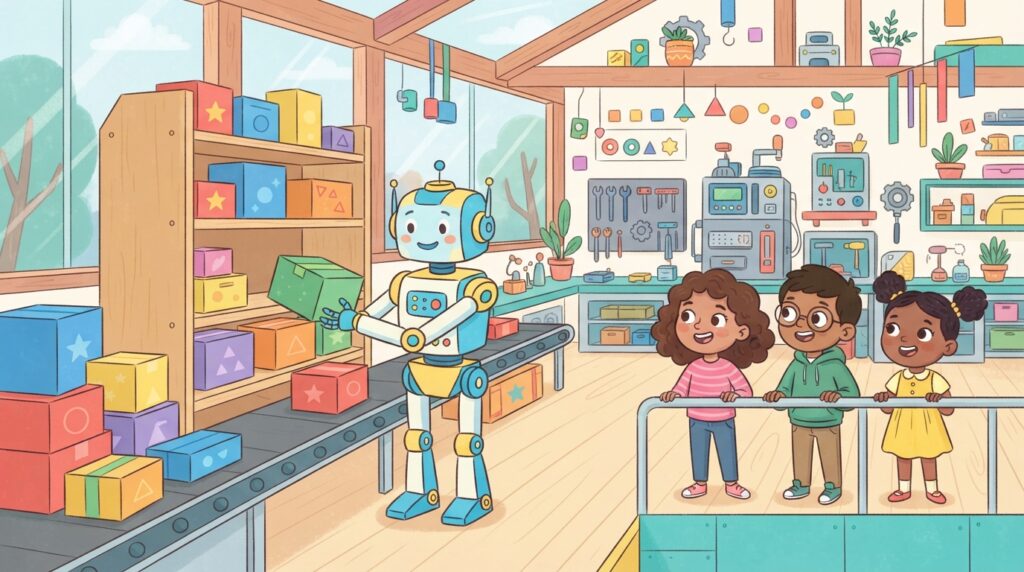
During the nearly three-minute demonstration, Atlas was put to work sorting plastic automotive engine covers. The robot picked up these parts from a supplier container and placed them neatly into a mobile sequencing dolly.
What makes this so special is how little help Atlas needed from people. The team only gave the machine a simple digital list of bin locations. From there, Atlas used its powerful onboard computing systems to decide how to navigate, walk, and carry each part safely.
To see the room around it, Atlas uses a smart machine learning vision model. This programme lets the robot detect, classify, and pinpoint carts, individual bins, and fixtures in real time. It pairs optical cameras with special force and proprioceptive feedback sensors. These tools help the robot constantly estimate the exact position and weight distribution of the object held firmly in its grip.
Atlas even knows what to do when things do not go as planned. In one test, an engine cover failed to slide smoothly into a tight slot. Instead of stopping or waiting for help, Atlas autonomously detected the obstruction. It pulled the cover back out, adjusted its alignment, and successfully inserted it on the second try without human intervention!
The machine can also move in ways that go far beyond human anatomy. Because it is built with flexible mechanical joints, Atlas can rotate its torso, shoulders, and hips between 180 and 360 degrees. This allows it to place items in different directions without having to reposition its feet at all.
This new model is quite different from older versions. Boston Dynamics retired its older hydraulic Atlas platform in April 2024. In its place, the team chose electric actuators, which are much quieter, stronger, and more efficient. Its parent company, Hyundai Motor Group, now plans to test Atlas units for heavy lifting and parts sequencing inside commercial automotive assembly plants.
Why does it matter to you?
If you have ever built a tower out of colourful blocks, you know that mistakes happen. You might try to fit two pieces together, realise they are crooked, and gently pull them apart to try again.
Watching Atlas do the exact same thing shows how artificial intelligence and advanced sensors can work together like real eyes and muscles. As smart machines take on heavy and tiring tasks in factories, humans will have more time to focus on creative problem-solving. Whether you are curious about learning to code at school or designing gadgets at home, Atlas offers an inspiring glimpse into the future of robotics.
Words to know
- Autonomous: Able to act, make choices, and complete tasks freely without human control.
- Actuator: A mechanical component inside a machine that creates movement, acting much like a muscle.
- Proprioceptive sensor: A tool that helps a robot track the position, posture, and balance of its own body parts.
- Machine learning: A type of computer programme that learns from data to recognise objects and make smart decisions.
Did you know?
Atlas can spin its waist, shoulders, and hips up to 360 degrees, which is a full circle that no human body could ever do!
Think about it
If you could programme a helpful humanoid robot like Atlas to take over one tiring chore at your school or home, which task would you choose, and why?
Quick quiz
What did Atlas do when a part got stuck in a tight slot during testing?
- It sounded a loud alarm and shut itself down.
- It pulled the part out, adjusted its alignment, and inserted it on the second try.
- It waited for an engineer to push the part in by hand.
See the answer
It pulled the part out, adjusted its alignment, and inserted it on the second try.
Sources
This story was prepared by the Kids Gazette news desk with the help of AI research and writing tools, using the sources listed above.