
Xiaomi Humanoid Robot Finishes Full 8-Hour Shift
A humanoid robot has completed an entire eight-hour factory shift in Beijing, sorting car parts with clever hands and smart sensors.
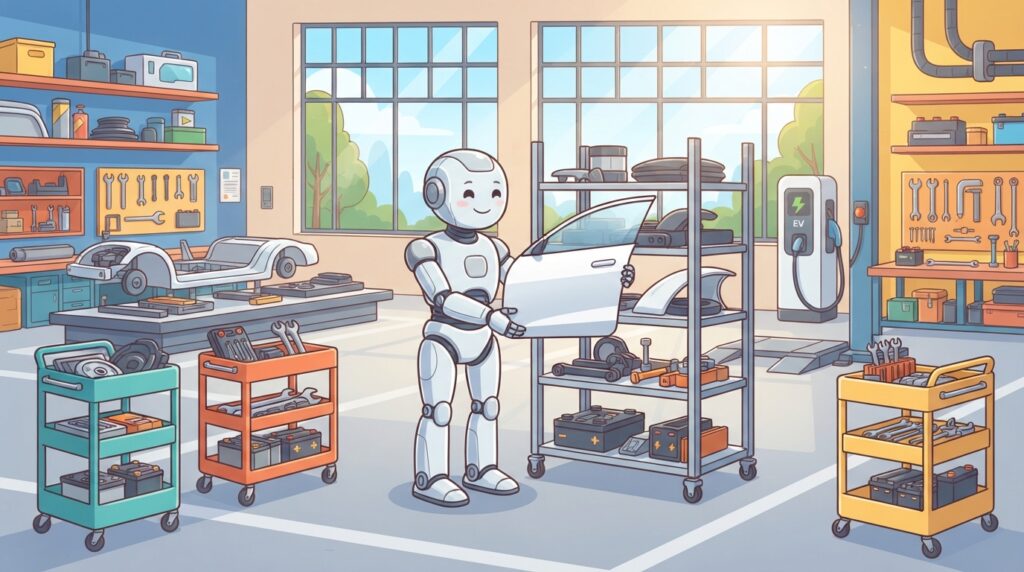
Imagine walking into a buzzing car plant and spotting a metal helper standing on two legs, busy at work. On 3 November 2026, technology company Xiaomi shared exciting video evidence showing its full-size humanoid robot working a full eight-hour shift at an electric vehicle factory in Beijing, China. This clever humanoid robot worker did not stop for tea, complain about being tired, or need someone to hold its hand.
The industrial test took place at the Xiaomi Auto Factory, right inside the final assembly logistics area. Working at the Center Console Side-Cover Sorting Workstation, the machine completed a normal working day just like a human team member. It was tasked with sorting parts to keep up with the busy facility’s full-day production schedule.
What happened?
During its eight-hour workday, the bipedal robot handled large, irregular, and flexible centre console side covers. It picked up these tricky car panels directly from storage bins, carried them carefully across the station, and placed them neatly into designated rack slots. Because the panels bend and shift, grabbing them requires a very gentle and precise touch.
The robot proved to be remarkably independent throughout the day. When something did not go as planned, the machine detected the problem and corrected errors on its own without needing any direct help from human supervisors. It also communicated smoothly with the factory floor’s digital management system and shared space with autonomous mobile robots, which are smaller wheeled machines that roll around moving materials.
This mechanical helper is built very much like an athletic adult. It stands roughly 1.70 metres tall and weighs around 66 kilograms. Inside its frame, it features 66 degrees of freedom, which means it has 66 different joints or points where it can bend and turn. Incredibly, 33 of those flexible points are in its hands, allowing its fingers to grip unusual objects safely.
This successful test is the result of months of practice. Back in March 2026, earlier trials ran for three hours with a 90.2 percent success rate. By July 2026, the robot had improved significantly, reaching an accuracy rate of up to 98 percent on assembly tasks. Because of this progress, Xiaomi’s robotics team received a prestigious Leading Science and Technology Award at the 2026 World Internet Conference Wuzhen Summit. To take things even further, Xiaomi revealed plans to invest more than 60 billion yuan, which is about 8.3 billion US dollars, over the next three years into smart manufacturing and embodied artificial intelligence.
Why does it matter to you?
You might wonder what an automobile factory in Beijing has to do with your life here in India. Whenever you ride in a modern car, hop on an electric bus, or use new gadgets, those items were assembled inside busy production plants. Seeing a two-legged machine do real factory duties shows how rapidly computer programming, electronics, and mechanical engineering are turning futuristic ideas into reality.
As technology moves forward, future workplaces will change. Rather than doing heavy, repetitive, or tiring chores, future engineers will design, programme, and guide helpful machines. If you enjoy building with blocks, tinkering with school robotics kits, or learning computer coding, you are already learning the skills needed for tomorrow’s world.
Words to know
- Humanoid robot: a machine designed with a body shape similar to a human, usually having a head, arms, and legs.
- Bipedal: an animal or machine that walks upright on two legs.
- Degrees of freedom: the number of directions or joints where a robot can bend and move.
- Autonomous: the ability of a machine to act and make decisions on its own without human intervention.
- Embodied artificial intelligence: artificial intelligence that connects to a physical body, allowing it to sense and move in the real world.
Did you know?
The Xiaomi humanoid robot has 33 degrees of freedom in its hands alone, giving its fingers the fine control needed to grasp flexible car panels!
Think about it
If you could programme a humanoid robot to help out in your school or neighbourhood, what tasks would you choose? How would you make sure it works safely alongside people?
Quick quiz
How many degrees of freedom does the Xiaomi humanoid robot have in its hands alone?
- 12
- 33
- 66
See the answer
33
Sources
This story was prepared by the Kids Gazette news desk with the help of AI research and writing tools, using the sources listed above.