Nagaland Bird Count: Students Spot 138 Avian Species!
School students and birdwatchers across Nagaland recorded 138 bird species during the colourful Tokhü Emong Bird Count 2026.
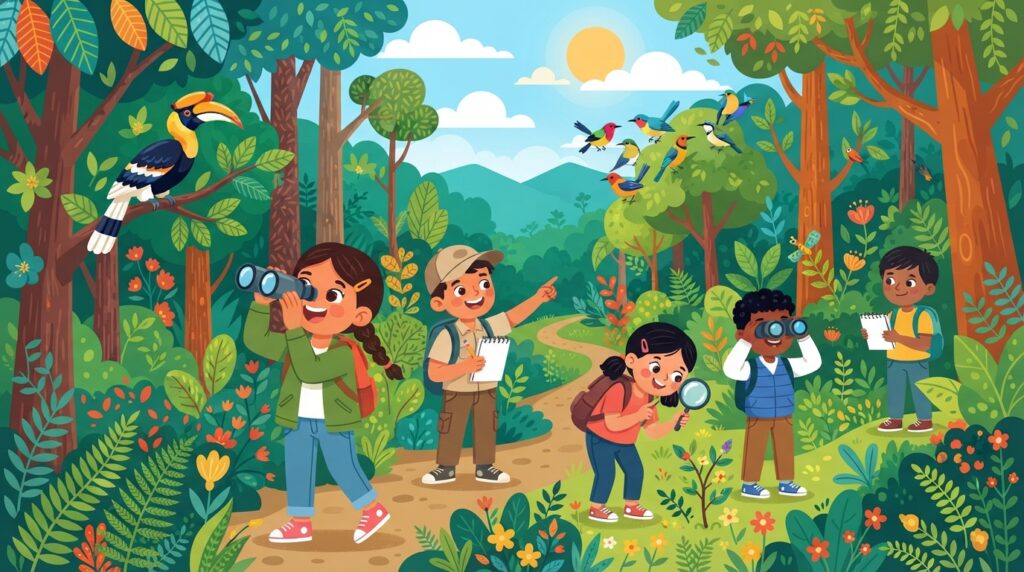
Have you ever grabbed a pair of binoculars and looked up into the trees? During the exciting Nagaland bird count in northeast India, young school pupils and birdwatchers grabbed their notepads to spot feathered friends. By 6 November 2026, the fifth edition of the Tokhü Emong Bird Count had already logged a fantastic total of 138 bird species!
This lively statewide citizen-science programme was arranged by the Nagaland Department of Environment, Forests and Climate Change. They teamed up with Bird Count India, the Foundation for Ecological Security (FES), and Eco Warriors Nagaland to turn nature into an open-air classroom.
What happened?
The four-day birdwatching festival began on 4 November 2026, perfectly matching Tokhü Emong, the joyful harvest festival of the Lotha Naga community. The special motto for the event was: “When we count birds, we count the health of our land.” On the very first day, birders spotted 72 different species across 26 checklists. That number jumped to 105 species on the second day, and by 5:00 p.m. on the third day, enthusiastic watchers had filed 296 checklists with 138 species!
Students stepped out of their regular classrooms to explore green forests and open skies. Guided bird walks welcomed school children from Government Middle School Okotso in Wokha, GHSS Tening in Peren, Frontier School in Noklak, Jireh School in Tseminyu, and GHSS Tobu in Mon. College youth joined the adventure too, including bright learners from Xavier College in Jalukie who explored outdoor trails under the guidance of local district coordinators.
Teams sent in sightings from across the state, exploring districts such as Wokha, Noklak, Phek, Dimapur, Niuland, Mon, and Peren. In Dimapur, at the Nature Learning Centre, a workshop brought together over 100 participants on 5 November 2026. During this meeting, Vedpal Singh, IFS, who is the Principal Chief Conservator of Forests and Head of Forest Force, proudly revealed the official logo for the 2026 count.
Youngsters also joined hands-on training sessions with Tekameren I. Jamir from Eco Warriors Nagaland. He guided the students on how to tell different birds apart and how to enter their findings into eBird, a huge online database used by scientists worldwide. Forest officers Lansothung Lotha and Suman W. M. Sivachar explained that birds act as natural barometers for the environment. They reminded everyone that creatures like the dodo vanished forever in the past, showing why protecting living birds is so important today.
Why does it matter to you?
You do not have to be a grown-up scientist in a white coat to help our planet. When you step outdoors and note down the birds you see in your school garden, park, or balcony, you become a citizen scientist! Watching wildlife helps you notice how healthy your local environment is, because birds quickly leave places that become too polluted or damaged. By discovering the wonders of nature right around your home in India, you can help protect birds and their green habitats for years to come.
Words to know
- Citizen science: scientific research carried out by everyday members of the public, including curious children and students.
- Avian: anything related to birds and their lives.
- Database: an organised collection of electronic information stored on computers.
- Extinction: the complete disappearance of an animal or plant species from the Earth so that none remain alive.
- Checklist: a list used by birdwatchers to record all the bird species seen during a single walk.
Did you know?
The dodo was a flightless bird that lived long ago on an island, but it became completely extinct when humans and new predators disturbed its home, reminding us to care for nature today!
Think about it
Which birds do you see around your school or home every morning? If you could spend a whole day counting birds with your friends, which natural spot in your neighbourhood would you choose to explore first?
Quick quiz
How many bird species did participants record by Day 3 of the Tokhü Emong Bird Count 2026?
- 72 species
- 105 species
- 138 species
See the answer
138 species
Sources
This story was prepared by the Kids Gazette news desk with the help of AI research and writing tools, using the sources listed above.