
Giant New Armoured Dinosaur Discovered in China
Scientists in China have identified a giant new armoured dinosaur with a tail club like a pomelo fruit. Learn how 3D scanners helped solve this ancient puzzle!
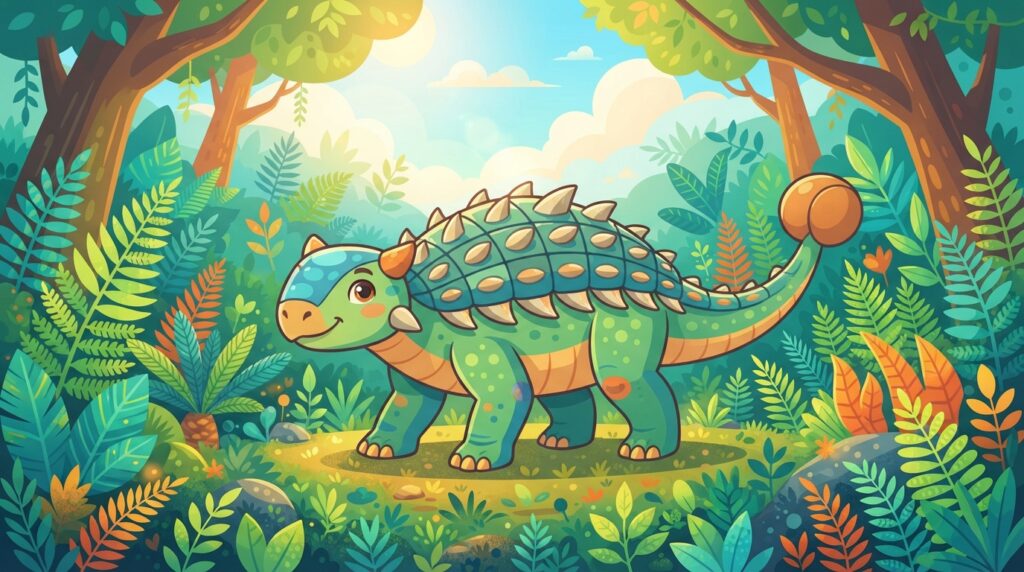
Imagine coming face to face with a prehistoric creature built just like a walking tank! On 8 November 2024, an international scientific study announced the discovery of a giant new armoured dinosaur species named Huaxiazhoulong shouwen. This magnificent animal roamed our planet roughly 72 to 84 million years ago during the Late Cretaceous period.
The exciting study was published in the journal Historical Biology by researchers from Yunnan University and the Jiangxi Provincial Museum. Led by doctoral researcher Zhu Ziheng and paleontologist Xu Xing, the team revealed that this plant-eating giant was one of the largest armoured dinosaurs ever found in southern China.
What happened?
The story behind this discovery began decades ago. In May 1986, a villager in Longxi village, located in Guangchang County of Jiangxi Province, uncovered an unusual fossil skeleton. The bones had been preserved deep inside rock sediments of the Tangbian Formation for millions of years.
To study the fragile skeleton without risking any physical damage, the modern research team turned to high-tech tools. They used handheld 3D laser scanners to build precise digital computer models of the bones. This allowed the scientists to turn, inspect, and examine every single detail safely on a screen.
Their detailed research showed that the dinosaur stretched over 6 metres (around 20 feet) in length and stood roughly 1.5 metres (5 feet) tall at the hip. Belonging to the Ankylosauridae family, its skin was packed with thick bony plates called osteoderms. At the tip of its tail sat a heavy, solid bony club about the size of a pomelo fruit, which it could swing with powerful tail muscles to keep fierce predators away.
Despite its heavy defence system, this dinosaur was completely harmless to other animals. It was a gentle herbivore that used its beak and specialised teeth to munch on low-growing ferns, leafy greens, and seeds. Even its name holds special meaning: Huaxia honors an ancient term for China, zhou means cranial armour, and shouwen refers to a beast pattern found on an ancient bronze helmet kept at the Jiangxi Provincial Museum.
Why does it matter to you?
This fantastic find shows that science is full of patience and brilliant surprises. A fossil found long ago in 1986 held secrets that took nearly forty years to fully understand!
Just like paleontologists search for dinosaur remains in India, researchers across the globe are constantly using modern inventions like 3D scanners to see old treasures in brand-new ways. It reminds us that our planet’s deep past is still full of wondrous mysteries waiting for future scientists like you to solve.
Words to know
- Paleontologist: A scientist who discovers and studies ancient fossils to understand prehistoric life.
- Osteoderms: Bony plates or scales embedded directly into the skin of certain animals for defence.
- Herbivore: An animal that feeds exclusively on plants, leaves, ferns, and seeds.
- Tangbian Formation: A specific layer of ancient rock sediments in China where prehistoric fossils were preserved.
Did you know?
The bony club on the tail of Huaxiazhoulong shouwen was roughly the size of a pomelo fruit, a large Asian citrus fruit that many people in India enjoy eating under names like batabi lebu or chakotra!
Think about it
If you were given a handheld 3D scanner to explore an ancient museum collection, what historical object or fossil would you want to scan first, and what secrets would you hope to find?
Quick quiz
What modern tool did scientists use to study the fragile dinosaur bones without damaging them?
- Handheld 3D laser scanners
- Metal detectors and hammers
- Magnifying glasses and glue
See the answer
Handheld 3D laser scanners
Sources
This story was prepared by the Kids Gazette news desk with the help of AI research and writing tools, using the sources listed above.