
Stonehenge Altar Stone Mystery: Origin Still Unknown
Scientists have discovered that Stonehenge's famous Altar Stone did not come from north-east Scotland after all, leaving researchers with a brand-new ancient puzzle to solve.
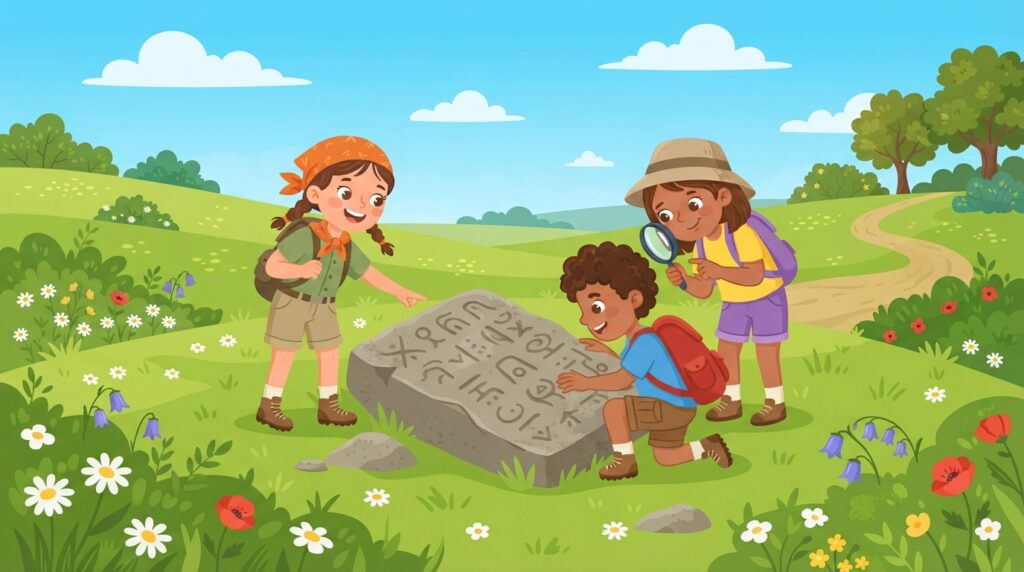
Imagine visiting a famous ancient circle of giant rocks and realising that nobody truly knows where the central slab came from! On 5 November 2026, an international team of geologists published a surprising study showing that the Stonehenge Altar Stone mystery is far from solved.
Scientists once believed this giant rock journeyed all the way from north-east Scotland to its resting place on Salisbury Plain in Wiltshire, England. However, brand-new tests have now ruled that area out, reopening one of the most exciting historical puzzles in the world.
What happened?
The Altar Stone is a massive slab of fine-grained sandstone sitting right in the heart of Stonehenge. It measures 4.9 metres long, 1 metre wide, and 0.5 metres thick, weighing around 6 tonnes, which is roughly 13,000 pounds! Today, it lies flat on the ground, partly buried under two fallen sarsen megaliths of the Great Trilithon.
For nearly a century, experts believed the slab was brought from west Wales alongside smaller bluestones, but that theory was disproved in 2020. Then, a study in 2024 suggested the stone had travelled over 750 kilometres from the Orcadian Basin in north-east Scotland based on the ages of mineral grains.
To check this claim, a team led by Emeritus Professor Duncan Pirrie from the University of South Wales carried out a detailed investigation. Because Stonehenge is a protected ancient monument that cannot be drilled into, researchers analysed eight rock fragments held in museums—including samples collected as early as 1844—and conducted portable X-ray scans on exposed patches of the stone.
The scientists looked closely at the stone’s mineralogy, chemistry, and sedimentology to build a precise geological fingerprint. When they compared this fingerprint with field samples from north-east Scotland, they found no match at all! The Altar Stone had different barium levels and specific clay characteristics showing it was buried less deeply than rocks in Orkney and Caithness.
Co-author Professor Nick Pearce from Aberystwyth University explained that while southern Britain and north-east Scotland are ruled out, candidate sources might still exist elsewhere in Scotland, northern England, or Ireland.
Why does it matter to you?
You might wonder why a puzzle about a rock in England matters to a student in India. Just like when you read a mystery book or work through a difficult maths problem, science is an ongoing detective investigation where ideas are constantly tested.
Sometimes textbooks share ideas that seem settled, but new tools can challenge old beliefs and reopen great questions. This discovery reminds young thinkers that the world is full of unsolved riddles waiting for the next generation of curious scientists to explore!
Words to know
- Geologist: a scientist who studies rocks, minerals, and the history of the Earth.
- Megalith: a very large stone used in ancient monuments or prehistoric structures.
- Sedimentology: the scientific study of sand, mud, and rock layers formed over time.
- Barium: a natural chemical element found inside certain minerals and rocks.
Did you know?
The Altar Stone weighs an estimated 6 tonnes (roughly 13,000 pounds), which means prehistoric builders had to move the weight of an entire adult elephant across huge distances without any modern engines or trucks!
Think about it
If you were a geologist trying to solve this mystery, which region would you search next? How do you think ancient communities managed to transport such gigantic stones over land and water?
Quick quiz
How much does the Altar Stone at Stonehenge weigh?
- Roughly 2 tonnes
- Roughly 6 tonnes
- Roughly 15 tonnes
See the answer
Roughly 6 tonnes
Sources
This story was prepared by the Kids Gazette news desk with the help of AI research and writing tools, using the sources listed above.