NASA Swift Space Telescope Ends 22-Year Mission
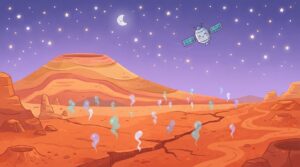
After spending nearly 22 years tracking the biggest explosions in the universe, NASA's Swift observatory has completed its historic journey.

On Wednesday, 4 November 2026, a legendary cosmic explorer completed its grand journey. The NASA Swift space telescope, officially known as the Neil Gehrels Swift Observatory, safely re-entered Earth’s atmosphere high over the North Sumatra region of Indonesia. Tracking data from the U.S. Space Force confirmed that the spacecraft re-entered at around 7:39 a.m. EST (12:39 UTC).
Most of the 1,450-kilogram (roughly 3,200-pound) spacecraft burned up safely like a glowing meteor in the upper atmosphere. Space scientists at NASA reported that no injuries or property damage took place anywhere on the ground. It was a peaceful and sparkling farewell to one of the most hardworking robotic explorers ever launched into space.
What happened?
The Swift observatory began its space voyage way back on 20 November 2004, launching from Cape Canaveral Air Force Station in Florida aboard a Delta II rocket. When scientists first designed Swift, they expected it to work for only two years. Instead, thanks to fantastic engineering, the tough little satellite operated for nearly 22 years, lasting more than ten times longer than its original mission plan!
Swift was built to be a cosmic detective. Its main goal was to hunt down gamma-ray bursts, which are the most powerful and energetic explosions in our universe since the Big Bang. Because these bursts vanish quickly, Swift had to be incredibly nimble. It could autonomously turn its cameras and instruments toward an explosion in just about 90 seconds, which is why it was named “Swift”!
To study these mysterious flashes, the satellite carried three clever tools: the Burst Alert Telescope (BAT), the X-Ray Telescope (XRT), and the Ultraviolet/Optical Telescope (UVOT). Together, these instruments helped Swift record over 2,000 gamma-ray bursts and more than 1,400 exploding stars called supernovae. The valuable information it sent home contributed to around 7,000 scientific research papers written by astronomers around the world. In 2017, NASA even renamed the spacecraft in honour of Dr. Neil Gehrels, who led the mission for many years.
Over time, high solar activity increased atmospheric drag, gradually pulling the satellite closer to our planet. Swift finished its scientific observations on 20 October 2026 at an altitude of about 275 kilometres (171 miles) above Earth, before finally making its fiery dive into the atmosphere near North Sumatra at 3.4 degrees north latitude and 98.6 degrees east longitude.
Why does it matter to you?
Whether you are sitting in a classroom in Bengaluru or watching the night sky from your terrace in Jaipur, Swift’s story shows what human curiosity and brilliant engineering can achieve. When engineers build machines carefully, they can sometimes work ten times longer than expected and solve huge mysteries.
Learning about Swift also reminds us that the universe is full of dramatic events waiting to be explored. You do not need to be an astronaut travelling to faraway galaxies to study the cosmos; robots and space telescopes can be our eyes in the dark. Maybe one day, Indian students who are fascinated by the stars today will design the next great observatory to track deep-space explosions!
Words to know
- Atmospheric drag: The friction caused by air particles in the upper atmosphere that slows down a spacecraft and pulls it toward Earth.
- Gamma-ray burst: A sudden, tremendously bright flash of high-energy light, representing the most powerful explosions in the cosmos since the Big Bang.
- Supernova: The dramatic, brilliant explosion of a dying star at the end of its life.
- Observatory: A special station or spacecraft equipped with instruments to view and study distant objects in the universe.
Did you know?
Swift was so quick that it could automatically turn its three telescopes towards a surprise explosion in the night sky in about 90 seconds, without waiting for instructions from humans on Earth!
Think about it
If you were tasked with building a robotic space telescope, what cosmic mystery would you want it to explore, and what special skills would your robot need?
Quick quiz
How long did NASA’s Swift observatory operate in space before re-entering Earth’s atmosphere?
- Nearly 22 years
- Exactly 2 years
- Over 50 years
See the answer
Nearly 22 years
Sources
This story was prepared by the Kids Gazette news desk with the help of AI research and writing tools, using the sources listed above.