Astronaut Anil Menon Completes Epic ISS Spacewalk
Astronauts Anil Menon and Joshua Kutryk stepped outside the International Space Station to install the final solar array on a historic spacewalk.
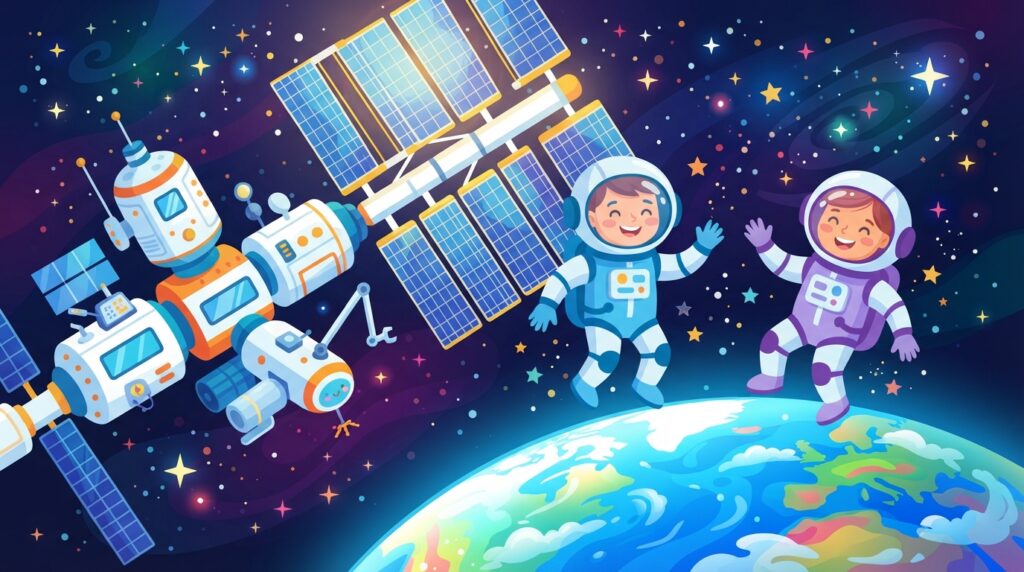
Imagine floating high above the blue planet Earth while holding a giant mechanical solar panel! On Thursday, 5 November 2026, two brave space explorers stepped into the vacuum of space outside the International Space Station to deliver a sparkling new power upgrade. Indian-origin NASA astronaut Anil Menon and Canadian Space Agency astronaut Joshua Kutryk worked together on an extraordinary mission known as the astronaut anil menon spacewalk.
The grand orbital journey began early in the morning at 8:36 a.m. EST and wrapped up at 3:35 p.m. EST. During their 6 hours and 59 minutes outside the orbiting home, the two astronauts floated high in Low Earth Orbit to complete vital maintenance work. Their successful adventure marked the 101st U.S. spacewalk and the 286th spacewalk in history devoted to assembling and upgrading the famous station.
What happened?
The main goal of this exciting spacewalk was to set up and unfurl a huge piece of technology called the International Space Station Roll-Out Solar Array, or IROSA. This was the eighth and final roll-out solar wing needed by the station. The astronauts placed it onto the 3B power channel located along the station’s starboard truss. To tell the two explorers apart in the dark ink of space, Joshua Kutryk wore a spacesuit decorated with bright red stripes as spacewalker 1, while Anil Menon wore an unmarked white suit as spacewalker 2.
One of the most thrilling moments happened when Anil Menon hitched a ride on a massive 58-foot robotic arm named Canadarm2. Floating 260 miles above Earth, he held the tightly rolled-up solar panel safely in his hands while the robotic arm carried him through space. Once the astronauts secured the hardware into place, the flexible solar blanket unrolled like a giant magical carpet at about 3:05 p.m. EST, stretching out to an impressive length of 63 feet!
This exciting day was the grand finale of a massive five-year power improvement campaign that first kicked off in 2021. Over those five years, astronauts took part in 18 separate spacewalks to get every single solar wing installed. Working together, all eight new roll-out arrays have raised the station’s total electrical power from 160 kilowatts to around 215 kilowatts. That is a boost of up to 30 percent, which provides plenty of clean electricity for microgravity experiments and daily station living until the laboratory retires in 2030.
Why does it matter to you?
For young dreamers and students across India, seeing an Indian-origin astronaut like Anil Menon soar above the world is truly inspiring. It shows that learning science, working hard in school, and dreaming big can take you from your study desk all the way to the stars! Space exploration is all about teamwork, where people from different countries join hands with giant robotic arms to solve tricky problems together. The clean solar energy powering these orbital laboratories helps scientists test new ideas in physics, biology, and chemistry that could one day improve life back home on Earth.
Words to know
- spacewalk: a mission where an astronaut floats outside their spacecraft wearing a special protective suit.
- solar array: a connected set of panels that captures sunlight and turns it into electrical energy.
- microgravity: an environment where gravity seems very weak, allowing people and things to float weightlessly.
- robotic arm: a large mechanical limb operated by computers or humans to move heavy objects safely.
Did you know?
The robotic arm that helped astronaut Anil Menon move the heavy solar array, called Canadarm2, measures an incredible 58 feet in length!
Think about it
If you were an astronaut floating 260 miles above Earth on a robotic arm, what would you feel as you looked down at our planet? What kind of science experiment would you love to run aboard the International Space Station?
Quick quiz
How long did the spacewalk conducted by Anil Menon and Joshua Kutryk last?
- 4 hours and 15 minutes
- 6 hours and 59 minutes
- 8 hours and 30 minutes
See the answer
6 hours and 59 minutes
Sources
This story was prepared by the Kids Gazette news desk with the help of AI research and writing tools, using the sources listed above.