Fast Sports Build Strong Bones, Study Shows
A new scientific study shows that action-packed sports like football and handball help build much stronger bones than gentle walking or jogging.
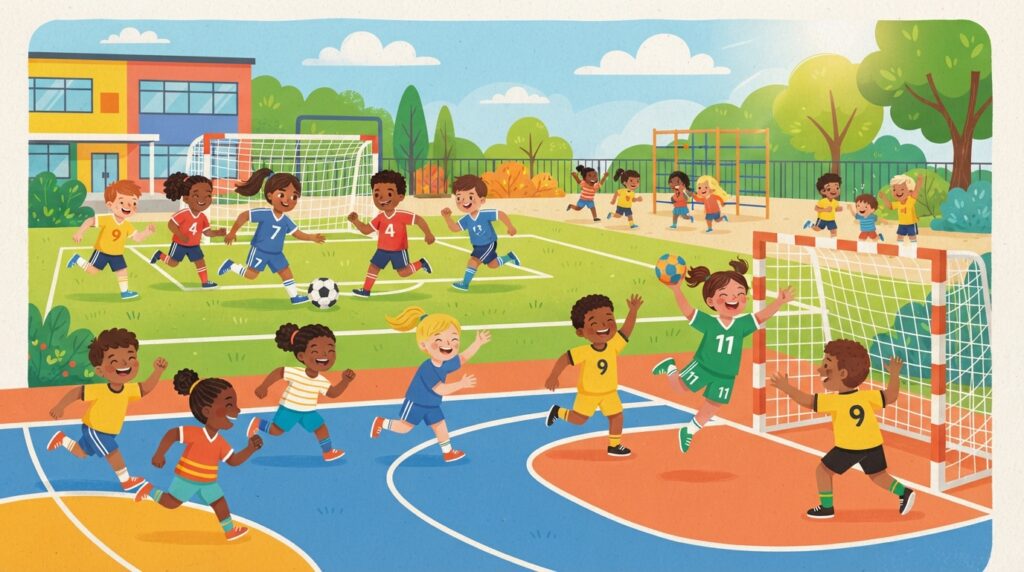
Have you ever wondered why running around a playground feels so exhilarating? On 11 November 2026, scientists in Budapest, Hungary, shared exciting news about how sports and strong bones go hand in hand. They discovered that quick, action-packed games do something truly wonderful deep inside your skeleton.
The research review was led by experts at Semmelweis University and published in the sports science journal Sports Medicine – Open. The scientists investigated how different types of physical exercise stimulate the growth of healthy, sturdy bone tissue.
What happened?
To understand the body’s secret building programme, the research team analysed results from 24 clinical studies involving 1,238 healthy adult participants. Instead of waiting several years for tiny changes to appear on medical bone scans, the team tried a speedier method. They measured special blood biomarkers linked directly to bone creation, focusing on a bone-building protein named osteocalcin.
The results were eye-opening. The researchers discovered that high-intensity, fast-paced sports stimulated new bone formation most effectively. Activities packed with sudden sprints, sharp turns, and explosive multidirectional movements caused bone-making markers to soar. In fact, recreational sports such as football and handball were linked to increases of up to 45% to 46% in these biological markers.
On the other hand, lower-intensity endurance exercises did not produce the same exciting boost. Activities like walking, jogging, and even traditional gym weight training showed no significant long-term increase in osteocalcin levels. Lead author and PhD researcher Viktória Barna explained that living bone tissue requires strong, dynamic mechanical forces to trigger bone cell growth and remodelling.
Senior author Dr. Péter Ferdinandy, who serves as Vice-Rector for Science and Innovations at Semmelweis University, stated that the team tracked speed, exercise intensity, and movement variety alongside how long people exercised. Co-author Dr. Nóra Sydó added that while daily walking remains wonderful for your heart, dynamic sports are crucial to preserve skeletal strength and shield against brittle bones.
Why does it matter to you?
This is fantastic news for anyone who loves playing during school break time! When you dash across the field playing games like football, tag, or basketball, your skeleton experiences quick jumps and zigzag turns. These dynamic motions give your bones the exact signals they need to grow dense and tough.
Childhood is the absolute best time to construct a strong skeleton. Developing dense bones right now lays down a solid foundation that protects your body, keeps you energetic, and helps you stay injury-free throughout your entire life.
Words to know
- Biomarker: a measurable biological sign in the body that gives clues about health or natural processes.
- Osteocalcin: a special protein in the blood that acts as a signal for active bone building.
- Multidirectional: moving quickly in many different directions, such as dodging left, right, forward, and backward.
- Osteoporosis: a medical condition where bones become thin, brittle, and easily broken.
Did you know?
Playing fast games like football and handball can boost natural bone-building markers by up to 46 percent, while steady jogging produces no significant long-term rise in osteocalcin!
Think about it
Which fast-paced games do you enjoy playing most with your friends at school? How can you add more zigzag dashes and quick hops to your favourite evening games?
Quick quiz
Which bone-building protein did scientists measure in the blood to track bone growth?
- Osteocalcin
- Haemoglobin
- Collagen
See the answer
Osteocalcin
Sources
This story was prepared by the Kids Gazette news desk with the help of AI research and writing tools, using the sources listed above.