
5 New Tiny Horned Frog Species Found in Arunachal!
Scientists have uncovered five new species of tiny horned frogs in Arunachal Pradesh, including one that eats snails whole!
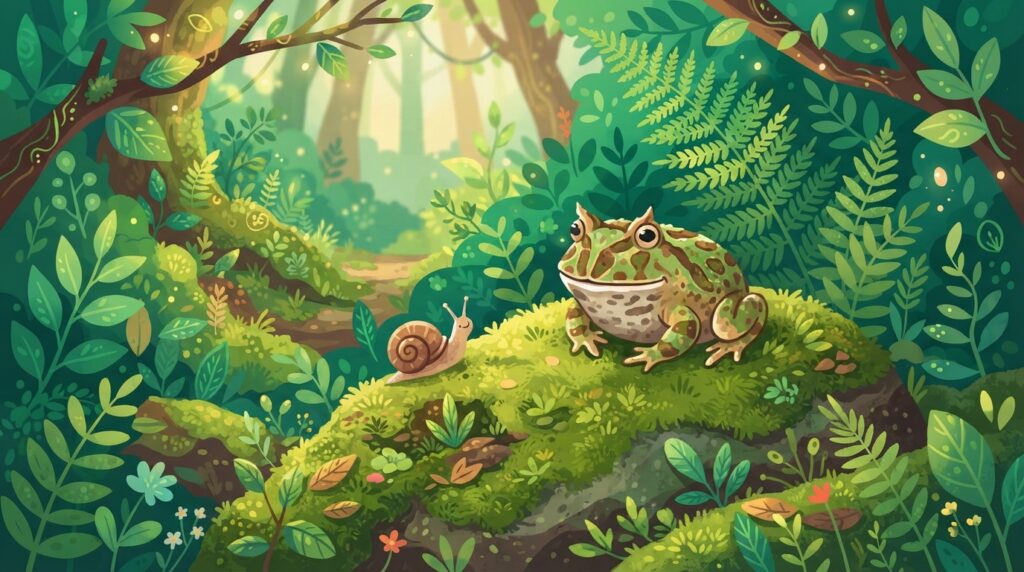
Deep inside the misty, green forests of Arunachal Pradesh, nature was keeping a delightful secret. On 11 November 2026, scientists announced that they found five new horned frog species hopping along the damp forest floor! These tiny amphibians had stayed hidden from the world until researchers took a closer look.
A dedicated team of researchers from the University of Delhi and Harvard University spent five long years exploring the wilderness of Northeast India. Led by Dr. Sonali Garg from Harvard’s Museum of Comparative Zoology, alongside co-authors Professor S. D. Biju, James Hanken, Tage Tajo, and Radhakrishna Upadhyaya K., the group shared their exciting results in the scientific journal Royal Society Open Science.
What happened?
The team discovered that all five tiny frogs belong to a genus known as Jingophrys, which is part of the Asian horned frog family Megophryidae. This single study more than doubles the known variety of this genus across the entire globe! For our country, the research increases the number of diminutive horned frog species officially recorded in India seven-fold, alongside two new geographic country records.
Each of the five new creatures has an interesting story behind its name. One frog is called Jingophrys siangensis, named directly after the Siang region of Arunachal Pradesh. Two others were given the names Jingophrys hrdy and Jingophrys wularsoni. A fourth species was named Jingophrys taniitatii, or the Tanii Horned Frog, to honour the local Tanii community. Its name joins their tribal name with tatii, which is the indigenous word for frogs and toads.
The fifth species, Jingophrys tanogogo, also called the Snail-eating Horned Frog, gave the team a huge surprise! Its name comes from the Apatani language spoken in the Ziro Valley, where tanogogo means snail. When scientists looked inside the frog using advanced 3D micro-CT imaging, they were amazed. The scans revealed intact, whole land snail shells inside the frog’s digestive tract! This makes it the first frog species ever recorded in India to eat snails, and the very first in its entire family documented with such a diet.
Why does it matter to you?
This exciting discovery shows that you do not need to travel to outer space to find mysterious new life. Incredible wonders are waiting right here in India, hiding beneath fallen leaves in states like Arunachal Pradesh.
It also shows how important indigenous communities and local knowledge are for science. The researchers worked closely with local people and honoured their heritage through names from the Apatani language and the Tanii community. When scientists listen to local experts, we can understand nature much better and protect rare wildlife before it disappears. Who knows—perhaps one day you will explore a forest and find a new animal yourself!
Words to know
- Diminutive: extremely small or tiny in size.
- Genus: a scientific group used to classify closely related animals or plants.
- Amphibian: a cold-blooded animal that can live both on land and in water, such as a frog.
- Micro-CT imaging: a special 3D scanner that lets scientists see inside tiny animals without harming or cutting them open.
Did you know?
The Snail-eating Horned Frog is the first frog ever discovered in India that eats snails, swallowing them entirely whole along with their hard shells!
Think about it
Why do you think it is helpful for modern scientists to learn from indigenous languages and local traditions when studying nature? If you found a brand-new tiny frog in your neighbourhood, what special name would you choose for it?
Quick quiz
Which of the newly discovered frog species was found to eat whole land snails?
- Jingophrys tanogogo
- Jingophrys siangensis
- Jingophrys hrdy
See the answer
Jingophrys tanogogo
Sources
This story was prepared by the Kids Gazette news desk with the help of AI research and writing tools, using the sources listed above.