New Pink Flower Discovered in Arunachal Pradesh
Botanists have found a brand-new wild pink flower named Begonia siangensis growing beside a shaded stream in Arunachal Pradesh's Siang Valley.
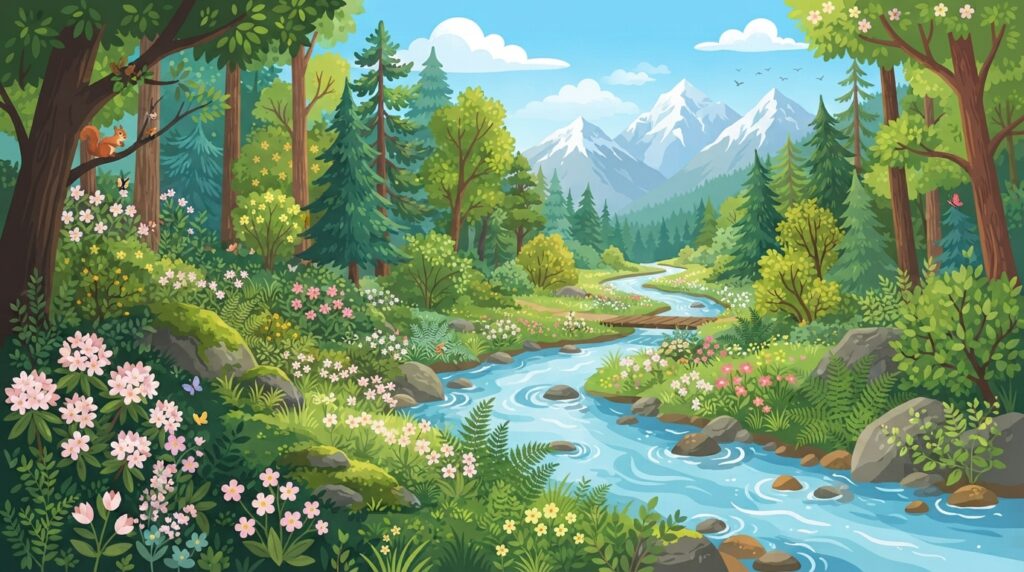
Exciting news has arrived from the misty green mountains of northeastern India! Plant scientists exploring quiet valleys have officially found a brand-new wild flower that had never been documented before. On 13 November 2026, researchers shared the thrilling story of this new plant discovered in Arunachal Pradesh, giving it the scientific name Begonia siangensis.
The lovely herb was spotted in the Upper Siang district by a team of botanists who were carrying out a biodiversity survey. Their findings were scientifically published in the respected Edinburgh Journal of Botany, confirming that this pretty mountain plant is completely new to science.
What happened?
The discovery was made by botanists S. Kishwan, T. U. Thackeray, and N. V. Page from the Thackeray Wildlife Foundation, an organisation based in Mumbai. They named the flower after the scenic Siang River Valley where they first came across it. The researchers spotted the herb between two settlements called Bomdo and Jengging, thriving at an altitude of approximately 600 metres above sea level in the Eastern Himalayas.
This plant likes peaceful surroundings. It was found living in a shaded habitat right beside a perennial freshwater stream, where the air stays cool and damp. Rather than standing straight up like a sunflower, Begonia siangensis is a creeping herb. Its stems grow along the forest floor up to 35 centimetres long, forming thickened nodes that send roots directly into the wet ground.
Its dark green leaves are asymmetrical, which means that the two sides of each leaf are not identical in shape. When viewed up close, the underside of each leaf is covered in microscopic bumps, giving it a rough, corrugated texture. The plant produces delicate pale pink blossoms with two distinct flower types. The female flowers droop gracefully downwards, while the male flowers hold upright stamens that display bright yellow pollen.
Scientists explained that the species belongs to the genus Begonia under the section Platycentrum. While it looks very similar to another wild plant named Begonia iridescens, the newly found flower does not have any silvery spots and lacks an iridescent sheen. Because experts still need to survey the forests to see how many of these plants exist, the International Union for Conservation of Nature (IUCN) has provisionally listed it as “Data Deficient”.
Why does it matter to you?
It is easy to think that scientists have already explored every hill and riverbank on Earth, but this discovery proves that nature still holds wonderful secrets! In a biodiverse country like India, pristine mountain valleys remain full of surprises waiting to be noticed.
This discovery shows that you do not need to look at towering trees to find something extraordinary. Even a tiny creeping herb hidden next to a babbling forest stream can be an important piece of our planet’s living puzzle. It reminds young Indian explorers that keeping our streams and forests clean helps protect rare living treasures that science is only just beginning to understand.
Words to know
- Botanist: A scientist who studies wild and cultivated plants.
- Perennial stream: A natural stream of freshwater that flows throughout the entire year without drying up.
- Asymmetrical: Having two sides or halves that do not match each other in shape or size.
- Stamen: The part of a flower that produces yellow powdery pollen.
- Data Deficient: A conservation category used when scientists do not yet have enough information to judge how rare a species is.
Did you know?
The plant has separate male and female flowers on the same plant, and its drooping female blossoms help safeguard developing seeds against heavy mountain rainfall!
Think about it
If you were exploring a quiet stream near a forest, what small clues would you look for to tell two different wild plants apart? Why do you think it is important for scientists to conduct surveys before deciding if a wild flower is rare?
Quick quiz
What colour are the blossoms of the newly discovered Begonia siangensis?
- Pale pink
- Bright blue
- Deep purple
See the answer
Pale pink
Sources
This story was prepared by the Kids Gazette news desk with the help of AI research and writing tools, using the sources listed above.