Webb Telescope Finds Giant Red Monster Galaxies
Scientists have spotted three giant 'Red Monster' galaxies in the early universe that grew much faster than anyone thought possible.
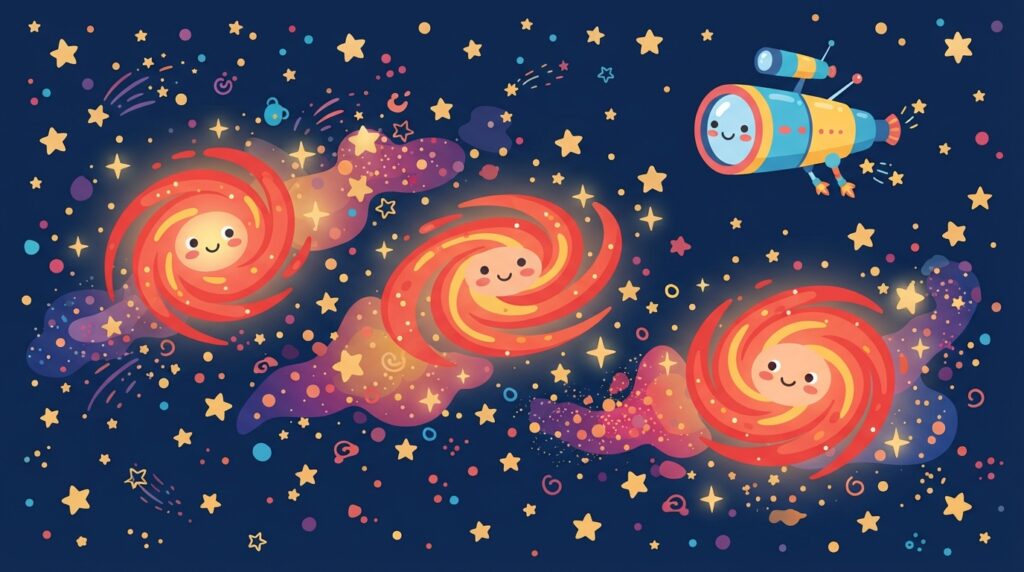
On 13 November 2024, astronomers in Geneva, Switzerland, announced a startling discovery about the distant past of deep space. Using powerful infrared data, scientists found three colossal early galaxies nicknamed the Red Monster galaxies.
These giant starry cities existed more than 12.8 billion years ago, within the first one billion years after the Big Bang. Researchers from the University of Geneva, Yale University, and the University of Bath shared their findings with the world in the journal Nature.
What happened?
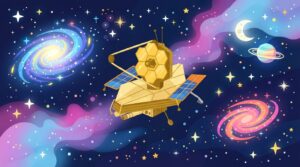
The space scientists spotted these three objects using the famous James Webb Space Telescope (JWST). This grand observatory is run jointly by NASA, the European Space Agency (ESA), and the Canadian Space Agency (CSA). The team identified the three wonders through an observational programme called the JWST FRESCO survey.
Why did experts call them “Red Monsters”? The galaxies are filled with huge clouds of cosmic dust. Because of this thick dust, they shine as bright red blotches when viewed in infrared light.
Even more shocking is their sheer size. Each of these three galaxies has a stellar mass equal to nearly 100 billion times the mass of our own Sun. That means each one is almost as huge as our Milky Way galaxy is today!
Normally, older theories suggested that early cosmic clouds grow very slowly. Scientists thought dark matter halos would turn only up to 20 percent of their captured gas into bright stars. However, these three giants made stars almost twice as efficiently as normal galaxies.
Co-author Professor Stijn Wuyts from the University of Bath explained that these massive structures quickly slipped past the usual hurdles that slow down star creation. Another researcher, Pieter van Dokkum from Yale University, explained it with a clever picture. He said it was like digging into the oldest rocks on Earth and unexpectedly digging up fossils of fully grown, mature animals!
Why does it matter to you?
Whenever you look up at night from your terrace or schoolyard in India, you are looking back into time. This grand discovery proves that the early universe was building giant, bustling galaxies far faster than anyone believed was possible.
It shows curious young explorers that science is not finished yet. The cosmic rulebooks are constantly being rewritten, meaning there are still many massive mysteries waiting for you to solve one day.
Words to know
- Stellar mass: the total weight or mass of all the stars inside a galaxy combined together.
- Infrared: a special type of light that human eyes cannot see, but space telescopes can use to peer through thick dust.
- Galaxy: a huge family of billions of stars, dust, and gas bound together in space.
- Cosmic dust: tiny floating specks of matter scattered across outer space.
Did you know?
Even though these three Red Monster galaxies were formed when the universe was very young, each of them holds nearly as many stars as our modern home galaxy, the Milky Way!
Think about it
If giant galaxies could form so quickly in deep space, what other hidden secrets do you think the James Webb Space Telescope might uncover next?
Quick quiz
Why did astronomers nickname the newly discovered galaxies ‘Red Monsters’?
- They are shaped like angry space creatures
- Cosmic dust makes them look like bright red blotches
- They glow red because they are extremely cold
See the answer
Cosmic dust makes them look like bright red blotches
Sources
This story was prepared by the Kids Gazette news desk with the help of AI research and writing tools, using the sources listed above.