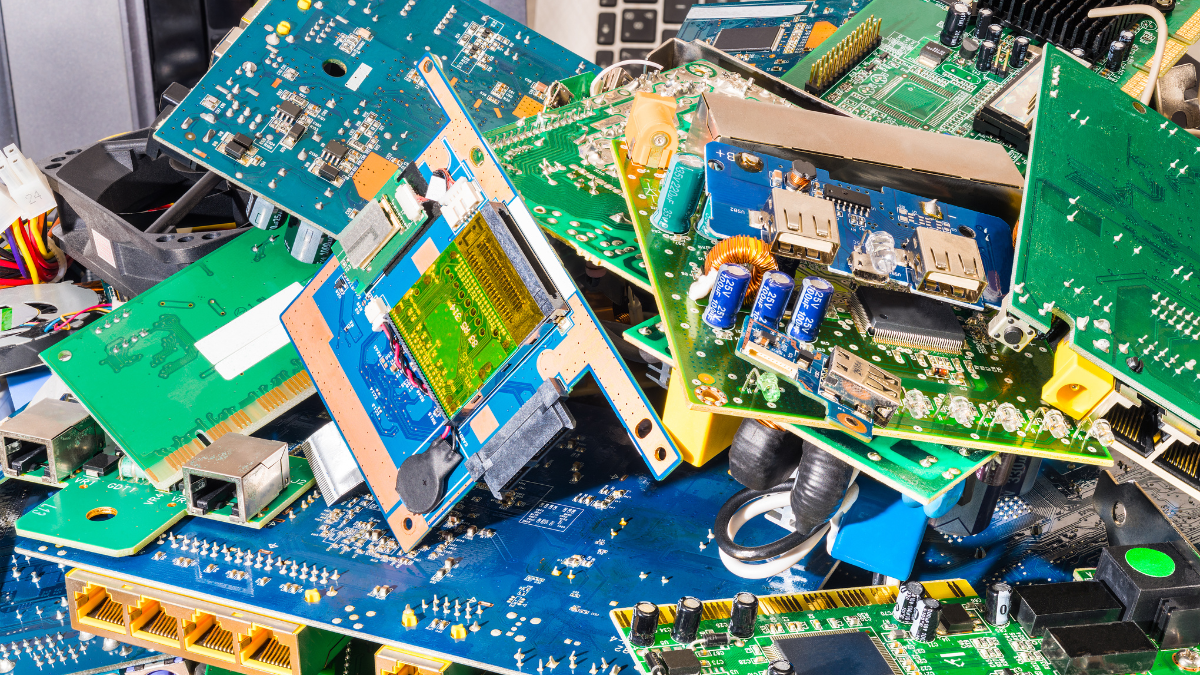
On a bright October morning, hundreds of schoolchildren across Delhi arrived with bags full of what most people throw away—old chargers, broken toys, headphones, and discarded mobile phones. What looked like a pile of trash was actually the beginning of a lesson in responsibility. In a first-of-its-kind campaign, students from 15 Delhi schools are leading an e-waste recycling drive to help reduce electronic pollution and teach families how small steps can protect the planet.
Organized under the “Clean Circuits, Green Planet” initiative, the campaign is supported by the Delhi Pollution Control Committee (DPCC) and Tech Recyclers India, a certified waste management company. The goal is simple: make students the ambassadors of responsible gadget disposal. With India now producing over 1.6 million tonnes of e-waste annually, most of which ends up in landfills or informal scrap yards, this drive shows how young citizens can lead where adults hesitate.
The idea began at Modern Public School in Shalimar Bagh, where the student eco-club noticed discarded electronics piling up after the school upgraded its computer lab. “We realized that the old machines still had value,” said Ananya Singh, a Class 10 student who co-led the project. “Instead of dumping them, we contacted recyclers to see what could be reused or safely dismantled.” Their experiment soon spread to other schools, including Bluebells International, Springdales, and Bal Bharati Public School, turning into a full-scale city drive.
Every school set up a “Tech Waste Corner” where students, teachers, and parents could deposit old gadgets, wires, and batteries. Within a week, collection bins were overflowing. “We had to request extra vans from the recycler,” said eco-club teacher coordinator, Ms. Sushmita Roy. “It’s not just about waste—it’s about awareness. Children are now teaching their parents to separate e-waste from regular trash.”
According to Tech Recyclers India, the drive has already collected more than 4 tonnes of electronic waste, enough to fill an entire mini-truck. The materials include broken monitors, CPUs, cables, toys with circuit boards, and outdated phones. Once collected, these are sent to a certified plant in Noida, where experts extract valuable metals such as copper, gold, and silver while safely handling hazardous components like lead and mercury.
Experts say that the danger of e-waste lies not in its quantity but in how it’s handled. “When electronics are burned or dumped, they release toxic fumes that damage air, soil, and water,” explained environmental scientist Dr. Preeti Verma. “Children and ragpickers who handle them without protection are at highest risk. Drives like these replace unsafe practices with organized recycling.”
The Delhi government’s education department has praised the initiative and plans to expand it citywide. “This program fits perfectly into our environmental education goals,” said Education Minister Atishi in a statement. “It combines learning with action. Our students are showing the country what responsible citizenship looks like.”
For many schools, the campaign has become part of their practical environmental science curriculum. Students not only collect devices but also record their types, estimate material recovery, and present data through graphs and infographics. “It’s real-world math and science,” said teacher Rajiv Khanna. “They see how a discarded tablet contains metals that can be reused instead of mined again. It’s sustainability in numbers.”
Parents, too, have responded positively. “My son told me not to throw our old phone in the dustbin,” said Priya Nair, a parent from Pitampura. “He explained that even small gadgets can poison soil if we discard them carelessly. Now our housing society is thinking of keeping a permanent e-waste box.”
Some students have taken the project further. A group from Apeejay School, Saket, is developing an app called “E-Circle” that helps users locate the nearest recycling points. Another team from DPS Rohini is designing awareness posters and street plays to be performed in neighborhood markets. “We want everyone to see that recycling is not boring,” said Ritvik, a Class 9 student. “It’s like giving gadgets a second life.”
India ranks among the top five e-waste producers globally, but only about 30% of its electronic waste is formally recycled. The rest often ends up in informal scrap yards where unprotected workers manually extract metals using acid baths and open fires. Children involved in those processes are often exposed to toxic chemicals. “That’s why it’s powerful when students themselves talk about safe recycling,” said DPCC officer Ramesh Kumar. “They become influencers for change.”
To make the campaign more interactive, schools are organizing “E-Waste Treasure Hunts”, where students compete to collect and categorize discarded electronics from home. Winners receive certificates and upcycled trophies made from recycled circuit boards. These fun activities ensure the message sticks without feeling like a lecture.
The project also has a clear sustainability roadmap. Once the collection phase ends, recyclers will share audit reports showing how each component was processed. The goal is to ensure zero landfill contribution and track material recovery rates. The data will feed into a citywide awareness report to be presented on World Environment Day 2026.
Teachers say the drive has changed how students view technology itself. “They now ask deeper questions about where gadgets come from and what happens after they break,” said Principal Seema Kapoor. “That’s a huge shift from seeing devices as disposable. The conversation has moved from consumption to conservation.”
The campaign is also sparking similar efforts outside Delhi. Schools in Gurugram, Noida, and Ghaziabad have requested support to start their own drives. The National Green Tribunal has welcomed the initiative and urged other states to replicate the model. “This is education at its best—learning that builds habits, not just grades,” the tribunal said in an advisory note.
Environmental experts are hopeful that such student-led drives will help India reach its Extended Producer Responsibility (EPR) targets under the E-Waste Management Rules, which require companies to collect and recycle a set percentage of their products each year. When young consumers learn early to dispose responsibly, industries feel more pressure to design sustainable products.
The children involved say their biggest reward isn’t prizes or certificates—it’s pride. “We feel like superheroes with gloves instead of capes,” joked 12-year-old Manya from Bluebells. “Every charger or phone we collect is one less thing hurting the planet.”
The movement shows that environmental change doesn’t always begin in government halls—it can start in classrooms, one wire at a time. As Delhi’s e-waste bins fill up, they hold more than discarded gadgets; they hold proof that children understand the value of a cleaner tomorrow better than most adults.
The lesson is clear: small hands can lead big change when guided by purpose and awareness. Delhi’s young eco-warriors aren’t just cleaning their city—they’re rebooting how we think about waste itself.