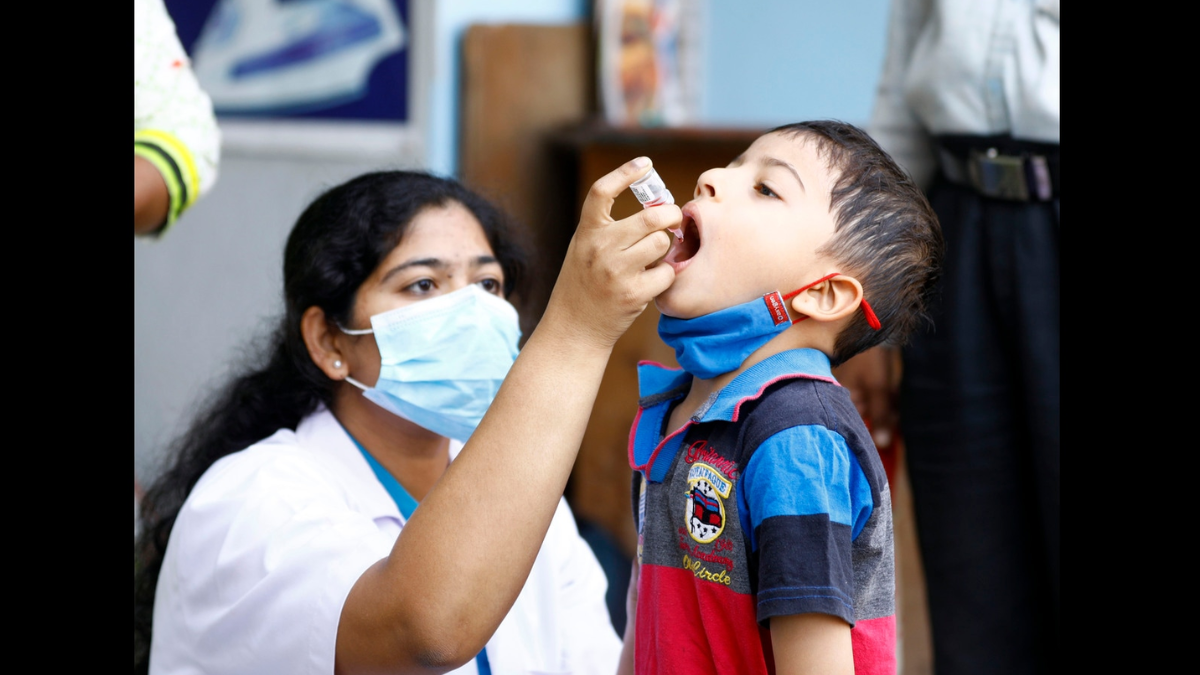
On October 14, health workers in Lunglei district, Mizoram, vaccinated 5,406 children under age five as part of a large-scale polio immunization campaign. This first-day achievement signals strong commitment from officials, local communities, and frontline teams to keep polio at bay in remote and border areas. The Times of India
The campaign is part of India’s Sub-National Immunisation Day (SNID) strategy, which complements the national efforts to sustain India’s polio-free status. Mizoram had announced plans months earlier to conduct the drive in border districts such as Lunglei, Siaha, Champhai, and Lawngtlai. India Today NE+2The Times of India+2
Health officials treated the first day as a test of logistics, outreach, and local acceptance. Teams set up fixed booths, mobile posts, and house-to-house visits to reach children in remote villages and near border belts. In many cases, local volunteers and Anganwadi workers helped identify children and bring them to vaccination points.
Despite challenges of difficult terrain and sparse population, health workers say turnout was encouraging. In one village, a mother who had traveled two kilometers said she brought her two children because she did not want them left out. A vaccinator from Lunglei said that in hilly terrain, sometimes teams had to walk narrow paths to reach homes.
Officials also confirmed that children from refugee communities will be included in this drive, particularly those residing near border areas with Myanmar and Bangladesh. This decision responds to concerns about cross-border movement and potential disease transmission. The Times of India
The vaccination drive is not just about delivery—it’s about assurance. In the past, rumors and skepticism have hampered vaccine uptake in parts of Northeast India. To counter this, health officers conducted pre-drive awareness sessions in local languages, engaged community leaders, and used local radio to reassure parents about vaccine safety and necessity.
Polio, a viral disease that can cause paralysis, mainly affects children under five when it is not prevented early. India was declared polio-free in 2014, but experts warn that vigilance must continue because any gap in immunization can allow the virus to re-emerge. The SNID campaigns act as booster shields to maintain immunity levels.
Still, the first day’s number — 5,406 — represents only a fraction of the target population in Lunglei. Authorities estimate many more children will be reached over the next few days through mop-up rounds and catch-up drives. They aim for near-100% coverage in each ward.
Challenges remain. Some hamlets are hard to access, monsoon rains and road blockages can slow travel, and keeping the vaccine cold (cold chain) in remote locations is always a hurdle. To mitigate that, health teams brought portable cool boxes and battery-powered freezers.
Schools in the area have paused non-essential activities so they can host vaccination posts. In a classroom in Lunglei, a teacher posted an advisory: “Bring child, birth record, and smile — today we protect our future.” Some schools also organized small information sessions for parents.
Local doctors say the first day’s success is a hopeful sign. “If we maintain momentum, we can reach all children by the end of this SNID window,” said Dr. Lalhlimpuii, a WHO surveillance medical officer. “Every child vaccinated is a step away from polio’s return.”
Communities, too, are feeling part of the effort. In one village, children helped carry vaccine boxes, and elders offered water and refreshments at booths. “When people see us working together, they feel it is their drive too,” a vaccinator said with pride.
Public health experts stress that sustained campaigns and repeated rounds are essential. Single-day success is promising, but consistent coverage is the safeguard against any resurgence.
For students, this drive is a reminder: vaccines are tools of protection, not just injections. Each dose helps safeguard futures, keeps school routes open, and ensures that children grow without fear of polio.
As Mizoram continues the campaign over coming days, health authorities are calling on every parent to participate. When a child receives a polio vaccine, the ripple benefits extend beyond the body — they protect families, neighborhoods, and the entire nation.
In a tiny state framed by hills and borders, 5,406 smiling children walked toward a safer tomorrow. And with community backing, that tomorrow may come a little sooner.