When we look up, clouds often look soft and fluffy, like cotton candy. This topic is popular because children often wonder what clouds are made of and how something so heavy can float in the sky.
Clouds are not made of smoke or cotton. They are made of tiny drops of water or ice crystals that are so light they can stay in the air.
What are clouds?
Clouds form when:
-
Warm air rises into the sky
-
The air cools down
-
Water vapour turns into tiny water droplets or ice
These tiny droplets group together and become visible as clouds.
Why clouds float
Cloud droplets are:
-
Extremely small
-
Lighter than falling rain
-
Held up by moving air
As long as warm air keeps rising, clouds can stay floating high above the ground.
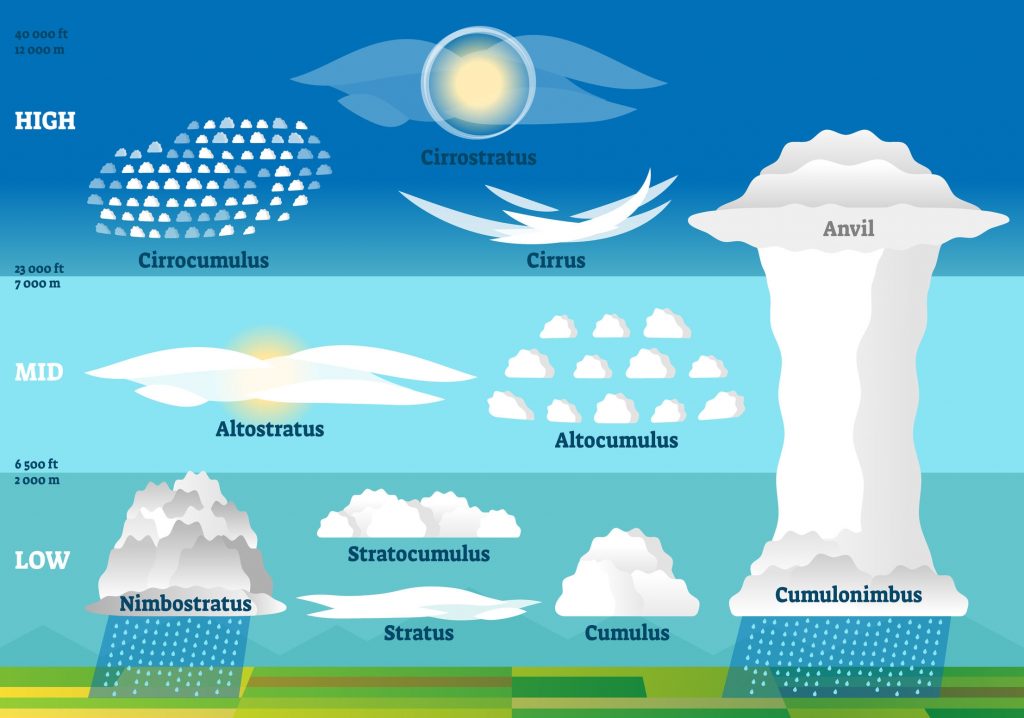
Different types of clouds
There are different cloud types, such as:
-
Cumulus – fluffy clouds seen on sunny days
-
Stratus – flat clouds that cover the sky
-
Cirrus – thin, feathery clouds high up
-
Nimbus – rain clouds that bring storms
Weather scientists study cloud types to predict rain and storms.
How clouds bring rain
Clouds produce rain when:
-
Water droplets collide and grow
-
Droplets become heavy
-
Gravity pulls them down as rain, snow or hail
This process is called precipitation.
Why clouds are important
Clouds help Earth by:
-
Bringing rain for plants and rivers
-
Controlling temperature
-
Protecting Earth from too much heat
-
Helping predict weather
Without clouds, Earth would be too hot and dry.
Why kids should care
-
Clouds are part of the water cycle
-
Understanding clouds explains weather
-
Watching clouds builds observation skills
Teachers say cloud watching is a fun way to learn science outdoors.
Fun fact
A large cloud can weigh more than a million kilograms, even though it floats!
In short: Clouds are made of tiny water drops or ice crystals that float because they are very light.
Learning takeaway: Even the soft-looking clouds teach us how air, water and weather work together in nature. ☁️🌍