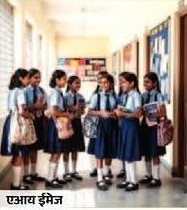
A recent official report has revealed that 1,164 schools across the state do not have separate toilet facilities for girls, raising serious concerns about school infrastructure and student welfare. The findings, based on consolidated data collected by the School Education Department between 2021 and 2024, have highlighted gaps in basic facilities affecting thousands of students.
According to the report, nearly 3.32 lakh students are impacted by the lack of proper infrastructure in various schools. The data includes government schools, private aided schools, private unaided schools, and other educational institutions. While some schools have toilet structures, they do not have separate facilities specifically designated for girls.
Education experts say separate toilets are essential for ensuring safety, dignity, and comfort for female students. The absence of proper sanitation facilities can affect attendance, especially among adolescent girls. Studies have shown that inadequate sanitation can lead to higher dropout rates.
The report mentions that schools in districts such as Dhule, Hingoli, Parbhani, Gadchiroli, Jalgaon, Amravati, and Nashik are among those lacking separate toilets for girls. In some districts, more than 100 schools reportedly do not provide this basic facility.
The infrastructure concerns are not limited to toilets. In 2,852 schools across the state, there are no proper handwashing facilities. Hand hygiene is especially important for preventing illnesses and maintaining student health. Without handwashing stations, students face increased health risks.
The report also highlights that 17 schools lack adequate water supply, including two schools in Pune. Other affected districts include Jalgaon, Buldhana, Beed, Solapur, Parbhani, and Nanded. Water availability is crucial not only for sanitation but also for overall hygiene and daily school operations.
In upper primary schools (Classes 6 to 8), nearly 937 schools reportedly lack basic facilities such as electricity and proper water connections. Primary schools (Classes 1 to 5) were also found to have infrastructure challenges.
Education officials have acknowledged the issue and stated that efforts are being made to address these gaps. Infrastructure development plans and budget allocations are expected to prioritize schools with urgent needs.
For students, this issue is significant because safe and clean school environments support better learning. Basic facilities such as toilets, water, and electricity are fundamental to ensuring equal access to education.
Experts emphasize that improving school infrastructure requires coordination between state authorities, local administrations, and community groups. Parents and teachers have also called for quicker action to ensure that schools provide safe and hygienic environments.
The report serves as a reminder that education is not limited to classrooms and textbooks. Adequate infrastructure plays a key role in supporting student health, attendance, and academic success.
As authorities review the findings, stakeholders hope that concrete measures will be implemented to ensure that every school provides essential facilities. Ensuring access to separate toilets and basic amenities is a critical step toward creating safe and inclusive educational spaces for all students.