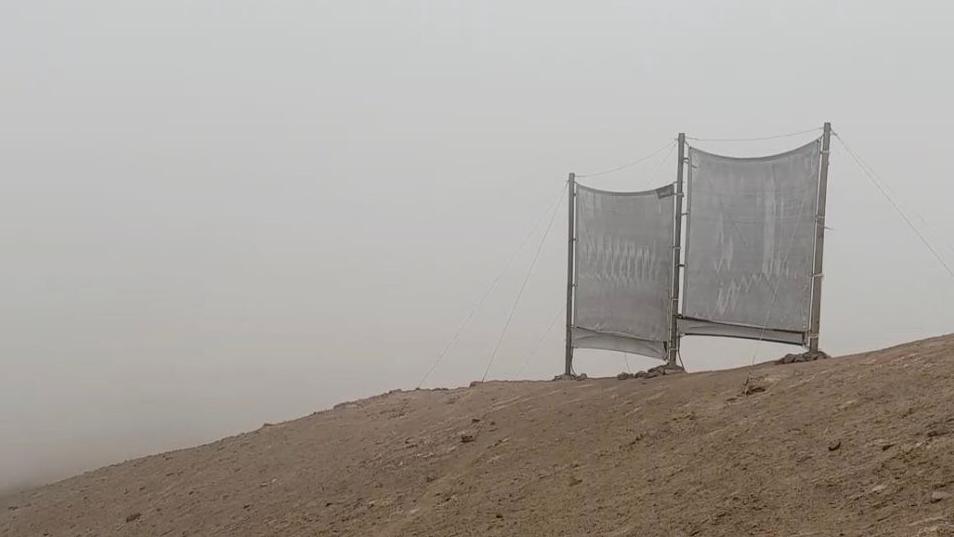
Scientists and environmental engineers are developing fog harvesting systems to collect water from the air, making this an important science and environmental protection news story. These systems help provide clean water in dry regions where rainfall is scarce and water sources are limited.
Fog harvesting works by capturing tiny water droplets present in fog. Experts explain that special mesh nets are placed in areas where fog is common, such as mountains and coastal regions. As fog passes through the mesh, water droplets collect on the surface and drip into storage containers.
This simple yet effective technology can produce liters of clean water each day. The collected water can be used for drinking, cooking, and irrigation.
For children, this news matters because access to clean water is essential for health and daily life. In some parts of the world, people must travel long distances to collect water. Fog harvesting offers a sustainable solution.
Engineers design the mesh using durable materials that can withstand strong winds and weather conditions. Some systems are installed on large frames to capture more moisture.
Environmental experts say fog harvesting does not require electricity, making it energy-efficient and eco-friendly.
Communities in dry regions are being trained to maintain and manage these systems independently.
Schools often teach students about water conservation and innovative solutions to global challenges.
Researchers continue improving mesh materials to increase water collection efficiency.
Experts emphasize that fog harvesting works best when combined with other water conservation methods.
Governments and non-profit organizations are supporting projects to install fog collectors in water-scarce regions.
The development of fog harvesting systems shows how simple technology can solve serious environmental challenges.
Learning about water sustainability teaches children the importance of conserving resources and protecting the environment.
By collecting water directly from the air, scientists and communities are creating a practical solution to help ensure access to clean water in some of the world’s driest areas.