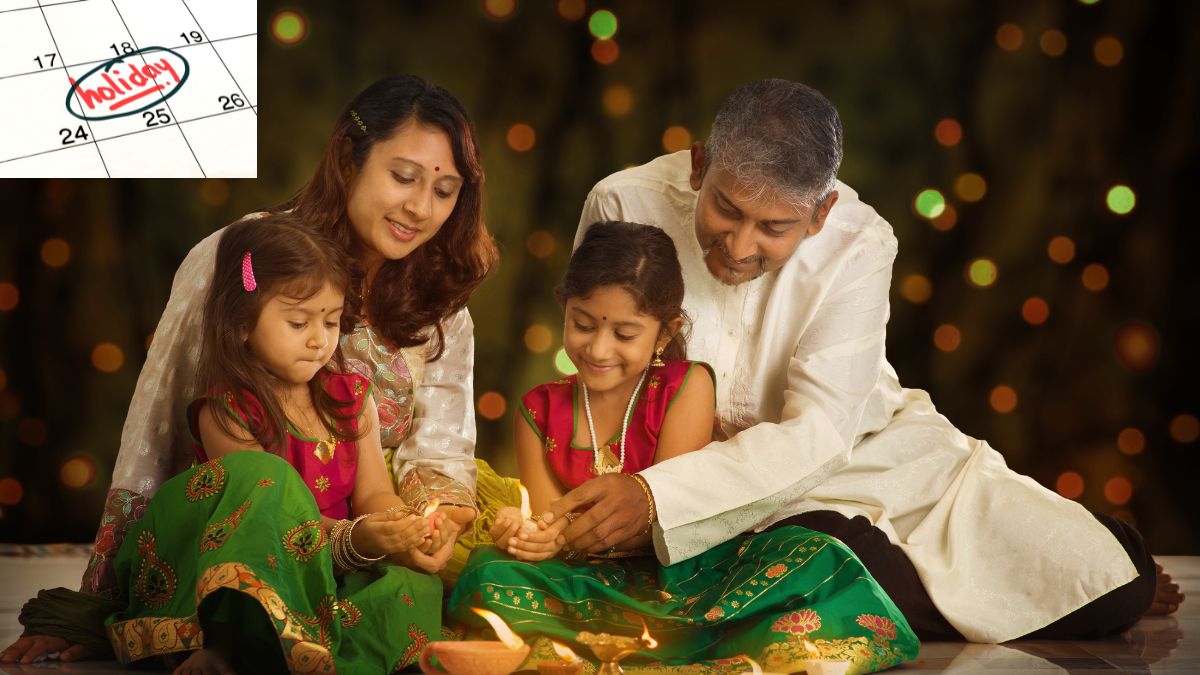
For millions of Indian Americans, this year’s Diwali will shine brighter than ever. California, one of the most diverse U.S. states, has officially declared Diwali a school holiday. The move marks a historic recognition of Indian culture and its growing presence in American life.
Governor Gavin Newsom signed the resolution after months of petitions and community discussions led by Indian-origin lawmakers and cultural groups. The new law means that public schools across the state can now observe Diwali, the Festival of Lights, as an official holiday.
For children of Indian descent, this isn’t just a day off—it’s a moment of pride. Many have spent years explaining Diwali to classmates, missing school to celebrate with family, or watching other major religious festivals recognized in the school calendar while theirs was not. “It feels like our culture finally has a seat at the table,” said 13-year-old Riya Patel from Fremont. “Now my friends will know why we light diyas and share sweets.”
Diwali, celebrated by Hindus, Sikhs, Jains, and Buddhists worldwide, symbolizes the victory of light over darkness and good over evil. It’s a time for family gatherings, new beginnings, and acts of generosity. In the U.S., where the Indian diaspora now numbers over 5 million, celebrations have grown from small temple events to public festivals attended by thousands.
California isn’t the first state to take this step. New York made Diwali a school holiday in 2024, followed by New Jersey districts with large South Asian populations. But California’s move carries special weight because of its size and influence. With over 6 million students, it’s home to one of the largest public education systems in the world.
Supporters say the decision sends a message of inclusivity. State Assembly member Ash Kalra, who championed the bill, said, “Our classrooms should reflect the communities they serve. Recognizing Diwali means recognizing the contributions of Indian Americans to California’s story.”
School administrators have welcomed the decision too. Many teachers say it gives them a chance to teach about global traditions through art, history, and literature. Some schools are planning “Festival of Lights Week,” where students can make paper lanterns, learn about Indian music, and try traditional snacks. The goal is to build cultural understanding, not just add another holiday.
Parents see this as a milestone for representation. “Growing up, I used to hide my Diwali sweets in my lunchbox,” said Priya Sharma, a software engineer from Cupertino. “Now my daughter will share hers proudly.”
Experts in multicultural education believe such recognition matters deeply to children’s self-esteem. “When schools honor diverse traditions, students feel seen and respected,” said Dr. Karen Wells, an education researcher at UCLA. “It helps immigrant families feel like they belong in the national story.”
Economically too, the decision reflects India’s growing soft power. Indian-origin entrepreneurs, doctors, and engineers make up a significant part of California’s workforce, especially in Silicon Valley. Cultural exchange festivals, Bollywood film screenings, and yoga events have already become part of local calendars.
Still, not everyone agrees. Some critics argue that adding too many cultural holidays could disrupt school schedules. Others question whether public institutions should recognize religious festivals. Lawmakers counter that Diwali, like Christmas or Hanukkah, carries universal messages of hope, gratitude, and renewal that transcend religion.
To balance inclusivity with practicality, the state allows local school districts to decide how to observe the holiday. Some may hold cultural assemblies instead of a full day off. Others plan to combine Diwali with broader “Diversity Days.” This flexible approach aims to honor all communities without overcrowding the calendar.
For Indian families abroad, the recognition feels deeply emotional. Many say they finally feel their identity accepted in public spaces. “It’s not about religion,” said 10-year-old Arjun Mehta. “It’s about celebrating light, happiness, and family. Everyone can join.”
Teachers are using the opportunity to create empathy through storytelling. Lesson plans now include tales of Lord Rama’s return to Ayodhya, Guru Hargobind Ji’s release from prison, and Mahavira’s enlightenment—all events linked to Diwali in different faiths. The idea is to show students that one festival can hold many meanings and still unite people through shared values.
The decision also reflects a larger shift in American education toward diversity. Schools are adding more inclusive materials to textbooks, celebrating heritage months, and inviting guest speakers from various backgrounds. Students learn not only facts but also cultural respect—an essential skill in a globalized world.
In the long run, the Diwali holiday may do more than just bring lights to classrooms. It may illuminate the path toward deeper understanding between cultures. “When kids learn to respect traditions early, they grow into adults who value empathy,” said Dr. Wells. “That’s what education should achieve.”
For now, Indian families across California are preparing for their first official Diwali break. Homes are being decorated, sweets ordered, and community programs planned. Fireworks may still be limited by local laws, but the joy in people’s hearts is loud enough.
As diyas glow in thousands of Californian homes this year, they’ll shine not just for good fortune, but for recognition, belonging, and the hope that every culture finds its light in the world’s shared classroom.