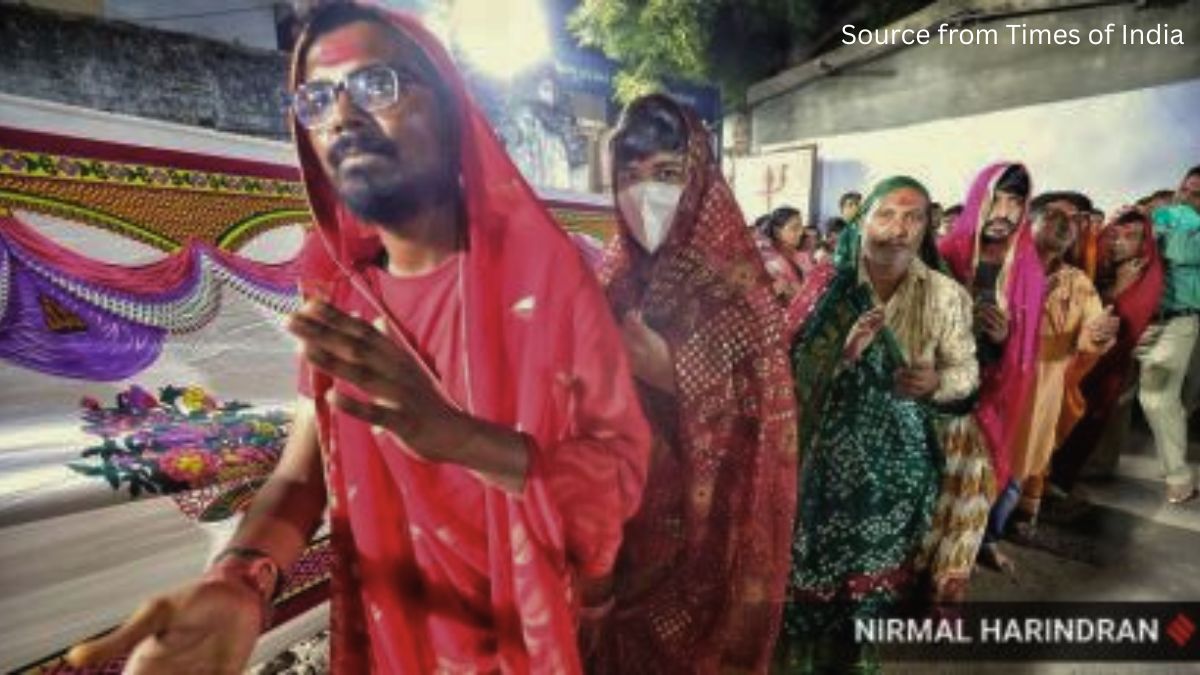
This Navratri, a video from a small village in Gujarat took the internet by storm. It showed dozens of men, dressed in colorful sarees, dancing Garba with grace and devotion. The clip quickly went viral, drawing millions of views and sparking curiosity across India and abroad. Why are men wearing sarees to perform Garba? The answer lies in a 200-year-old ritual rooted in faith, folklore, and unity.
The viral dance comes from the Sathwara community of Navapura village in Anand district, Gujarat. Every year during Navratri, men from this village dress in sarees and perform Garba to honor Maa Bahucharaji, a form of Goddess Shakti. The practice, passed down through generations, is believed to have started after a local legend and a divine promise.
According to the village elders, centuries ago the goddess appeared in a devotee’s dream. She asked that men perform Garba in women’s attire as a sign of equality and devotion. The tradition was meant to remove pride and teach humility—values that still guide the community today. Since then, every Navratri, men from different age groups wear traditional sarees, adorn themselves with jewelry, and dance through the night.
What began as a local offering has now become a global symbol of cultural beauty. As the video spread on social media, people from across India applauded the performers for preserving heritage. Many were surprised to learn that this custom predates social media trends and gender debates by centuries. “It’s not about breaking rules,” explained local priest Haribhai Patel. “It’s about following faith. Our ancestors believed that in front of the Goddess, all are equal.”
The dance itself is mesmerizing. The men perform intricate Garba steps, clapping and turning in rhythm to the beats of the dhol. Their sarees swirl with color—red, green, yellow, and gold—each representing prosperity and purity. They sing devotional songs in praise of Maa Bahucharaji, their voices echoing through the temple courtyard. No one feels out of place, because for nine nights, everyone dances as children of the same divine mother.
The internet’s response has been heartwarming. Comments flooded social platforms with admiration. “Tradition meets tolerance,” wrote one user. “They’re teaching the world what equality looks like.” Others shared the video with hashtags like #RealGarba and #FaithBeyondGender.
For the villagers, though, it isn’t about going viral. They’ve been doing this long before phones had cameras. “Our fathers and grandfathers danced this way,” said 52-year-old performer Rameshbhai. “We didn’t know it would reach so many people, but we’re happy that others now understand our faith.”
Historians say the practice is one of many examples showing how Indian culture blends devotion with social values. Across India, there are rituals where men take on female roles during religious performances. From Koovagam Festival in Tamil Nadu to Theyyam in Kerala, such customs highlight the idea that spirituality transcends gender.
Anthropologist Dr. Leena Bhatt explains, “In Indian tradition, divinity often contains both masculine and feminine energies. By embracing both, devotees express balance, humility, and surrender.” The Garba ritual in sarees, she adds, is not rebellion—it’s reverence.
Young people in the village are proud to continue the practice. With each generation, more volunteers join the dance. Many work in nearby cities but return home every year for Navratri. “It’s our identity,” said 19-year-old student Ankit. “When we wear the saree, we don’t feel shy. We feel blessed.”
The festival also strengthens community bonds. Every home contributes to the preparations—women help drape sarees for the men, elders teach the songs, and children decorate lamps. Together, they transform devotion into celebration. Visitors from nearby districts now travel to witness the ritual in person, often leaving with a new respect for its message of equality and faith.
Religious scholars note that Maa Bahucharaji herself is associated with compassion toward gender fluidity and inclusivity. Her temples, including the famous shrine near Becharaji town, have long been places of refuge for those who feel different or marginalized. This makes the Navapura tradition not only ancient but also remarkably progressive.
As the world debates gender identity and inclusion, this small Gujarati village quietly demonstrates both through devotion. The men who dance in sarees are not defying masculinity—they’re defining humanity. Their act reminds us that worship, like love, is beyond labels.
The viral video has already inspired similar Garba performances in other parts of Gujarat. Cultural organizations are planning to document and preserve the tradition through short films and exhibitions. The state tourism board has even expressed interest in including it in cultural heritage tours.
But for the villagers, the goal remains spiritual, not social. “We don’t do it for fame,” says elder performer Govindbhai. “We do it for faith. The Goddess gave us this duty—to dance with devotion, not with ego.”
As Navratri lights fade and everyday life returns, the echoes of the drums and laughter still linger in Navapura’s narrow lanes. For one week each year, sarees replace shirts, tradition replaces trend, and humanity replaces difference.
The world may see it as viral content, but for those men, it’s a sacred promise kept for 200 years—a dance not of gender, but of grace.