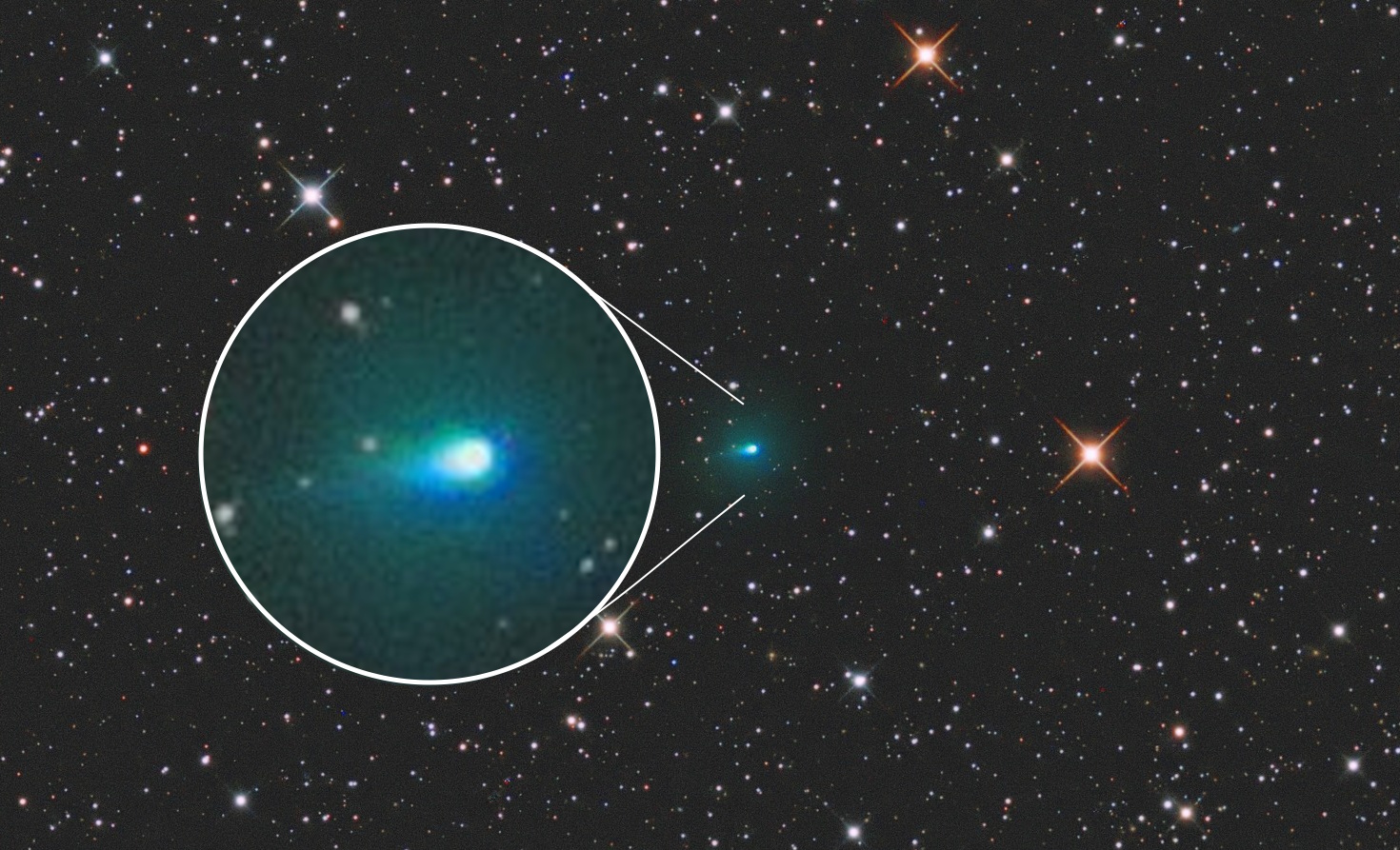
A rare interstellar comet called 3I/ATLAS is expected to make its **closest approach to Earth on December 19, 2025, and sky-watchers around the world are getting excited about it. This cosmic visitor did not originate in our solar system — it came from deep space — and scientists say it’s a great opportunity to learn more about the universe. The Economic Times
A comet is a big ball of ice, dust and rock that travels through space. What makes 3I/ATLAS extra special is that it is an interstellar object — meaning it came from outside our solar system, unlike most comets we see. These visitors are extremely rare, and only a handful have ever been observed by astronomers. The Economic Times
According to NASA and other space experts, 3I/ATLAS will pass by our planet at a safe distance of about 167 million miles (270 million km) — that’s far beyond Earth’s orbit — but close enough that telescopes and powerful cameras can see it. The comet is expected to stay visible for a few more months as it continues on its journey through space. The Economic Times
Scientists say that watching an interstellar comet like 3I/ATLAS can help us learn a lot about what other parts of the galaxy are like. Because these objects come from beyond the Sun, they may carry materials and clues about how other star systems form. The Economic Times
If you want to see the comet, astronomers recommend using a moderately powerful telescope and finding a dark sky area with as little light pollution as possible — away from bright streetlights or city glow. Although it won’t be visible with the naked eye from most places, telescope views can be exciting for kids and adults alike who love space and exploration. The Economic Times
For young readers who are curious about space:
-
Comets are like cosmic time capsules, carrying dust and ice from far-away regions of space.
-
Interstellar objects help us understand more about our galaxy and beyond.
-
Events like this show how scientists use telescopes, rockets and maths to track moving objects millions of miles away.
In short: The rare interstellar comet 3I/ATLAS will safely pass close to Earth on December 19, 2025, offering a unique chance to observe an object from outside our solar system. The Economic Times
Learning takeaway: Even though space is big and far away, events like this show that you can watch and learn about the universe with the right tools — and curiosity can take you places not even astronauts have been!