NASA Reconnects With Voyager 1 in Deep Space
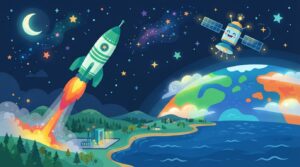
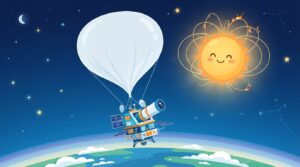
Voyager 1 went silent for two days in deep space, but the resilient probe managed to switch to backup thrusters and call home to Earth!

Imagine sending a message to a robot so far away that it takes an entire day for your words to arrive! On 30 October 2026, scientists at NASA confirmed that the famous Voyager 1 space probe is in steady communication with Earth once again. The brave robotic spacecraft had suddenly gone silent for two days while cruising through the dark chill of interstellar space.
Engineers at NASA’s Jet Propulsion Laboratory in Pasadena, California, in the United States, were relieved when its familiar radio signals returned. Operating billions of kilometres away from home, the spacecraft managed to resolve an unexpected technical issue entirely on its own.
What happened?
The sudden quiet began when NASA’s Deep Space Network tried to locate Voyager 1 on 18 October and 19 October 2026. During both scheduled tracking sessions, ground antennas failed to detect any radio signals from the distant probe. Before ground controllers could transmit troubleshooting instructions across space, the spacecraft’s signal reappeared on its own on 20 October 2026.
When diagnostic data finally reached Earth, engineers learned that one set of the probe’s thrusters had suddenly gone offline. Fortunately, Voyager 1’s onboard fault protection system detected the failure, switched on backup thrusters, and placed the spacecraft into safe mode. Kareem Badaruddin, the Voyager mission manager at NASA JPL, noted that this was the first time engineers had seen the spacecraft respond in this specific way.
Keeping the ageing spacecraft healthy requires careful planning because its power supply is slowly fading. Both Voyager 1 and Voyager 2 are powered by radioisotope thermoelectric generators that turn heat from decaying plutonium into power, losing roughly 4 watts of electricity each year. To conserve energy, engineers carried out a delicate procedure in early September 2026 nicknamed the “Big Bang,” swapping three devices for lower-power alternatives to save electricity.
Why does it matter to you?
Voyager 1 is an inspiring example of how thoughtful engineering can create machines that last for generations. The spacecraft was launched on 5 September 1977 and has been travelling across space for 49 years. It is currently cruising at approximately 61,000 kilometres per hour through interstellar space, roughly 26 billion kilometres (16 billion miles) from Earth, making it the most distant human-made object in history.
When you build science models or dream about exploring the stars, Voyager 1 shows how smart robotic explorers can look after themselves when help is too far away. On 18 November 2026, the spacecraft is projected to reach an astonishing milestone of one light-day from Earth. That means a radio signal travelling at the speed of light takes a full 24 hours to reach Voyager 1 and another 24 hours to return!
Words to know
- Interstellar space: The vast, open region of space that exists between different stars.
- Thrusters: Small rocket engines on a spacecraft that fire bursts of gas to adjust its direction.
- Safe mode: A protective computer setting that turns off non-essential systems to protect a spacecraft during an error.
- Light-day: The enormous distance that a beam of light travels in a complete 24-hour day.
Did you know?
Voyager 1 has been flying through space for 49 years, which means it has been exploring the cosmos longer than most school teachers have been alive!
Think about it
If you were designing a robotic probe to explore the outer reaches of the solar system, what kind of emergency rules would you program into its computer?
Quick quiz
How long does a radio signal take to travel one light-day from Earth to Voyager 1?
- 12 hours
- 24 hours
- 48 hours
See the answer
24 hours
Sources
This story was prepared by the Kids Gazette news desk with the help of AI research and writing tools, using the sources listed above.