Hyderabad Opens India’s First Space Robotics Facility
India launched Base 1 in Hyderabad, its first private space robotics facility, to help clear broken satellites under the Swachh Space drive by 2030.
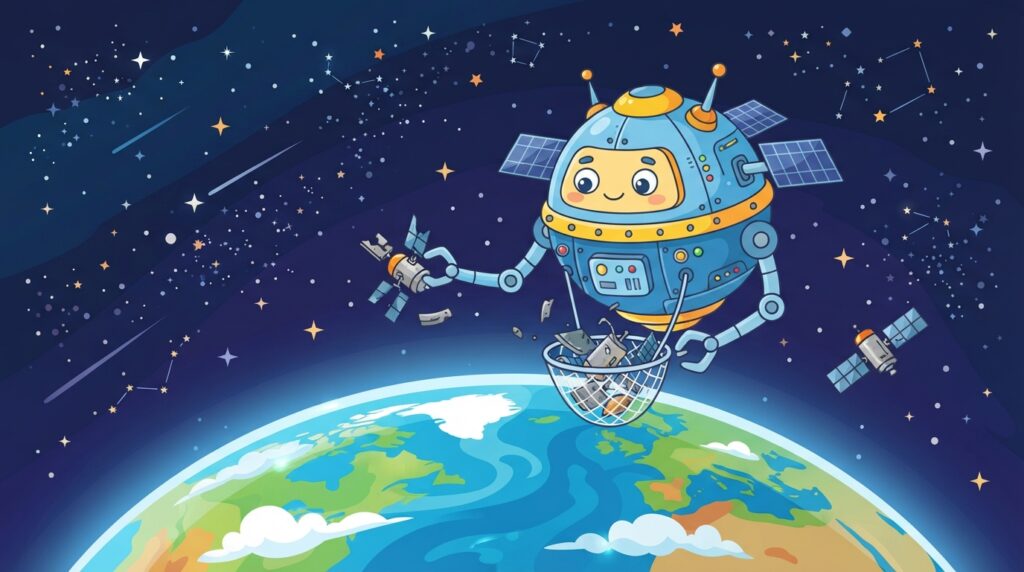
Have you ever taken part in a cleanliness drive at your school? On 5 November 2026, India launched a grand cleanup drive for outer space by opening an advanced space robotics facility called Base 1 in Hyderabad, Telangana.
This brand-new tech centre was built by an Indian space startup named Cosmoserve Space. It will design clever robotic helpers that can capture broken satellites and keep our skies tidy under India’s special “Swachh Space” vision.
What happened?
Union Minister of State for Science and Technology Dr. Jitendra Singh virtually opened the facility. He explained that India wants all its space missions to be completely debris-free by the year 2030. At the event in Hyderabad, Telangana Minister for IT and Industries D. Sridhar Babu and Cosmoserve Space Founder and CEO Dr. Chiranjeevi Phanindra celebrated the launch in person.
Base 1 is a huge centre covering around 14,800 square feet at VSD Tech Park in Gachibowli, Hyderabad. It is the very first private centre of its kind in India and only the sixth in the entire world with microgravity simulation and space-vision systems. The startup set up this centre after raising 6 million dollars in seed funding, bringing its total capital to over 9 million dollars.
The facility has four specialised wings working together:
- Orbital Rendezvous and Capture Lab: where robots practice meeting and catching drifting objects in orbit.
- Space Robotics Innovation Lab: where engineers invent new robotic arms and mechanisms.
- ISO Class 8 Clean Room: an ultra-clean room where satellites are assembled without dust.
- Mission Simulation and Control Centre: where flight teams practice directing cleanup missions.
These space robots are being built to gently dock with dead satellites. Once attached, they can perform repairs, pump in fresh fuel, or steer the old metal junk down toward Earth so it burns up safely in our atmosphere.
Cosmoserve Space has already tested soft robotic petals in orbit during Mission EMBRACE in July 2026. Next, the team plans to run a full demonstration of capturing real orbital debris by 2027. Dr. Singh shared that reforms have helped India’s space startup community leap from single digits to nearly 450 enterprises, supported by groups like IN-SPACe and NewSpace India Limited.
Why does it matter to you?
Satellites floating high above Earth make our daily life work smoothly. They send weather warnings about storms, connect our mobile phones, and help school buses find the right route using maps.
Right now, around 47,000 to 50,000 large pieces of junk and over 100 million tiny fragments are zooming around our planet at super-fast speeds. Even a speck of paint can hit an active satellite like a bullet! India only contributes 129 trackable debris items, which ISRO watches carefully using Project NETRA. By inventing robots to clear away space trash, Indian engineers are making sure space stays safe for future astronauts traveling to the Moon and beyond.
Words to know
- Debris: pieces of broken, leftover, or discarded rubbish floating in space.
- Microgravity: a condition where people or objects appear weightless, just like floating in orbit.
- Rendezvous: a planned meeting where two spacecraft carefully find each other and travel together.
- Clean room: a sealed laboratory kept completely free from dust, hair, and dirt to protect sensitive machines.
Did you know?
ISRO has an eagle-eyed tracking system called Project NETRA that can spot and monitor space debris as small as 10 centimetres across!
Think about it
If you were asked to design a space-cleaning robot, what kind of tools would you give it? Would you choose giant robotic arms, nets, or magnetic grippers?
Quick quiz
By which year does India aim to achieve debris-free space missions under its Swachh Space initiative?
- 2026
- 2030
- 2040
See the answer
2030
Sources
This story was prepared by the Kids Gazette news desk with the help of AI research and writing tools, using the sources listed above.