
New Wild Tiger Discovered in Sahyadri Tiger Reserve
Forest officials have confirmed a new wild tiger named STR-T2 in Maharashtra's Sahyadri Tiger Reserve after it completed a 100-kilometre trek.
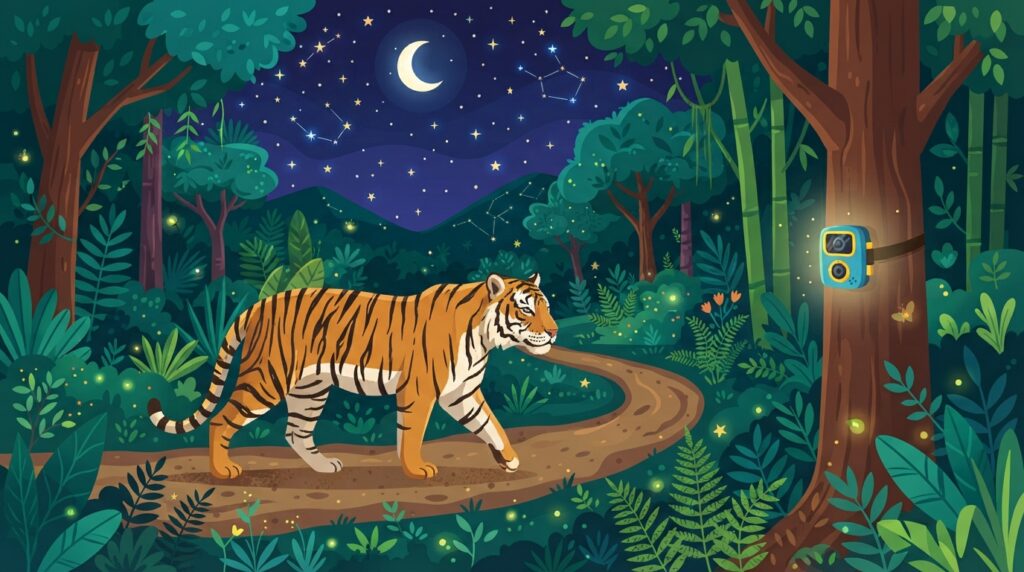
A thrilling wildlife discovery has delighted animal lovers across India! On 9 November, conservation officials proudly confirmed the arrival of a healthy wild male big cat in Maharashtra. This magnificent tiger in Sahyadri Tiger Reserve has received the official code name STR-T2, marking a major success for nature protection in the Western Ghats.
The striped wanderer made his surprise appearance at 11:46 pm on 28 October inside Chandoli National Park. An automated habitat-monitoring camera trap snapped his photograph in the dead of night. Dedicated forest patrol teams had first spotted fresh footprints on their regular walking paths, prompting researchers to collect and study memory cards from local cameras.
What happened?
Finding a wild cat in such a vast wilderness takes clever detective work! Once the camera trap cards were collected, specialists in the reserve’s dedicated “tiger cell” research unit sat down to examine the photographs. Just like human fingerprints, the black stripes on every tiger’s orange coat form a unique pattern that belongs to only one animal.
The experts quickly confirmed that these new images did not match STR-T1. That was the reserve’s first resident tiger, famously discovered on 17 December 2023 after a five-year period without any recorded big cats since 2018. This meant a brand new visitor was roaming the hills!
Soon, wildlife biologist Girish Punjabi from the Wildlife Conservation Trust solved the puzzle. He matched the stripes to a male tiger photographed on 13 April inside Radhanagari Wildlife Sanctuary. To reach his new territory, the young adventurer had walked nearly 100 kilometres northward through rugged, hilly country using a natural forest pathway.
This big monitoring success was guided by reserve leaders, including Sahyadri Tiger Reserve Field Director Ramanujam, Chandoli National Park Deputy Director Snehalata Patil, and Koyna Wildlife Sanctuary Deputy Director Kiran Jagtap. Honorary Wildlife Warden Rohan Bhate highlighted that STR-T2 is only the second tiger documented in the Chandoli Wildlife Division under the reserve in recent history.
Why does it matter to you?
Living in India means sharing a beautiful homeland with some of the most extraordinary creatures on Earth. Conservationists pointed out that 14 tigers have used the southern forest corridor connecting Tilari, Radhanagari, and Chandoli in recent years. This proves that preserving unbroken stretches of forest allows wild animals to move safely away from crowded areas and establish secure new homes.
This discovery also demonstrates how modern science helps humans protect endangered wildlife without causing them stress. By relying on automatic cameras and footprint tracking, researchers can observe shy creatures without disturbing their daily lives. It shows that when people work together to safeguard wild green spaces, nature can bounce back in remarkable ways!
Words to know
- Camera trap: a rugged outdoor camera that automatically takes a picture when an animal steps in front of its sensor.
- Pugmark: the distinct footprint left on the ground by a wild animal, especially a big cat.
- Forest corridor: a protected strip of natural woodland that links separate animal reserves together.
- Habitat: the natural forest environment where a wild creature finds its food, water, and shelter.
Did you know?
Tigers have completely unique stripe patterns on their fur and skin, meaning scientists can identify every single individual just by looking at a clear photograph!
Think about it
Why is it essential to maintain open forest corridors between different wildlife parks? How do tools like silent camera traps help researchers study animals without scaring them?
Quick quiz
How far did the young tiger STR-T2 walk to reach Sahyadri Tiger Reserve?
- Nearly 100 kilometres
- Around 25 kilometres
- Over 500 kilometres
See the answer
Nearly 100 kilometres
Sources
This story was prepared by the Kids Gazette news desk with the help of AI research and writing tools, using the sources listed above.